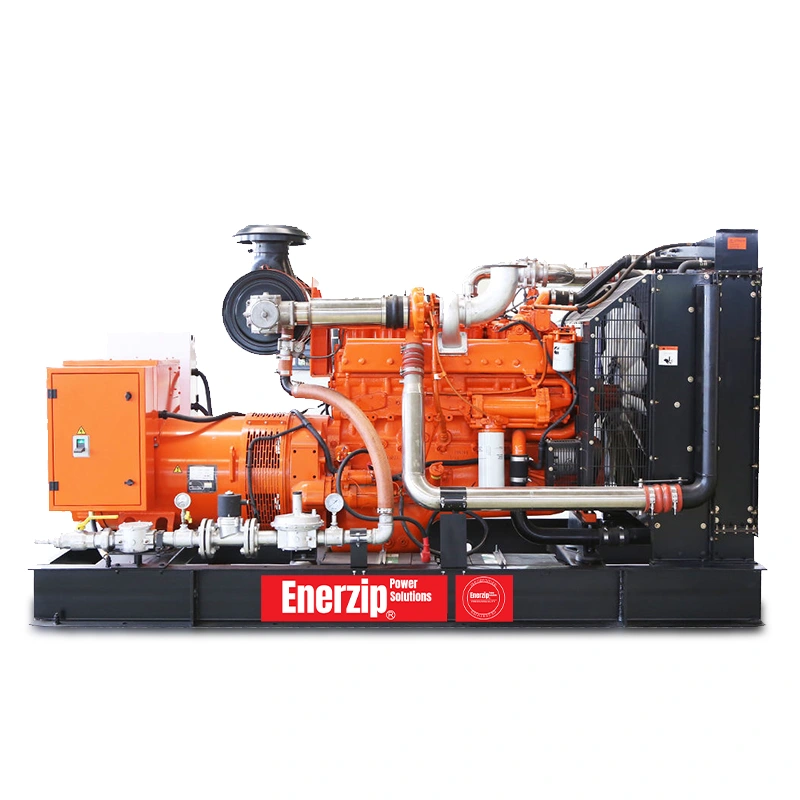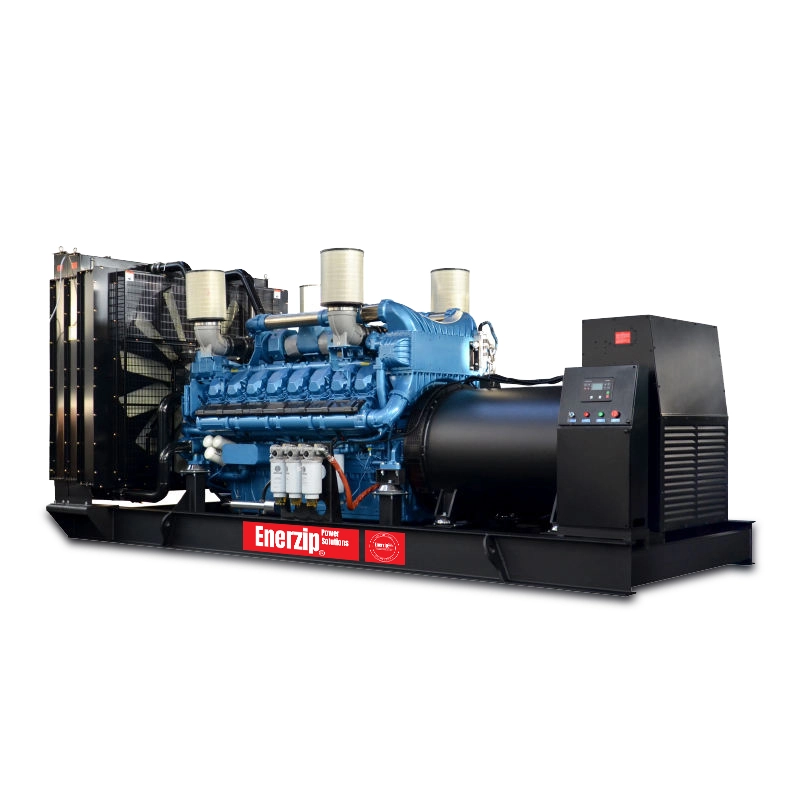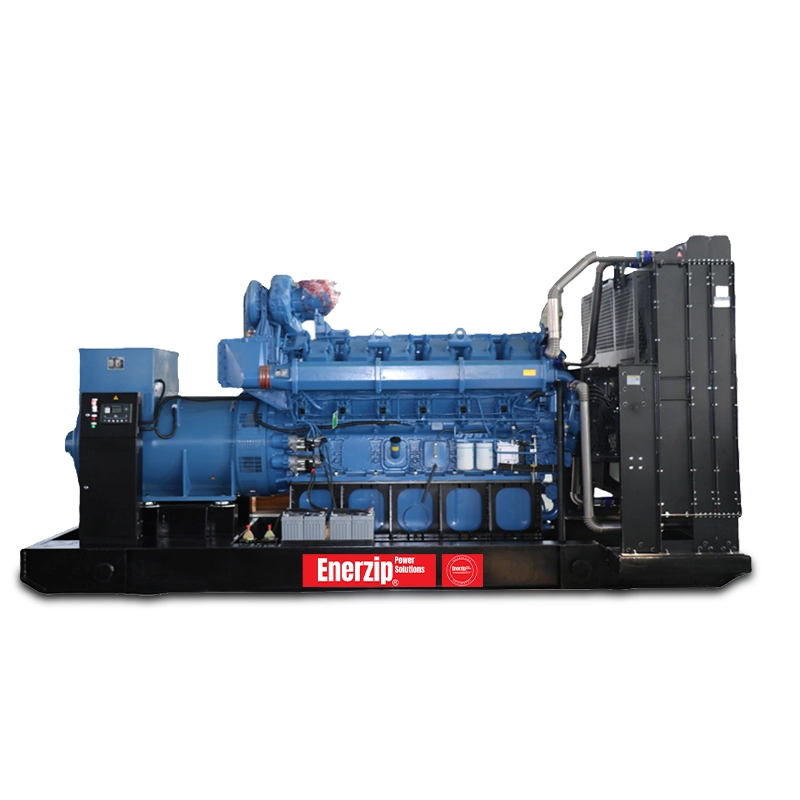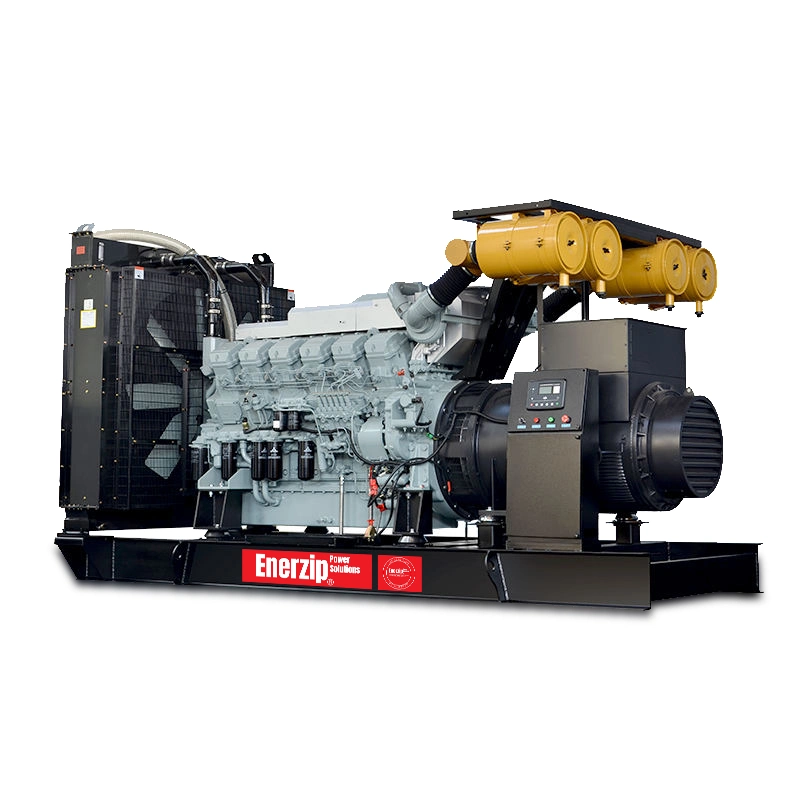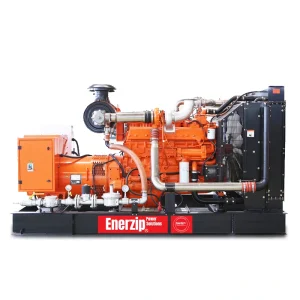
China produces gasoline engines, portable generators, agricultural machinery and small industrial power equipment for domestic and export markets. Several engine manufacturers also supply products used in LPG and natural gas applications.
For buyers looking for a silent tri-fuel generator set from China, the engine brand is one part of the specification. The completed generator must be capable of operating on gasoline, liquefied petroleum gas (LPG) and natural gas (NG), with the fuel system, alternator, cooling arrangement and enclosure matched to the operating conditions.
This article examines four Chinese companies involved in this supply chain: ZONSEN, LONCIN, LIFAN and ENERZIP.
ZONSEN, LONCIN and LIFAN manufacture engines and power equipment. ENERZIP integrates selected engine platforms into generator sets, including the EZ-SA multi-fuel series.
The comparison is based on published manufacturer information and ENERZIP’s supplied product details. It is not a laboratory comparison or a national quality ranking.
1. What Defines a Silent Tri-Fuel Generator?
A tri-fuel generator can operate on three different fuels:
- Gasoline
- LPG
- Natural gas
The engine normally operates on one selected fuel at a time.
Gasoline is supplied through a liquid-fuel system. LPG and natural gas require suitable pressure regulation, gas metering and fuel controls.
The distinction between dual-fuel and tri-fuel equipment is important. A generator designed for gasoline and LPG is not necessarily suitable for natural gas. Similarly, an LPG/NG standby generator does not automatically support gasoline.
A silent generator also requires an acoustic enclosure designed around the complete engine-alternator assembly.
The enclosure should reduce noise while maintaining combustion airflow, engine cooling, exhaust discharge and access for servicing.
Why Engine Selection Alone Does Not Determine Generator Quality
A generator engine may have a suitable mechanical power rating and still perform poorly after integration.
Common causes include insufficient gas flow, an undersized alternator, poor speed regulation, restricted enclosure ventilation and incorrect electrical protection settings.
A completed generator therefore needs its own load and safety checks, even when it uses an engine from an established manufacturer.
2. ZONSEN: General-Purpose Engines and Generator Manufacturing
Manufacturer: ZONSEN / Zongshen
Location: Chongqing, China
Website: https://en.zonsen.cn/
ZONSEN manufactures general-purpose engines and equipment used in power generation, agriculture, water pumping and construction.
Its gasoline engine range is relevant to portable generators, irrigation pumps, cultivators, compactors and other equipment that requires independent mechanical power.
The company also supplies completed generator sets.
ZONSEN Engine Technology
For generator applications, the useful engine characteristics are the available shaft power, operating speed, governor response, cooling capacity and maintenance requirements.
The engine must hold the required speed as electrical demand changes. For a conventional generator operating at fixed speed, poor governor response can produce excessive frequency variation during load changes.
Cooling and lubrication are equally important during extended operation.
ZONSEN’s PB22000E is an example of a gasoline generator available through distributors. It should not be described as a tri-fuel generator without documentation confirming LPG and natural gas operation.
ZONSEN Quality Assessment
ZONSEN has an established manufacturing background in general-purpose gasoline engines and generator equipment.
For tri-fuel generator production, the relevant evidence would be an approved engine configuration, three-fuel power ratings, fuel system specifications and test records.
The company’s gasoline-engine manufacturing capability is established. The performance of a specific tri-fuel configuration must be evaluated separately.
3. LONCIN: Gasoline Engines and Dual-Fuel Generator Systems
Manufacturer: LONCIN
Location: Chongqing, China
Website: https://www.loncinindustries.com/

LONCIN manufactures general-purpose engines, generator sets, water pumps and agricultural machinery.
Its product catalogue includes gasoline generators and documented gasoline/LPG dual-fuel models.
LONCIN DF6500D: Published Technical Specifications
The DF6500D provides a useful example of how engine and generator output change with fuel type.
| Specification | LONCIN DF6500D |
|---|---|
| Engine model | G300F(D)A |
| Engine displacement | 302 cc |
| Rated power on gasoline | 5.5 kW |
| Rated power on LPG | 5.0 kW |
| Frequency | 60 Hz |
| Voltage | 120/240 V |
| Starting method | Recoil / Electric |
The manufacturer identifies the DF6500D as a dual-fuel generator. Its published configuration covers gasoline and LPG, not all three fuels.
The LPG rated output is approximately 9.1% lower than the gasoline rated output.
That difference matters when the generator is selected for an actual electrical load. A 5.5 kW gasoline rating should not be used as the LPG rating.
LONCIN Engine Integration
For an OEM generator project, the engine should be assessed against the required operating speed, load profile and fuel system.
When natural gas operation is required, the buyer should confirm that the exact engine variant and fuel controls have been approved for NG.
Installing a gas conversion kit on a gasoline engine is not, by itself, sufficient evidence of an approved tri-fuel generator design.
4. LIFAN: Gasoline Engine Platforms and Gas Standby Generators
Manufacturer: LIFAN
Location: Chongqing, China
Website: https://power.lifan.com/
LIFAN manufactures small internal combustion engines and generator equipment. Its product range includes single-cylinder gasoline engines, V-twin gasoline engines and gas-fueled standby generator applications.
The LIFAN engine platforms are particularly relevant to ENERZIP because the company’s supplied procurement information identifies LIFAN as its principal engine source for the EZ-SA product range.
LIFAN 2V90F: Engine Specifications
The LIFAN 2V90F is a four-stroke, forced-air-cooled V-twin gasoline engine.
The manufacturer’s specifications include:
| Specification | LIFAN 2V90F |
|---|---|
| Cylinder arrangement | V-twin |
| Displacement | 999 cc |
| Net engine power | 23 kW at 3,600 rpm |
| Maximum torque | 69.5 Nm at 2,800 rpm |
| Compression ratio | 8.9:1 |
| Cooling system | Forced air cooling |
| Starting method | Electric start |
LIFAN describes the 2V90F as an engine platform suitable for approximately 15 kW-class generator applications.
The published 23 kW value is the net mechanical engine output at 3,600 rpm. It must not be presented as the completed generator’s electrical rating.
Alternator efficiency, auxiliary loads, operating conditions and the selected fuel affect the available electrical output.
LIFAN PD20REG-DB: LPG and Natural Gas Standby Operation
The LIFAN PD20REG-DB is another relevant product, but it belongs to a different category.
Its published standby generator documentation identifies:
| Fuel | Rated Electrical Power |
|---|---|
| LPG | 20 kW |
| Natural gas | 18 kW |
These figures apply to a documented 60 Hz LPG/NG dual-fuel standby generator.
The PD20REG-DB should not be described as a gasoline/LPG/NG tri-fuel model.
The difference between its LPG and NG ratings illustrates why a gas generator must be specified for the intended fuel.
Confirm the Exact LIFAN Engine Model
Generator manufacturers and distributors sometimes shorten engine designations in quotations and product descriptions.
This can create problems when different engines have similar model names.
For example, LIFAN’s published 192F engine specification describes a 499 cc direct-injection diesel engine.
Therefore, a gasoline generator quotation listing only “LIFAN 192F” requires further clarification.
The complete engine model, nameplate and manufacturer’s technical sheet should match the production unit.
This is particularly important when preparing spare parts lists and export documentation.
LIFAN Engine Quality Assessment
LIFAN’s published engine range establishes its background in gasoline and gas power equipment.
Engine quality should be assessed using the actual model’s load capability, thermal behavior, starting performance, oil consumption, maintenance requirements and operating history.
An engine manufacturer’s reputation cannot replace a durability test of the completed generator under its intended fuel and load conditions.
5. ENERZIP: Silent Tri-Fuel Generator Set Integration
Manufacturer: ENERZIP Power Technology (Weifang) Co., Ltd.
Location: Weifang, Shandong, China
Website: https://www.enerzip.com/

ENERZIP supplies generator sets and power equipment for industrial, commercial and agricultural applications.
Its product range includes diesel, natural gas, biogas and multi-fuel generator sets.
For the EZ-SA series, ENERZIP’s role is generator-set integration: selecting engines, matching electrical components, specifying fuel systems and assembling the completed equipment.
ENERZIP EZ-SA Multi-Fuel Generator Models
According to ENERZIP’s product information, the EZ-SA range includes:
| Model | Product Series |
|---|---|
| EZ10000SA | EZ-SA Multi-Fuel |
| EZ13000SA | EZ-SA Multi-Fuel |
| EZ14000SA | EZ-SA Multi-Fuel |
| EZ20000SA | EZ-SA Multi-Fuel |
| EZ25000SA | EZ-SA Multi-Fuel |
| EZ32000SA | EZ-SA Multi-Fuel |
The model names identify the product series. They should not be interpreted as confirmed rated electrical power on all three fuels.
A complete technical sheet should state gasoline, LPG and natural gas output separately.
ENERZIP Engine Sourcing
According to ENERZIP’s supplied sourcing information, approximately 90% of the engines used in its relevant gasoline-engine configurations are from LIFAN, with around 10% from LONCIN.
These figures describe the company’s reported sourcing arrangement. They are not independently audited production statistics and may vary by model or order.
Engine platforms referenced in its development and product information include LIFAN’s 2V90F, 465QR, 470Q1 and LF481 families, along with LONCIN’s 2V78F-2.
The exact engine installed in each EZ-SA model must be confirmed from the applicable bill of materials and engine nameplate.
Engine-to-Alternator Matching
The alternator must be selected according to the electrical output available from the engine under the intended fuel.
A generator rated at 12 kW on gasoline may provide less power on LPG or natural gas.
If the engine cannot supply sufficient mechanical power at the required speed, the alternator’s nameplate capacity does not increase the generator’s available output.
For fixed-speed equipment, the manufacturer should check speed and frequency regulation at different electrical loads.
For inverter generators, output voltage, waveform quality and inverter capacity must also be considered.
Tri-Fuel System Integration
The three fuels require different delivery arrangements.
Gasoline uses a liquid-fuel supply system. LPG requires a suitable regulator and vapor supply. Natural gas operation requires the specified inlet pressure, gas flow and mixture control.
The fuel control system should prevent unintended fuel mixing or unsafe operating conditions.
Fuel changeover must follow the approved operating procedure for the specific model. Automatic or loaded fuel switching should not be claimed unless the control system has been designed and tested for that function.
Silent Enclosure Engineering
For silent-type EZ-SA configurations, the enclosure must be matched to the engine and alternator assembly.
A properly designed enclosure should provide:
- Adequate engine cooling airflow
- Sufficient combustion air
- Exhaust heat discharge
- Vibration isolation
- Acoustic treatment
- Access to service components
A low advertised noise figure has little value if the enclosure causes excessive engine or alternator temperature.
Noise performance and temperature should be evaluated under representative operating loads.
6. What Determines the Quality of a Silent Tri-Fuel Generator?
A useful quality comparison starts with measurable performance rather than a manufacturer’s market position.
Engine Lubrication and Thermal Performance
The engine must maintain suitable lubrication and operating temperature during the intended duty cycle.
The main wear areas include bearings, piston rings, cylinder walls and valve-train components.
Gasoline and gaseous fuels may produce different combustion temperatures and exhaust conditions.
The engine manufacturer’s fuel approval and maintenance requirements should be followed.
Gas Pressure and Fuel System Stability
For natural gas operation, the fuel system must maintain sufficient flow and pressure under load.
A proper gas supply review includes:
- Inlet pressure at the required load
- Minimum allowable operating pressure
- Gas composition and calorific value
- Regulator flow capacity
- Pipe diameter and pressure losses
Insufficient gas supply can cause low power output, unstable engine speed or shutdown during load changes.
Voltage and Frequency Regulation
The completed generator should be tested under electrical load.
Relevant checks include steady-state voltage, frequency, load changes, protection functions and temperature rise.
For three-phase generators, voltage balance and permissible phase loading should also be checked.
Acoustic Performance
Silent generator quality should be assessed using measured noise data.
A noise specification should identify the sound level in dB(A), measurement distance, load and operating conditions.
ISO 8528-10:2022 provides measurement methods for airborne noise from reciprocating-engine-driven generator sets.
Noise values measured under different conditions should not be treated as directly comparable.
Assembly Quality and Service Access
Electrical terminals, wiring, grounding, gas connections, exhaust components and vibration mounts require inspection.
The enclosure should also allow maintenance of the engine oil, filters, spark plugs, battery and fuel system.
Difficult service access can increase maintenance time and lead to incorrect servicing.
7. Recommended Factory Tests Before Shipment
For an international order, the following tests and records are useful when evaluating a finished gasoline/LPG/NG generator.
| Test Item | What Should Be Checked |
|---|---|
| Engine identification | Engine model and serial number |
| Gasoline load test | Rated output, voltage, frequency and temperature |
| LPG load test | Rated output, gas supply conditions and stability |
| Natural gas load test | Rated output, gas pressure and load response |
| Load change test | Voltage and frequency recovery |
| Fuel system inspection | Regulator settings, connections and leak checks |
| Electrical protection | Overload and shutdown functions |
| Enclosure inspection | Cooling airflow and operating temperature |
| Acoustic test | dB(A), test distance, load and conditions |
| Final inspection | Wiring, fasteners, labels and documentation |
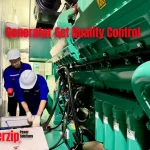
A recorded test should identify the actual generator serial number, fuel used and operating conditions.
Not every test is required in the same form for every generator type. The factory test plan should match the product design and the buyer’s technical requirements.
8. Applications for Chinese Silent Multi-Fuel Generators
Residential Backup Power
Residential backup systems may supply lighting, refrigeration, communications equipment and other selected electrical loads.
The generator must be selected using the rated electrical output on the fuel that will actually be used.
Where an automatic transfer switch is required, starting controls and transfer arrangements must be compatible with the installation.
Agricultural Power Supply
Small generator sets can supply agricultural control equipment, lighting and certain electric water pumps.
Motor starting current is often higher than normal running current. Irrigation pump selection should therefore consider both motor starting demand and generator load acceptance.
Small Commercial Facilities
Shops, workshops and service facilities may require backup power where grid supply is unstable.
Selection depends on the load schedule, required running hours, fuel availability and electrical system.
Temporary and Remote Power
Gasoline operation is useful where fuel must be transported to the site. LPG or natural gas may be practical where a suitable supply system is available.
The best fuel choice depends on local prices, fuel availability, equipment configuration and permitted operating conditions.
Portable engine-driven generators must be operated outdoors in accordance with the manufacturer’s safety instructions. A soundproof enclosure does not eliminate carbon monoxide hazards.
9. Chinese Engine Manufacturers vs. Generator Integrators
These four companies should not be compared as if they perform identical manufacturing activities.
| Manufacturer | Main Manufacturing Role | Relevant Products or Capabilities |
|---|---|---|
| ZONSEN | Engine and generator manufacturing | General-purpose gasoline engines, generator equipment |
| LONCIN | Engine and generator manufacturing | Gasoline engines, gasoline/LPG dual-fuel generators |
| LIFAN | Engine and generator equipment manufacturing | Single-cylinder engines, V-twin engines, LPG/NG standby systems |
| ENERZIP | Generator-set integration | EZ-SA multi-fuel generators, alternator and fuel system integration |
This table is a comparison of manufacturing roles, not a ranking of engine reliability or generator quality.
A buyer sourcing bare engines should concentrate on mechanical specifications, fuel compatibility, spare parts and engine support.
A buyer purchasing a completed silent tri-fuel generator should also evaluate electrical performance, fuel system design, cooling, acoustic treatment and final assembly quality.
10. Frequently Asked Questions
Which Chinese companies manufacture engines for multi-fuel generator applications?
ZONSEN, LONCIN and LIFAN manufacture general-purpose engines used in generator applications. The exact engine model must be verified for the required fuel types.
Is the LONCIN DF6500D a tri-fuel generator?
No. The manufacturer’s published DF6500D specifications cover gasoline and LPG. It is a dual-fuel generator.
Does the LIFAN 2V90F produce 23 kW of electrical power?
No. The published 23 kW figure is net mechanical engine power at 3,600 rpm. Generator electrical output depends on the complete assembly and operating conditions.
Is the LIFAN PD20REG-DB a tri-fuel generator?
No. Its documented configuration supports LPG and natural gas. Gasoline operation is not established by that product specification.
Why is natural gas generator output often lower than gasoline output?
Natural gas affects intake mixture formation and engine combustion conditions. The difference depends on engine design and fuel calibration, so each fuel must have its own rated output.
How is a silent tri-fuel generator different from an open-frame model?
A silent-type generator uses an enclosure and acoustic treatment to reduce noise. The enclosure also requires appropriate cooling airflow, exhaust routing and maintenance access.
Can a 60 Hz generator be used for 50 Hz markets?
Only when the manufacturer provides an approved 50 Hz configuration. Engine speed, alternator output and rated power must be checked separately.
Can an electric-start generator be connected to an ATS?
Electric starting does not automatically establish ATS compatibility. The starting interface, fuel controls, electrical protection and transfer system must be evaluated together.
What documents should buyers request before ordering an ENERZIP EZ-SA generator?
Request the final model specification, engine identification, rated output on each fuel, voltage and frequency, gas pressure requirements, load-test records, warranty terms and spare parts information.
11. Conclusion
ZONSEN, LONCIN and LIFAN manufacture engines and power equipment used in small generator applications. Their products provide different options for engine sourcing and generator development.
ENERZIP integrates selected engine platforms into its EZ-SA multi-fuel generator range.
For buyers, the quality of a completed silent tri-fuel generator depends on the entire machine. Engine specifications, fuel compatibility, alternator sizing, enclosure cooling, electrical protection and factory testing all need to be checked.
The most useful comparison is the electrical output that each generator can maintain on gasoline, LPG and natural gas under clearly defined operating conditions.
ENERZIP Power Technology (Weifang) Co., Ltd.
Weifang, Shandong, China
Website: https://www.enerzip.com/
Editorial note: This manufacturer comparison is published by ENERZIP. ENERZIP product series and engine sourcing information are based on company-supplied records. Other manufacturers’ specifications are identified from publicly available product documentation. No independent comparative reliability testing or national quality ranking is claimed.