Last updated: 09-Apr-2026
Update policy: This guide is reviewed when China’s non-road machinery rules, gas-fired generation pricing mechanisms, data-center energy policy, or major export compliance expectations materially change.
Scope: Practical selection guidance for overseas buyers comparing diesel and natural gas generator solutions sourced from China, with emphasis on compliance, runtime, site type, total cost of ownership, supplier selection, and after-sales risk.
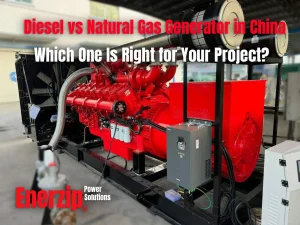
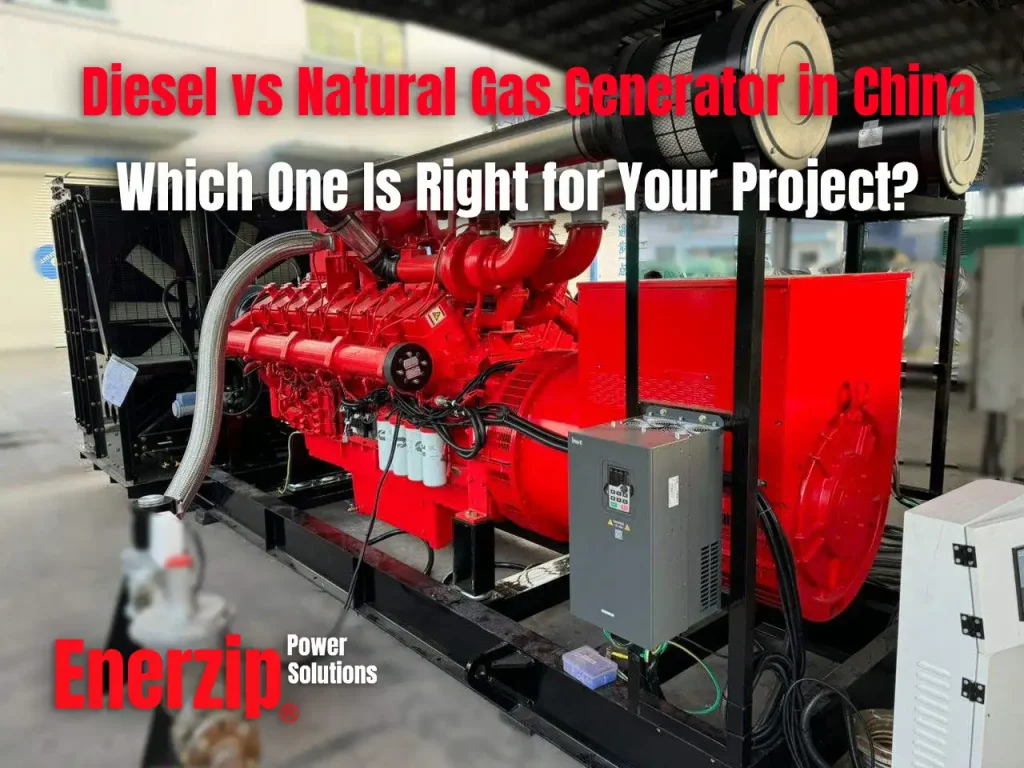
Diesel vs Natural Gas Generator in China: Which One Is Right for Your Project?
Executive Summary
If your project is a pure emergency backup application with low annual operating hours, especially in a remote location without dependable gas infrastructure, a diesel generator from China usually remains the safer and more practical choice. If your project is a high-hour, urban, CHP, distributed-energy, or lower-carbon application, a natural gas generator often becomes the stronger long-term option. If your project is a data center, industrial park, hospital, or other critical facility, the best answer may not be “diesel or gas,” but “what should diesel do, and what should gas do?”
That is the real China answer in 2026.
In China, the diesel-versus-gas decision is no longer shaped only by equipment price, fuel preference, or brochure specifications. It is increasingly shaped by how the project will actually be used, where it will be used, how easy it will be to approve, and what kind of long-term operating burden the owner is willing to carry. Major cities are continuing to tighten controls on high-emission non-road machinery, while national and provincial reforms are giving qualified gas-fired generation a stronger economic position in selected project categories. At the same time, China’s data-center policy is pushing new projects toward lower-carbon and more energy-efficient infrastructure choices.
So the more useful question is not simply:
Which generator is cheaper?
The better question is:
Which generator is easier to deploy, easier to keep compliant, easier to justify over five years, and better matched to the real operating profile of the site?
That is the question Enerzip focuses on when reviewing overseas RFQs.
Quick Project Verdict from Enerzip
When Enerzip reviews a generator project in China, we usually do not start with engine brand or headline price. We start with the project itself.
If the project is a low-hour emergency backup application, especially in a remote area with limited gas access, diesel usually remains the lower-risk solution.
If the project is located in a city, is expected to operate for many hours each year, or needs a cleaner long-term operating profile, natural gas often becomes easier to justify.
If the project is a data center, industrial campus, hospital, or other critical facility with both resilience and long-duration operating needs, a hybrid diesel-plus-gas architecture is often the more realistic answer.
In other words, the correct decision in China is rarely made by fuel type alone. It is made by matching fuel choice to runtime, site condition, compliance burden, infrastructure reality, and long-term project priorities.
Quick Selection Matrix for China Projects
| Project situation | Diesel advantage | Natural gas advantage | Most realistic China answer |
|---|---|---|---|
| Low-hour emergency backup | Fast deployment, simpler fuel storage, mature standby practice | Cleaner image, but may not recover extra complexity if runtime is low | Diesel usually leads |
| Data center / AI backup | Strong emergency backup logic, black-start style resilience, proven critical-power role | Better for lower-carbon long-duration or parallel-duty roles where gas supply is reliable | Often diesel + gas hybrid |
| Urban hospital / school / commercial core | Still workable for backup, but compliance and local sensitivity increase | Lower local emissions, better urban acceptance, stronger long-run ESG story | Gas gets stronger, especially as runtime rises |
| Industrial park / mine / remote construction site | Easy storage and transport, less dependent on site gas infrastructure | Harder without stable pipeline, LNG, or CNG logistics | Diesel usually leads |
| CHP / distributed energy | Backup role only | Better fit for long-hour, stable-load, heat-recovery applications | Natural gas usually leads |
| Temporary / emergency deployment | Fastest to move and deploy | Better only when gas readiness already exists | Diesel usually leads |
Why China Needs a Different Diesel-vs-Gas Decision Framework in 2026
A lot of international articles treat diesel and natural gas as if they were simply two fuels being applied under roughly the same rules. That assumption no longer works well in China.
In China, the answer now depends on at least five practical questions:
- Is the generator fixed or mobile?
- Is the project in a major city, an industrial park, or a remote site?
- Is the unit for backup, main power, or CHP / distributed energy?
- Will it run only for testing and rare outages, or for many hours every year?
- Can the site actually support stable gas supply and gas-side project management?
China’s current base generator-set framework, GB/T 2820.1-2022, remains aligned with ISO 8528-1:2018. That means the rating framework itself is not usually the real problem. The bigger issue is how the project fits into China’s site rules, operating logic, and local compliance environment.
This is why Enerzip does not treat this as a simple engine comparison. For us, the fuel decision is a project-context decision first.
The 2026 Compliance Reality: Diesel Still Matters, but the Burden Is Becoming More Location-Sensitive
City-Level Restrictions Are Getting Stricter for High-Emission Non-Road Machinery
One of the most important 2026 facts is that China’s tightening local restrictions do not affect every diesel generator in exactly the same way. A fixed installed standby generator for a building is not treated exactly like a moveable or site-deployed industrial package. But once a generator is supplied in a mobile, trailer, or construction-style role, local non-road restrictions can become highly relevant.
Beijing is the clearest example. In May 2025, Beijing issued a three-stage plan for prohibiting the use of high-emission non-road mobile machinery. From December 1, 2025, the city bans China I and below machinery citywide. From July 1, 2026, key districts ban China II and below machinery. From December 1, 2026, China II and below machinery is banned citywide across all of Beijing. Shanghai is moving in the same direction by continuing to phase out older China II non-road machinery in citywide pollution-control work.
This does not mean diesel is unusable in China. Diesel remains essential for many backup, remote, and mission-critical applications. But it does mean diesel projects now need a sharper distinction between:
- fixed standby plant versus mobile / site-used unit
- urban deployment versus remote deployment
- low-hour emergency duty versus frequent-use operating duty
In Enerzip’s practical experience, many overseas buyers still underestimate the compliance friction that can attach to diesel in a city-facing or mobile-equipment context. The diesel package may still look cheaper ex-works, but once local deployment restrictions, filing complexity, and environmental sensitivity appear, the real cost of the decision can rise.
Why Gas Benefits from This Trend
Natural gas benefits because it usually enters the project without the same non-road diesel sensitivity in urban-facing deployments. It is not that gas is regulation-free. It is that gas aligns better with the direction of travel in urban China: lower local emissions, better low-carbon optics, and a cleaner story for the project owner. For schools, hospitals, commercial campuses, and many city-core sites, that difference now matters more than it did a few years ago.
Why Natural Gas Now Has Stronger Policy Economics Than Many Buyers Realize
At the national level, the key policy shift is the NDRC/NEA Notice on Improving Generation-Side Capacity Pricing Mechanisms (Price [2026] No. 114). This document explicitly states that provincial price authorities may establish capacity-pricing mechanisms for natural gas generation and use them to recover a proportion of fixed costs. That is a major signal. It means gas generation is no longer being treated only as a costly peaking niche. It is increasingly being recognized as part of China’s reliability and balancing framework.
This point must be read carefully. The notice does not say that every natural gas generator in China automatically receives subsidy support or capacity payments. It says provincial price authorities may establish such mechanisms. The correct conclusion for overseas buyers is this:
In China in 2026, qualified gas-fired projects have a stronger path to policy-backed economics than before.
Provincial and municipal developments reinforce this. Gas-fired CHP and distributed gas generation pricing in places such as Shanghai, as well as selected renewable-gas projects such as biomethane power in Shandong, show that gas-based generation can now fit into real tariff-support and policy-value structures. These do not apply equally everywhere. But they do show that gas economics in China are no longer determined by fuel price alone.
Gas Infrastructure Is Improving, but Not Equally Everywhere
One reason natural gas is becoming more credible in China is that the macro supply side has improved. China’s natural-gas output continues to rise, and the broader gas system is becoming more resilient. But this still does not mean every project site in China has easy gas access.
A stronger national gas system is not the same thing as a site-ready gas solution. For overseas buyers, that distinction is critical.
Gas is becoming more attractive in China.
Gas is not automatically easy everywhere in China.
That is why the right gas question is never just “Is gas cleaner?” It is:
Can this site actually support gas in a reliable, timely, and economical way?
Scenario-Based Selection: How the Right Answer Changes by Project Type
1) Data Centers and AI Computing Projects
This is the fastest-moving category, and data center backup power planning is where the answer becomes most nuanced. China’s green and low-carbon data-center policy makes clear that new data-center infrastructure is expected to improve energy efficiency, lower carbon intensity, and use cleaner energy more intelligently. That policy direction does not remove the need for backup generators. It makes the architecture decision more important.
Diesel still has major strengths here:
- fast emergency response
- mature standby architecture
- proven role in backup resilience
- independence from real-time gas delivery
That is one reason high-power diesel demand tied to data centers has remained strong. A recent CCTV market report highlighted rapid growth in Chinese generator-set exports and especially strong growth in high-power diesel packages used for data-center applications. This is best read as a strong market signal rather than a universal rule, but it still matters.
At the same time, data-center energy policy and long-duration low-carbon pressure make natural gas more attractive in projects that also require paralleling and grid-connect systems for parallel-duty, long-duration, or cleaner-support roles.
That is why Enerzip’s practical answer for many China data-center projects is:
Diesel for emergency resilience. Gas for cleaner long-duration or parallel-duty support where the site can truly support it.
2) Urban Hospitals, Schools, and City-Core Commercial Projects
In dense urban projects, gas becomes more attractive because the decision is no longer only about engine price. It is also about:
- environmental sensitivity
- public acceptance
- operational optics
- future policy tightening risk
- the site’s carbon and ESG story
Diesel still works in these projects, especially when the requirement is a hospital backup generator for low-hour emergency duty. But as runtime rises, or as the project owner wants a more defensible long-run operating profile, gas gets stronger.
This is one reason Enerzip does not give the same answer to a hospital backup project in a city core that we would give to a remote industrial site. The kW requirement might be similar. The project context is not.
3) Industrial Parks, Mines, and Remote Construction Sites
This is where diesel still wins more often, especially in mining power generator applications and other remote industrial projects.
If the site has:
- no dependable gas infrastructure
- no easy LNG/CNG logistics
- no appetite for more complicated gas handling
- and a strong need for fast deployment
diesel generator sets usually remain the simpler answer.
This is also where a lot of “green” articles become unrealistic. It is easy to say gas is cleaner. It is harder to make gas work well on a remote site that simply is not prepared for it.
For Enerzip, the rule here is practical:
If the site is remote, mobile, infrastructure-light, and time-sensitive, diesel usually remains the lower-risk answer for many construction site generator and temporary industrial power applications.
4) CHP, Distributed Energy, and Stable Industrial Load
If the project is genuinely CHP, trigeneration, or stable distributed energy, natural gas generator sets usually deserve to lead the conversation.
Why?
- gas aligns better with long-hour economics
- gas fits better with lower-carbon objectives
- gas is more compatible with heat-recovery value
- gas is more likely to fit evolving policy support logic
Diesel may still provide backup. But it is rarely the best central technology for long-hour CHP logic in China in 2026.
A useful Enerzip rule is this:
If the project can use the heat, can run enough hours, and has reliable gas, gas usually deserves to lead the conversation.
The Real China TCO Question: Hidden Burden vs Hidden Burden
A realistic five-year TCO comparison in China should include more than:
- purchase price
- fuel cost
- maintenance cost
It should also include:
- compliance friction
- infrastructure readiness
- project-delay risk
- site restrictions
- after-sales burden
- spare-parts planning
Diesel’s Hidden Burden
Diesel’s hidden burden in China is often not the engine itself. It is the wrong deployment context.
A diesel package that looks cheaper at EXW level can become harder to file, harder to justify, or harder to operate smoothly if the project is:
- in a sensitive city
- mobile or site-used
- expected to run longer than originally planned
- or exposed to stronger local environmental scrutiny
Gas’s Hidden Burden
Gas’s hidden burden is different. Gas often asks the project to carry:
- more infrastructure preparation
- more gas-quality clarity
- more front-end engineering
- and sometimes a longer or more specialized project cycle
That is why Enerzip’s TCO view is not “diesel is cheap, gas is expensive” or “gas is green, diesel is old.” Our practical view is:
In China, the real TCO battle is diesel’s compliance friction versus gas’s infrastructure burden.
China Supply Chain Reality: Diesel Moves Faster, Gas Rewards Better Planning
Diesel Projects Usually Move Faster
Diesel projects in China are usually easier to push quickly because:
- platform combinations are more mature
- supply chains are more standardized
- field service is easier to organize
- spare parts are easier to source
- project teams are more familiar with the deployment logic
That is why urgent projects, temporary industrial sites, and emergency power jobs still lean toward diesel even when gas looks attractive in theory.
Gas Projects Usually Need Better Front-End Definition
Gas projects can be excellent long-run choices, but they do not behave like diesel projects with a different fuel. Gas projects usually require better clarity around:
- gas composition
- gas train configuration
- ignition and control strategy
- safety integration
- project timing
- after-sales specialization
In Enerzip’s experience, many failed gas projects were not caused by bad engines. They were caused by weak project definition.
Procurement Traps Overseas Buyers Should Still Watch
1. Certification Mismatch
Do not accept generic “we have CE / EPA / ISO” statements. Ask whether the exact model, exact engine, exact alternator configuration, and exact destination requirement all match the compliance documents.
2. PRP / ESP Confusion
A quotation is not technically fair if one supplier quotes a standby-type number and another quotes a prime-type number without stating the basis clearly.
3. Gas-Quality Mismatch
For gas projects, this is one of the biggest technical traps. If gas composition is not defined early, the project can fail even when the hardware looks good.
4. Packaging and Preservation Shortcuts
A China-sourced generator must survive trucking, port handling, ocean transport, customs clearance, and site unloading before it ever starts. Shipping preparation matters.
5. After-Sales Realism
A low-cost generator without a workable parts and service plan is not truly low cost.
Why Enerzip’s C Series and P Series Stand Out for Global Projects
For overseas buyers sourcing from China, price is never the only concern. Long-term reliability of the core components and the strength of after-sales support matter just as much. This is where Enerzip’s C Series and P Series offer a practical advantage.
Enerzip’s C Series uses Cummins engine platforms. The Cummins engine itself is supported through Cummins’ global warranty and service system for the engine, in line with Cummins’ own terms and service conditions. The C Series can also be configured with STAMFORD alternators, and those alternator platforms align with their corresponding global service and warranty support systems according to the applicable brand terms.
Enerzip’s P Series uses genuine Perkins engine platforms. The Perkins engine itself is supported through Perkins’ global warranty and service system for the engine, in line with Perkins’ own terms and service conditions. The P Series can also be configured with ABB alternators, and those alternator platforms align with their corresponding service and warranty support systems according to the applicable brand terms and local service conditions.
Both the C Series and P Series are available in:
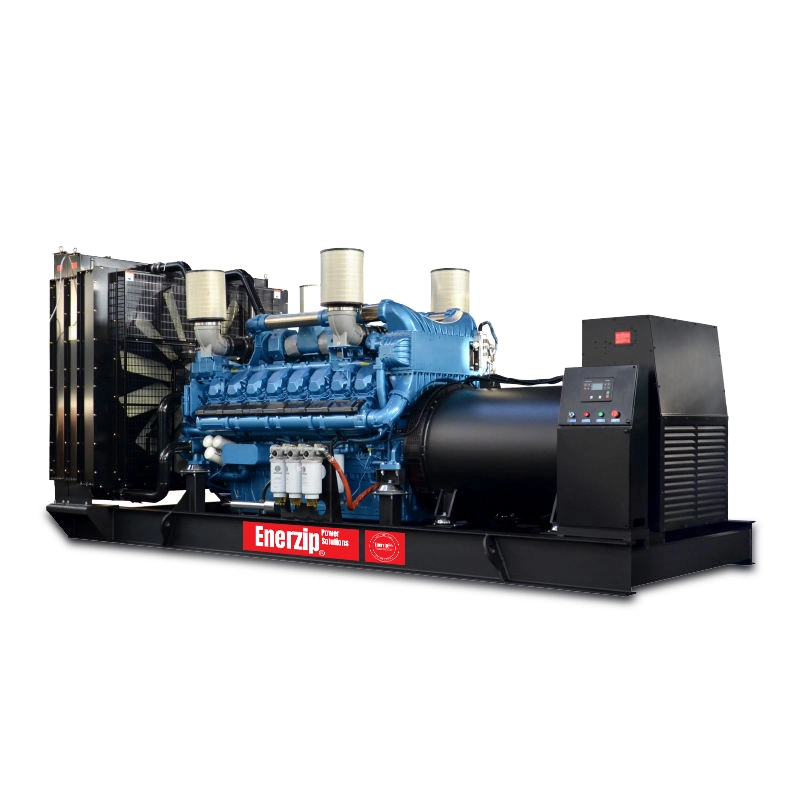
- diesel generator sets
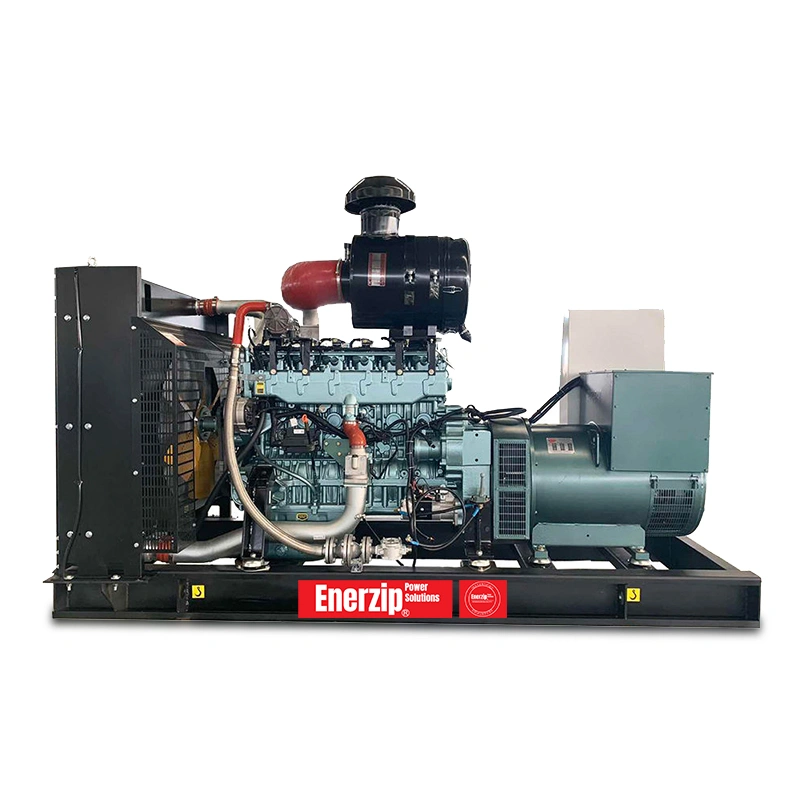
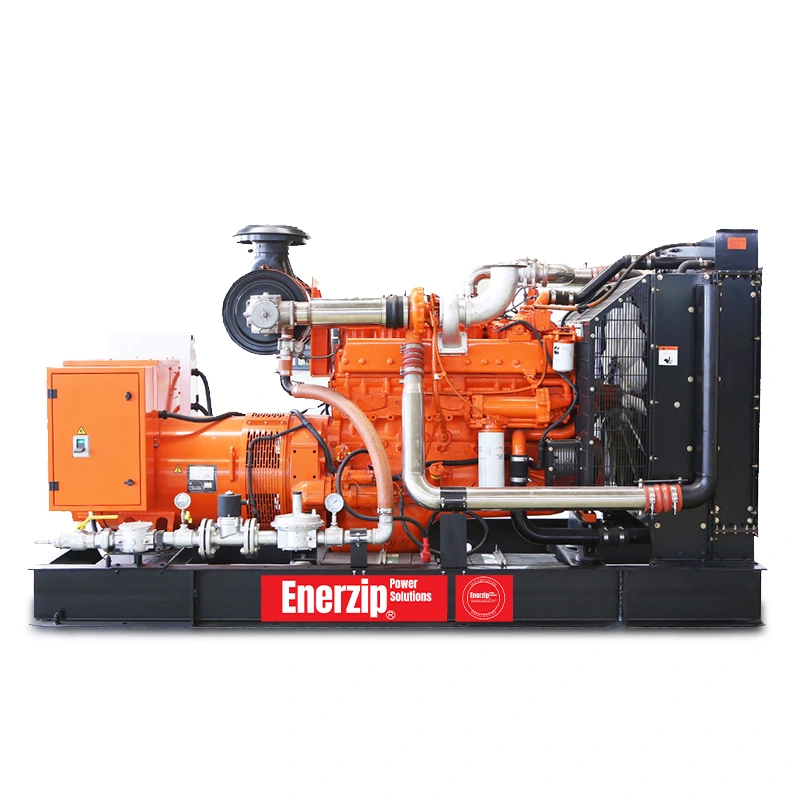
- natural gas generator sets
That gives buyers flexibility to choose the right fuel solution without giving up globally recognized engine and alternator platforms.
For these two series, the support structure is clear:
- the engine platform is supported through the relevant engine brand’s service and warranty system
- the alternator platform is supported through the relevant alternator brand’s corresponding service system
- the complete generator set warranty is provided directly by Enerzip as the genset manufacturer and system integrator
If an operating or quality issue arises, Enerzip provides remote technical support. Where required, on-site technical service can be arranged, subject to project location and the agreed service terms.
For global buyers, this creates a practical advantage: you are not only buying a generator from China. You are buying a complete power package with clearer service responsibility, globally recognized core platforms, and direct manufacturer support from Enerzip.
Enerzip’s Final Project Logic: Duty First, Fuel Second
This is the most important Enerzip viewpoint in this article:
In China in 2026, the right diesel-vs-gas decision usually starts with duty, not fuel.
If the duty is:
- low-hour emergency backup, diesel usually leads
- high-hour urban operation, gas becomes stronger
- CHP or stable distributed energy, gas usually leads
- remote and infrastructure-light deployment, diesel usually leads
- data center or critical industrial resilience, hybrid architecture often makes more sense than either fuel alone
That is what makes this a China article rather than a generic generator article.
The real decision is no longer only:
diesel or gas?
The real decision is:
What does the site need, what can the local policy environment tolerate, what infrastructure exists, and what hidden cost is the project more willing to carry?
What Enerzip Needs Before Recommending Diesel or Gas
To recommend the right generator solution for a China-based or China-sourced project, Enerzip usually asks for the following project information first:
- Project location: city, province, industrial park, remote site, or export destination
- Installation type: fixed installed plant, mobile package, trailer unit, or temporary site deployment
- Operating duty: emergency backup, prime power, continuous duty, CHP, or parallel-duty support
- Estimated annual operating hours: testing only, occasional outage support, or frequent long-hour operation
- Load profile: average load, peak load, largest motor starting requirement, and any critical step loads
- Power requirement: required kW/kVA, voltage, frequency, phase, and power factor
- Fuel condition: diesel-only site, pipeline gas available, LNG/CNG option, or gas composition report available
- Project priorities: lowest CAPEX, fastest delivery, lower carbon footprint, urban compliance, or lowest long-term TCO
- Service expectation: remote technical support only, spare-parts package, local technician training, or on-site service requirement
The clearer the RFQ, the more accurately Enerzip can recommend whether diesel, natural gas, or a hybrid architecture is the better fit for the project.
Final Recommendation for Overseas Buyers
If you are comparing a diesel generator and a natural gas generator from a China supplier, do not start by asking only for the best price.
Start with the project definition:
- Where is the project?
- Is the unit fixed or mobile?
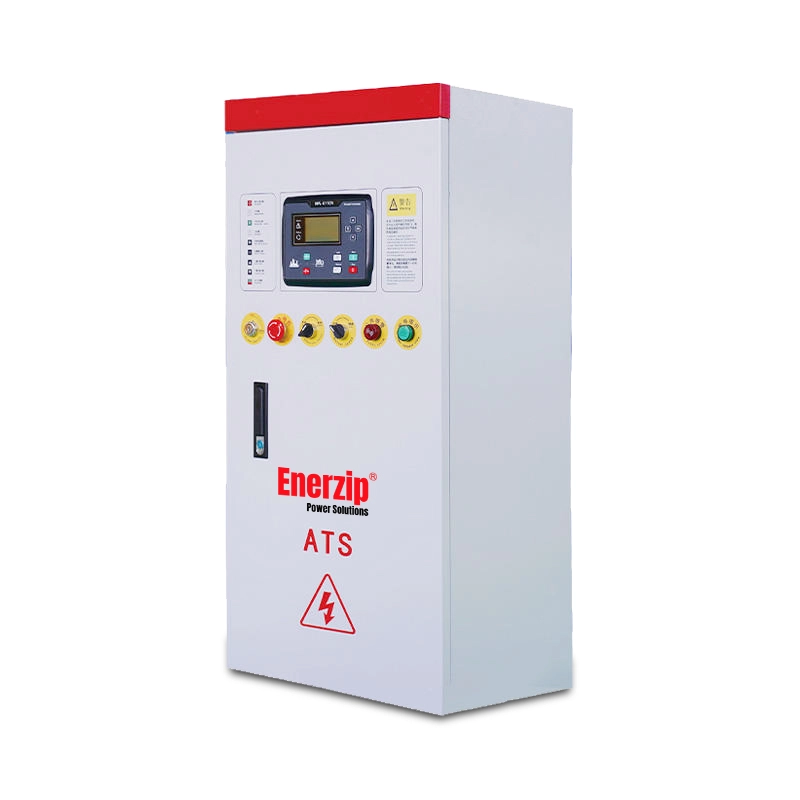
- Is it backup with an automatic transfer switch, main power, or CHP?
- How many hours will it really run?
- Is pipeline gas, LNG, or CNG available?
- Is the site in an urban-sensitive area?
- Does the project need a stronger carbon and ESG story?
- What compliance path will the site actually face?
Once those answers are clear, the diesel-vs-gas decision becomes much easier—and much safer.
In Enerzip’s view, that is the most important sourcing lesson for 2026:
The best generator from China is no longer the one with the lowest purchase price. It is the one with the lowest decision risk for the real project.
FAQ
Which is better in China, a diesel generator or a natural gas generator?
Neither is always better. In China, diesel generators are usually stronger for low-hour backup, remote deployment, and fast installation, while natural gas generators are often more attractive for high-hour, urban, CHP, and lower-carbon projects.
When should I choose a diesel generator in China?
A diesel generator is usually the better choice in China when the project is a low-hour emergency backup application, a remote site, a temporary deployment, or a location without dependable gas infrastructure.
When should I choose a natural gas generator in China?
A natural gas generator is usually the better choice in China when the project is urban, high-hour, CHP-oriented, lower-carbon focused, or supported by stable gas supply and suitable project conditions.
Are diesel generators restricted in China?
Diesel generators are not universally restricted in China. However, mobile, transportable, and non-road equipment can face stricter local compliance requirements in major cities, especially for older emissions stages.
Are natural gas generators subsidized in China?
Not all natural gas generators are automatically subsidized in China. However, selected gas-fired projects in some regions may benefit from capacity-pricing mechanisms, tariff structures, or other policy support depending on project type and location.
Which is better for a data center project in China, diesel or natural gas?
For many data center projects in China, diesel remains the backbone of emergency resilience, while natural gas can become attractive for cleaner long-duration or parallel-duty support where site conditions allow. A hybrid architecture is often the most practical solution.
Which is better for a remote industrial site in China, diesel or natural gas?
For remote industrial sites in China, diesel is often the lower-risk choice because it is less dependent on pipeline gas, LNG or CNG logistics, and specialized gas infrastructure.
What does Enerzip need before recommending diesel or natural gas?
Enerzip usually needs the project location, installation type, operating duty, estimated annual hours, load profile, required kW and kVA, voltage and frequency, fuel condition, project priorities, and service expectations before recommending diesel, natural gas, or a hybrid architecture.
Does Enerzip offer both diesel and natural gas generator sets?
Yes. Enerzip offers both diesel generator sets and natural gas generator sets, including C Series and P Series solutions built around internationally recognized engine and alternator platforms.
What is the biggest mistake when comparing diesel and gas generators in China?
The biggest mistake is comparing only purchase price or fuel type without checking the real project context, including operating hours, compliance burden, site location, gas access, and long-term total cost of ownership.
References
- GB/T 2820.1-2022, Reciprocating internal combustion engine driven alternating current generating sets — Application, ratings and performance
- ISO 8528-1:2018, Reciprocating internal combustion engine driven alternating current generating sets — Part 1: Application, ratings and performance
- NDRC / NEA, Notice on Improving Generation-Side Capacity Pricing Mechanisms (Price [2026] No. 114)
- Action Plan for the Green and Low-Carbon Development of Data Centers
- Beijing Municipal Ecology and Environment Bureau, Notice on Prohibiting the Use of High-Emission Non-road Mobile Machinery
- Shanghai policy materials on accelerating the replacement and update of China II non-road machinery
- CCTV Energy, High-Power Diesel Generator Sets for Data Centers and Export Growth Report