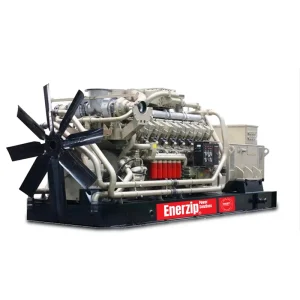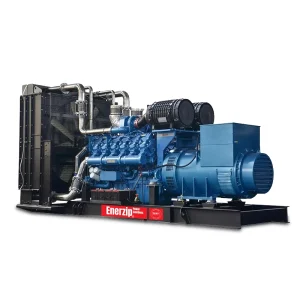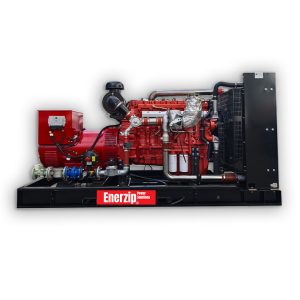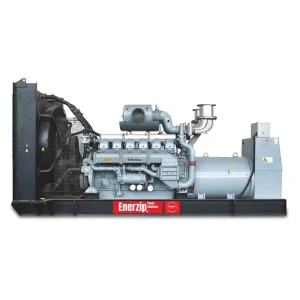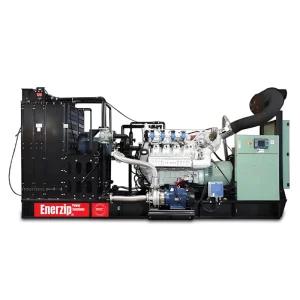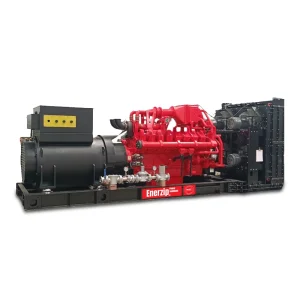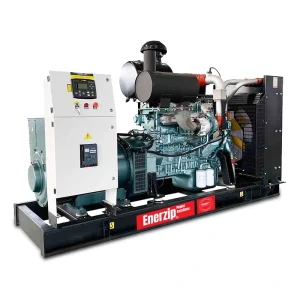

Enerzip supplies natural gas generator sets suitable for standby power, prime power, long-duration operation, CHP projects, oilfield power supply, commercial buildings, industrial plants and on-site power station applications.
When selecting a natural gas generator set, one should not focus solely on kVA. Factors such as gas type, gas pressure, methane content, load conditions, operating hours, ambient temperature, altitude, ventilation conditions, enclosure type, ATS, and parallel and grid-connection requirements will all influence the final configuration.
Enerzip offers natural gas generator sets ranging from 20 kVA to 5000 kVA, covering small commercial power requirements, medium-power industrial applications, CHP systems, large-scale industrial power supply, as well as megawatt-class oilfield or on-site power plant projects.
Features:
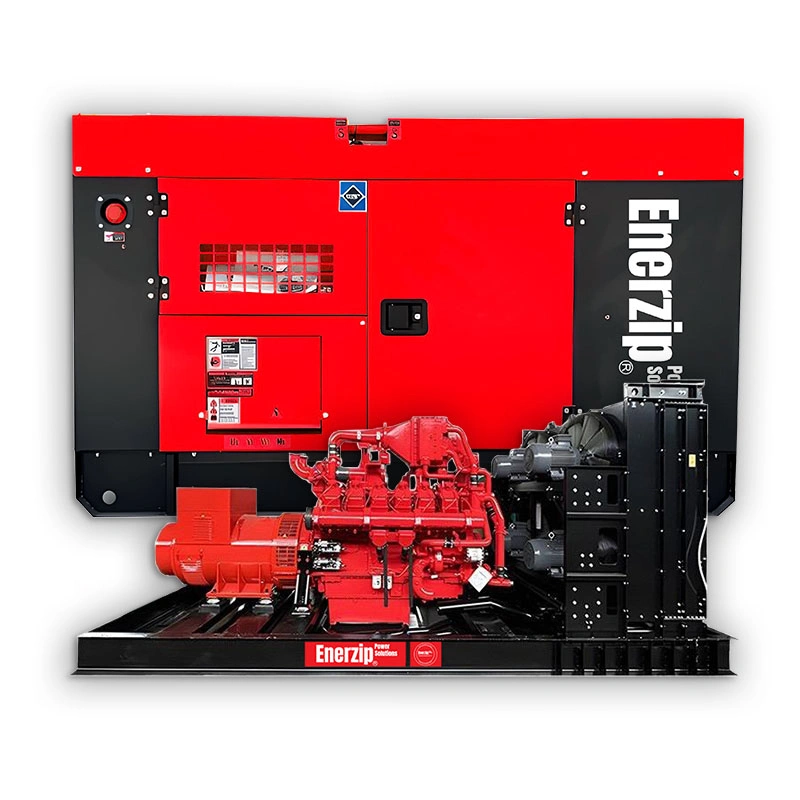
Enerzip natural gas generator sets are categorised according to engine platform, power range, gas specifications, operating mode and application type. The purpose of this series page is to assist purchasers in understanding the differences between Enerzip’s main natural gas generator platforms before selecting a specific model.
Different sites do not require identical configurations. Restaurants, small factories, hotel CHP systems, industrial estates, oilfield sites and on-site power stations may require different engine platforms, control systems, cooling systems, installation configurations and gas specifications.
Before recommending a specific series, Enerzip will assess the available gas conditions at the site, the required power output, operating mode, load requirements, site conditions and system scope. This helps to match the generator set to the actual operating conditions, rather than selecting it based solely on the rated kVA.
Enerzip offers natural gas generator sets suitable for small commercial users, industrial plants, CHP projects, oilfield applications and megawatt-class power stations. Available platforms include the E, D, MA, C, P, W and J Series, covering a range of power ratings and operating conditions.
The operational performance of natural gas generator sets depends on gas quality and site conditions. Before recommending a configuration, Enerzip will review the gas type, inlet pressure, pressure stability, methane content (where applicable), moisture, impurities, ambient temperature, altitude, ventilation conditions, load profile and operating mode.
Every natural gas generator set is inspected in accordance with the confirmed order configuration prior to dispatch. Key inspection items may include wiring, controller settings, protection functions, gas valve assembly layout, cooling configuration, enclosure condition and basic operational performance.
Enerzip supports customers with model selection, fuel gas review, configuration confirmation, installation questions, commissioning coordination, spare parts planning, and repeat-order records. For ATS, paralleling, grid synchronization, CHP, or containerized systems, the main technical scope should be confirmed before production.
Natural gas generator sets are suitable for sites with a stable gas supply that require standby power, prime power, long-duration operation, CHP heat recovery, or multi-unit power generation.
Compared to diesel generator sets, natural gas generator sets represent a practical choice for sites with a stable gas supply, extended operating hours, lower fuel storage requirements, or where there is a need to utilise waste heat. The overall cost-effectiveness depends on gas prices, operating hours, maintenance schedules, site conditions and system design.
Natural gas generator sets should be selected based on gas supply conditions, required power output, load type, operating hours, ambient temperature, ventilation conditions, installation configuration and control system requirements.
E Series Natural Gas Generator Sets – 20–313 kVA | Enerzip Engine
The E Series is suitable for small to medium-sized users requiring a simple design, manageable investment costs and easier maintenance. Typical applications include farms, workshops, restaurants, small factories, shops and residential estates.
D Series Natural Gas Generator Sets – 143–376 kVA | Doosan Powered
The D Series is suitable for medium-power industrial and commercial users. It is commonly used in factories, cold stores, commercial buildings, small industrial sites, and locations with water pumps, air compressors, refrigeration equipment or mixed loads.
MA Series Natural Gas Generator Sets – 55–715 kVA | MAN Powered
The MA Series is suitable for projects prioritising power generation efficiency and heat recovery. It is ideal for hotels, spas, hospitals, greenhouses, sewage treatment plants, and other facilities capable of utilising cylinder jacket water or exhaust heat.
C Series Natural Gas Generator Sets – 41–1650 kVA | Cummins Powered
The C Series is one of Enerzip’s primary industrial-grade natural gas generator platforms. It is suitable for industrial plants, oil and gas projects, commercial standby power, CHP systems, peak shaving, IPP projects and multi-unit power systems.
P Series Natural Gas Generator Sets – 375–1238 kVA | Perkins Powered
The P Series is suitable for heavy-duty industrial power supply and base-load applications. Suitable for manufacturing plants, industrial estates, large commercial facilities, CHP/CCHP systems and long-duration operation projects.
W Series Natural Gas Generator Sets – 38–1750 kVA | Weichai Powered
The W Series offers a wide power range for industrial users requiring cost control and flexible capacity planning. Suitable for factories, commercial buildings, industrial power projects, and treated associated gas applications that meet agreed gas specifications.
J Series Natural Gas Generator Sets – 625–5000 kVA | CNPC Jichai Powered
The J Series is suitable for megawatt-scale gas-fired power projects. It is primarily used for oilfield associated gas, flare gas utilisation, on-site power stations, large-scale industrial power stations and multi-unit gas-fired power systems.
Pipeline natural gas is generally more stable than associated gas, treated biogas or LNG vapourised gas; however, gas conditions should still be verified before finalising the configuration of a natural gas generator.
Key gas information includes gas type, inlet pressure range, pressure stability, methane content (if applicable), moisture content, impurities and site-specific gas treatment requirements.
Gas consumption data should be treated as indicative values. The actual gas consumption of the generator depends on the gas composition, lower heating value, engine calibration, operating load and site conditions.
Different operating modes require different natural gas generator configurations. Standby power, prime power, partial continuous duty applications, CHP, grid-connected operation and multi-unit systems may require different cooling capacities, control logic, protection settings, maintenance schedules and switchgear configurations.
The type of load is also important. Pumps, air compressors, refrigeration equipment, HVAC systems and other motor loads may generate sudden load variations during start-up or operation. These load conditions should be assessed before confirming the model.
Some natural gas power generation projects can utilise recovered heat from cylinder jacket water or exhaust gases for hot water, process heat, greenhouse heating, hotel energy systems or industrial heat requirements.
A CHP-ready configuration is only of practical value where there is a genuine thermal load on-site. If the recovered heat cannot be utilised, a standard natural gas power generation configuration may be more practical.
Grid connection depends on local grid permits, protection settings, metering, switchgear and commissioning requirements. Enerzip can provide natural gas generator configurations suitable for synchronous control and multi-unit operation; however, local grid connection requirements should be confirmed by the project owner, EPC contractor or utility company.
To prepare an appropriate quotation, please send us the project details you currently have available:
Fuel Gas:Gas type, inlet pressure, pressure stability, methane content, and moisture or impurity levels.
Power: Required kVA/kW, voltage, frequency, daily operating hours, main loads, and whether there is a maximum motor load.
Mode: Standby, prime, continuous operation, ATS, grid-connected, or whether multiple units need to be operated in parallel.
Site: Ambient temperature, altitude, indoor or outdoor installation, ventilation conditions, noise restrictions, and preferred configuration: open-type, sound-insulated or containerised.
Natural gas generator sets are suitable for applications where a gas supply is available on-site and where standby power, prime power, partial continuous operation, CHP heat recovery or multi-unit power generation is required.
The final configuration depends on gas availability, operating hours, load type, site conditions, installation method, and whether the system requires an ATS, parallel operation, grid synchronisation or heat recovery.
Hotels, shopping centres, office buildings, schools, hospitals and residential estates can utilise natural gas generator sets as standby power or for extended on-site power supply where a gas supply is available.
Typical loads include lifts, HVAC systems, lighting, water pumps, fire protection systems, security systems and mixed building loads. When units are installed outdoors or near areas where people are present, silent or containerised units may be selected.
Factories and industrial sites can utilise natural gas generator sets for standby power, prime power, peak shaving, CHP or long-duration operation.
Common loads include motors, pumps, air compressors, refrigeration equipment, production lines, lighting, control systems and auxiliary equipment. Motor starting requirements, load variations, gas pressure, cooling capacity and maintenance space should be assessed before finalising the model selection.
At oil and gas field sites, natural gas generator sets can be used to utilise treated associated gas or flare gas, provided the gas meets mutually agreed specifications.
Typical applications include campsite power supply, drilling auxiliary loads, water injection systems, pumping equipment, site facilities and on-site power stations. Such sites typically require consideration of gas treatment, pressure regulation, dust protection, high-temperature heat dissipation and containerised installation.
Where there is a genuine heat demand at the site where the natural gas generator set is located, CHP or CCHP configurations may be implemented. Heat recovered from cylinder jacket water and exhaust gases can be utilised for hot water, process heat, greenhouse heating, hotel energy systems or district energy systems.
For projects evaluating reciprocating engine CHP solutions, purchasers may also refer to CHP technologies for reciprocating engines for technical guidance. CHP only offers practical value when the site can effectively utilise the recovered heat.
Where gas supply, electrical design and backup power strategies are suitable, natural gas generator sets can be used in selected data centres, telecommunications sites and telecommunications facilities.
Such projects typically require clear ATS logic, synchronisation control, redundancy planning, stable power output and commissioning verification. The final system design should match the required backup level and local site conditions.
IPP projects, on-site power stations, industrial parks, oilfield sites and large-scale facilities may utilise multiple natural gas generator sets operating in parallel.
Such systems typically require synchronisation control, load sharing, switchgear, protection settings, metering, gas supply planning, and local grid permits for grid connection. Multi-unit designs can also support phased expansion and maintenance planning.
This is because the configurations of the generators differ. The engine platform, generator brand, controller, gas valve assembly, radiator, enclosure, ATS, parallel cabinet, CHP components, spare parts, testing and documentation all affect the price. For example, assuming all other specifications are identical, a 500 kVA open-type unit and a 500 kVA containerised CHP solution will differ in price, as the container housing and modification work will add to the cost.
This depends on the type of gas, inlet pressure, pressure stability, methane content, and the levels of moisture and impurities. Pipeline natural gas is generally easier to configure; however, for associated gas, LNG vapourised gas, treated biogas or mixed gas, gas conditions should be checked before confirming the model.
Gas pressure depends on the engine model and the design of the gas valve assembly. Please provide the range of inlet pressure available on-site, as well as whether the pressure remains stable during operation. If the pressure drops under load, a pressure regulator or buffer tank may be required.
A standard package typically includes the engine, generator, controller, radiator, base, gas valve assembly, wiring and basic protection systems. Depending on the order requirements, Enerzip can also provide soundproof enclosures, containerised solutions, ATS, parallel control cabinets, synchronisation control, CHP components, spare parts and export documentation.
Yes. Enerzip can inspect the unit prior to shipment based on the confirmed order configuration. Common inspection items include wiring, controller settings, protection functions, gas valve assembly layout, radiator layout, enclosure condition and basic operational performance. Special FAT testing requirements should be confirmed prior to production.
Please confirm the installation space, airflow direction, radiator exhaust direction, gas inlet position, exhaust outlet, noise limits, cable entry points, maintenance access, lifting methods, and whether ATS, parallel operation, CHP or fire safety devices are required.