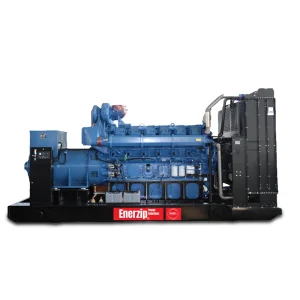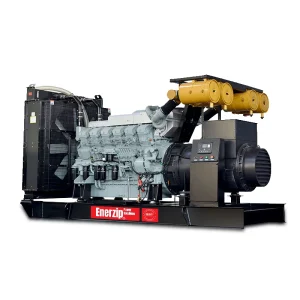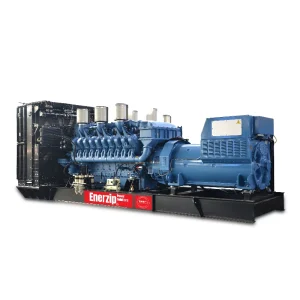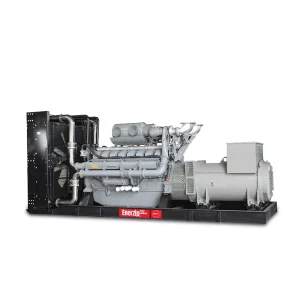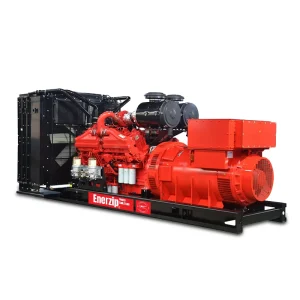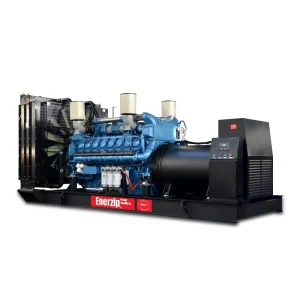

Enerzip supplies high-voltage generator sets suitable for large-scale sites where low-voltage distribution is impractical. For projects involving long-distance cabling, large motor loads or existing medium-voltage distribution networks, the use of direct output at 3.3kV, 6.3kV/6.6kV, 10.5kV, 11kV or 13.8kV can help reduce current, minimise cable sizes, and lower voltage drops and thermal losses.
Enerzip’s high-voltage generator sets cover a range of 275–3750 kVA and comprise six series: C, M, MS, P, W and Y. They are suitable for mines, data centres, industrial plants, water infrastructure, oil and gas facilities, utilities, large-scale campuses and medium-voltage power systems.
Features:
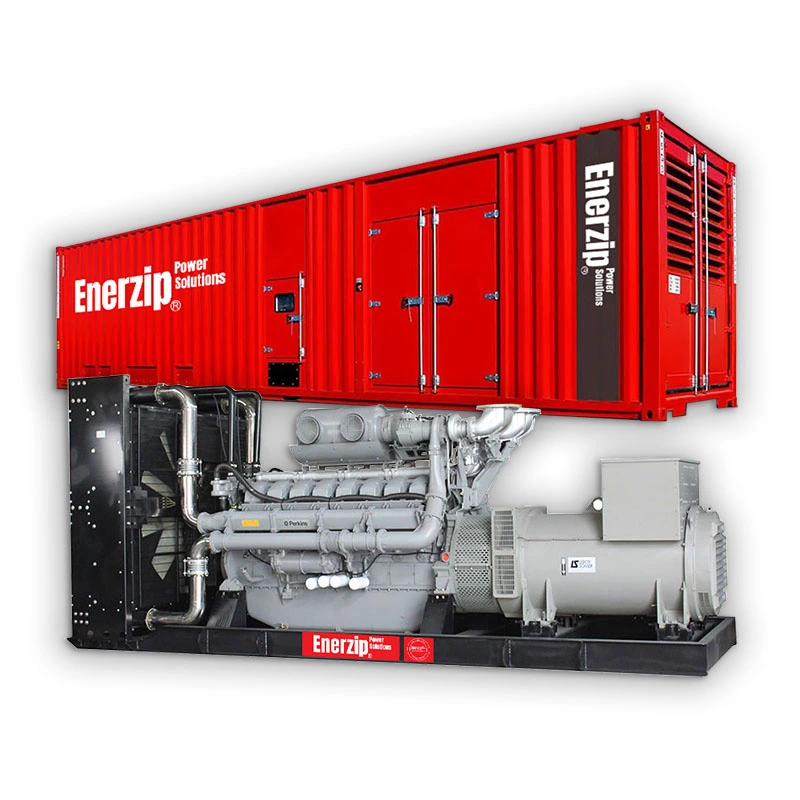
Enerzip high-voltage generator sets are categorised according to engine platform, voltage rating, power range, mounting configuration and the scope of medium-voltage system integration.
Before selecting a specific model, compare Enerzip’s main high-voltage generator series. High-voltage generator sets are selected by kVA and finally configured based on voltage rating, cable length, maximum motor size, load surge, operating mode, cooling conditions, switchgear scope, protection requirements and testing requirements.
For applications involving long feeder lines, large motors, containerised power houses, multi-unit operation or grid-connected systems, Enerzip will recommend the appropriate series based on this information.
Enerzip offers high-voltage generator sets with output options of 3.3kV, 6.3kV / 6.6kV, 10.5kV, 11kV and 13.8kV. Available configurations include open-type, sound-attenuated/weatherproof and containerised Power House units. The final voltage rating and unit configuration should be matched to the on-site power distribution system and installation conditions.
Prior to confirming the configuration, Enerzip will assess the required VCB switchgear, CT/PT metering, protection relay scope, synchronisation logic, earthing arrangements, cable entries, and connection interfaces with the on-site medium-voltage system.
Each high-voltage generator set undergoes inspection in accordance with the confirmed order scope prior to dispatch. Key inspection items may include wiring, insulation arrangements, controller settings, protection logic, switchgear interfaces, cooling layout, enclosure condition and basic operational performance. Any special FAT testing requirements should be confirmed prior to production.
Enerzip assists customers with series selection, voltage confirmation, switchgear scope assessment, container layout coordination, installation issue consultation, commissioning coordination, spare parts planning and repeat order documentation. For grid-connected, multi-unit or containerised systems, technical boundaries must be confirmed prior to production.
275–3750 kVA | 3.3–13.8 kV
Enerzip high-voltage generator sets are suitable for large-scale sites requiring medium-voltage power generation rather than low-voltage distribution. Such applications are commonly found in large industrial plants, mines, data centres, water infrastructure, oil and gas facilities, industrial parks, utilities, and large campuses utilising medium-voltage electrical networks.
We recommend projects involving long-distance cabling, large motors or a high concentration of distributed loads to utilise direct 3.3 kV, 6.3 kV / 6.6 kV, 10.5 kV, 11 kV or 13.8 kV outputs, as this helps to reduce current, cable sizing, voltage drop and thermal losses compared to low-voltage outputs. Where the on-site electrical system already utilises medium-voltage distribution, it is also easier to connect to the existing medium-voltage busbar.
The correct configuration of a high-voltage generator set depends on the voltage rating, load type, largest motor, load inrush, operating mode, cable distance, ambient temperature, altitude, ventilation conditions, enclosure type, switchgear scope, protection requirements and testing requirements.
High-voltage generator projects typically involve more engineering details than standard low-voltage generator sets. Before finalising the model, the purchaser should first confirm the electrical system boundaries, load characteristics, installation conditions and protection requirements.
Voltage level and distribution distance:
The voltage level should match the on-site medium-voltage network. For projects utilising 6.6 kV, 10.5 kV, 11 kV or 13.8 kV distribution, direct medium-voltage output is often more practical, particularly where feeder lengths are long or low-voltage cable sizes are excessive.
MV switchgear and protection scope:
High-voltage generator systems typically require VCB switchgear, CT/PT metering, protection relays, synchronisation logic, earthing configurations and interlocking designs. The interfaces between the generator sets, switchgear and the on-site distribution system must be clearly defined prior to manufacture.
Motor starting and load steps:
At sites where sudden changes in motor load may occur—such as those involving large water pumps, crushers, compressors, chillers, conveyors, flood pump station drives and large HVAC loads—the maximum motor power, start-up methods, load sequencing and anticipated load sags should be assessed prior to confirming the generator platform and capacity.
Cooling and ventilation:
High-voltage generator sets are often installed within soundproof enclosures, shipping containers or dedicated power houses. These installation configurations may increase airflow resistance. If the application site is subject to high temperatures, high dust levels or space constraints, the direction of radiator exhaust, air intake area, ventilation pathways, exhaust outlets and maintenance space should be confirmed as soon as possible.
Synchronization and multi-unit operation:
Clear control logic is required for projects involving multiple generator sets, whether for grid-connected, islanded or microgrid operation. Synchronisation control, load sharing, reverse power protection, under-voltage/over-voltage protection, under-frequency/over-frequency protection, ground fault protection, metering and communication interfaces should be confirmed in advance as part of the electrical scope. For general planning, the purchaser may refer to the microgrid overview as background material; the US Department of Energy describes a microgrid as a system capable of operating either connected to the main grid or independently of it.
The Enerzip high-voltage generator range comprises six series platforms, each selected based on power range, engine brand, installation type, load type and project budget.
M Series High Voltage Generators – 275–3000 kVA | MTU Powered
The M Series is suitable for projects requiring rapid load response, high power density and medium-voltage power distribution. Typical applications include data centres, semiconductor facilities, critical infrastructure, and large-scale standby or prime power systems.
C Series High Voltage Generators – 900–3360 kVA | Cummins Powered
The C Series is designed for heavy-duty industrial and critical power applications. It is suitable for data centres, mines, oil and gas facilities, infrastructure, large-scale standby systems and multi-unit power stations.
MS Series High Voltage Generators – 1250–2275 kVA | Shanghai Mitsubishi Powered
The MS Series is suitable for sites requiring a compact footprint and high output. It is commonly used in industrial parks, commercial facilities, urban infrastructure, generator rooms with limited space, and containerised systems.
P Series High Voltage Generators – 884–2250 kVA | Perkins Powered
The P Series is designed for industrial medium-voltage power systems where ease of maintenance and long-term operational planning are prioritised. Suitable for manufacturing plants, utilities, water infrastructure, commercial complexes, and industrial standby or prime power applications.
Y Series High Voltage Generators – 900–3000 kVA | Yuchai Powered
The Y Series is suitable for heavy-duty industrial applications requiring high torque, durability and cost control. It is suitable for use in mining, infrastructure, manufacturing, water projects and harsh site conditions.
W Series High Voltage Generators – 900–3750 kVA | Weichai Powered
The W Series provides high-capacity medium-voltage power for large-scale industrial projects, mining, utility installations, industrial parks and multi-megawatt expansion projects.
The technical scope of the high-voltage generator project must be clearly confirmed prior to production. This includes the voltage class, generator power rating, scope of the medium-voltage switchgear, protection relay functions, CT/PT transformation ratios, earthing arrangements, cable entry directions, synchronisation requirements, cooling layout, container design, and FAT/SAT testing requirements.
For grid-connected or utility-connected systems, the project owner or EPC contractor should confirm grid connection regulations with the local utility in advance. IEEE 1547 is one of the standards frequently referenced for the interconnection of distributed energy resources with power systems; however, actual projects should still be governed by local regulations and project specifications.
When procuring emergency and standby power systems for buildings or facilities, purchasers may also refer to the relevant sections on emergency and standby power systems; NFPA 110 covers the performance requirements for emergency and standby power systems providing alternative power to facilities.
To avoid under- or over-engineering, we recommend sizing and configuration based on your voltage level, load profile, and operating mode:
Electrical requirement: required kVA/kW, voltage level (3.3–13.8kV), frequency (50/60Hz)
Load data: average/peak load, largest motor (kW/HP), largest load step (if any)
Operating mode: grid-parallel or island, ATS required or not, single or multi-unit (if any)
Site conditions: ambient temperature, altitude, enclosure type (open/canopy/container)
High-voltage generator sets are primarily used in projects where an existing medium-voltage distribution network is in place, cable runs are long, there are a large number of heavy-duty motors, or the load distribution is extensive.
High-voltage generator sets are not suitable for all projects; for small-scale construction or short-distance power supply, low-voltage generator sets may be a simpler solution. High-voltage generator sets are better suited to mines, industrial plants, pumping stations, large-scale industrial parks, data centres, oil and gas sites, and multi-unit power systems.
Mining sites typically feature long-distance feeder lines, large motors, dust, high temperatures and dispersed loads. High-voltage generator sets supply power via the on-site medium-voltage network to crushers, conveyors, mills, drainage pumps, slurry pumps, maintenance workshops, camps and auxiliary systems.
Prior to procurement, the purchaser should confirm the maximum motor power, starting method, cable distance, load surge, site temperature, dust conditions, and whether the generator will operate as a single unit or in parallel with other units.
At oil and gas sites, high-voltage generator sets can be used to supply power to compressor stations, water injection systems, pipeline booster stations, process pumps, drilling auxiliary loads, utilities, camps and site auxiliary equipment.
Prior to selection, the project owner should confirm the unit configuration, maintenance access, fuel supply, cooling solution, earthing method, medium-voltage protection scope and operating mode, such as standby, prime, island operation, grid-connected operation or multi-unit redundancy.
Flood control pumping stations, raw water intake stations, water conveyance pumping stations, canal lift pumping stations and large irrigation districts typically utilise large pump motors and lengthy cable runs.
The purchaser should provide detailed information regarding motor power, voltage, starting methods, starting sequence, and whether multiple pumps are likely to start simultaneously.
Cement plants, steelworks, metallurgical sites, chemical plants, refineries and large manufacturing complexes may utilise high-voltage generator sets even if the site itself employs medium-voltage power distribution.
Typical loads include kiln tail fans, crushers, mills, rolling mill auxiliary equipment, process pumps, compressors, utilities and control systems. Prior to selection, the plant’s electrical engineers should confirm the MV busbar voltage, protection interfaces, load priorities, motor start-up sequence, and whether the generator set is intended to support all loads or only critical loads.
Industrial parks, airports, transport hubs, hospitals, public infrastructure, data centre campuses and large commercial complexes may utilise MV power distribution throughout the site.
Where direct connection to the MV busbar is more practical than long-distance LV distribution, high-voltage generator sets may be considered. For emergency and standby power planning, the purchaser may also refer to emergency and standby power systems.
Some data centre campuses and high-density computing sites utilise MV distribution to manage high-capacity power modules and reduce LV cable congestion.
High-voltage generator sets may be considered when the standby power system requires direct connection to medium-voltage switchgear or needs to support multiple generator sets. The purchaser should confirm redundancy objectives, load ramp-up requirements, UPS interfaces, switchgear logic, fuel endurance, cooling layout and testing procedures.
High-voltage generator sets can be used in multi-unit power stations, isolated power systems, microgrids and grid-connected applications.
For such projects, control and protection requirements must be clearly defined prior to production. Synchronisation control, load sharing, reverse power protection, under-voltage/over-voltage and under-frequency/over-frequency protection, earth fault protection, metering, communication interfaces, and FAT/SAT requirements should all be confirmed at the earliest opportunity. The purchaser may also refer to the microgrid overview and DER interconnection requirements for background information.
Yes. ‘High voltage’ refers to the output voltage rating, not the fuel type. High-voltage generator sets can be driven by either diesel engines or natural gas engines. This series of pages focuses primarily on diesel-driven medium-voltage generator sets.
For medium-voltage generators, the insulation system should be matched to the voltage rating and site conditions. Depending on the generator design, measures such as moulded windings, VPI (vacuum pressure impregnation) insulation, reinforced mica tape, anti-corona coatings, space heaters or moisture protection may be employed to reduce the risk of partial discharge and insulation failure.
Yes. The scope of supply may include VCB vacuum circuit breaker switchgear, CT/PT metering, protection relays, interlocks, synchronisation logic and cable entry arrangements. To provide an accurate quotation, the voltage rating, rated current, short-circuit capacity, earthing arrangement and protection requirements must be confirmed.
This depends on the on-site earthing design. Some medium-voltage systems utilise an NGR (neutral grounding resistor) to limit earth fault currents and protect the generator and the on-site power grid. The NGR rating and protection logic should be confirmed by the project’s electrical engineer.
This depends on the motor capacity, starting method, engine platform, generator capacity and load sequence. Please provide the maximum motor power, voltage, starting method, expected load surge, and whether multiple motors are likely to start simultaneously.
Prior to dispatch, Enerzip can inspect the wiring, controller settings, protection functions, insulation configuration, VCB operation, switchgear interfaces, cooling layout, enclosure condition and basic operational performance. Insulation resistance testing, protection relay checks, load testing or witnessed FAT should be confirmed prior to production.
Please confirm the voltage rating, switchgear compartment layout, cable entry direction, ventilation paths, radiator exhaust direction, exhaust outlets, maintenance access, lifting methods, noise limits and fire safety requirements.