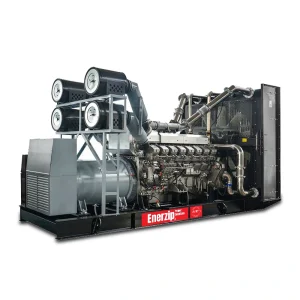

Diesel generator sets are widely used for backup power, prime power, and long-hour site power where grid supply is unstable or electrical loads cannot be interrupted.
Enerzip Power Technology (Weifang) Co., Ltd. supplies industrial diesel generator sets for commercial buildings, factories, hospitals, data centers, mining sites, construction projects, agriculture, and infrastructure applications.
Our diesel generator range covers different power ratings, engine platforms, and installation types. Available configurations include open type, silent/weatherproof type, trailer-mounted type, and containerized generator sets. According to project needs, Enerzip can also provide ATS panels, paralleling systems, remote monitoring, fuel tank options, and export support.
Features:
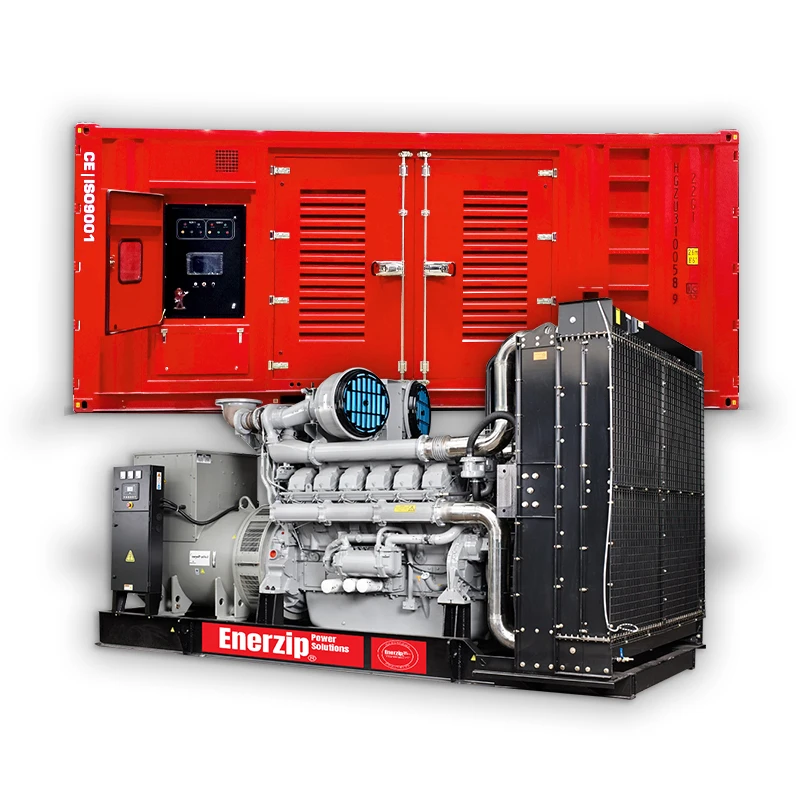
Enerzip diesel generator sets cover a power range from 9.5 kVA to 4125 kVA, with different engine platforms and configurations for standby power, prime power, and selected continuous-duty applications.
A diesel generator should not be selected by kVA alone. Site conditions, load type, motor starting demand, running hours, ambient temperature, altitude, ventilation, noise limits, and control requirements all affect the final configuration.
Enerzip helps customers choose suitable diesel generator sets based on actual operating needs. Available options include open type, silent/weatherproof type, trailer-mounted type, containerized type, ATS integration, paralleling systems, and remote monitoring.
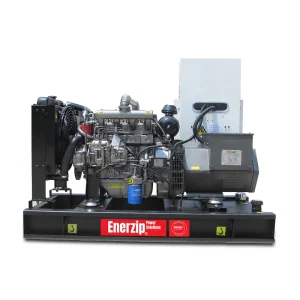
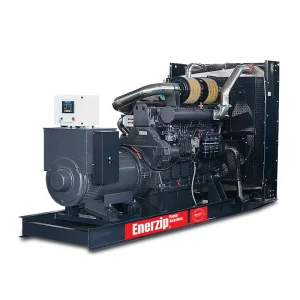
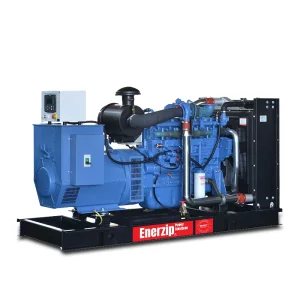
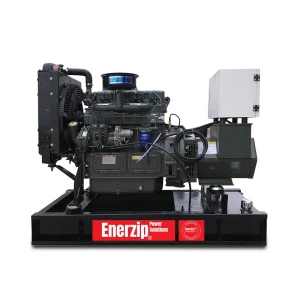
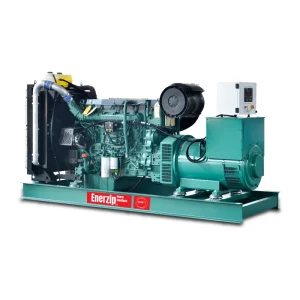
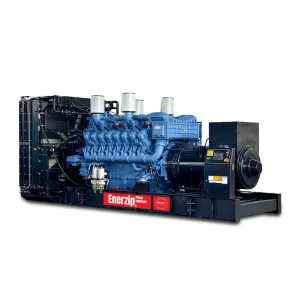
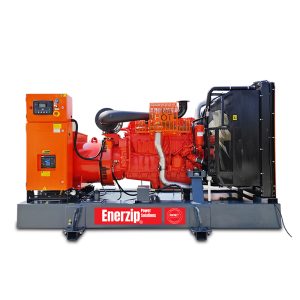
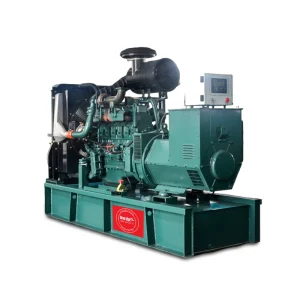
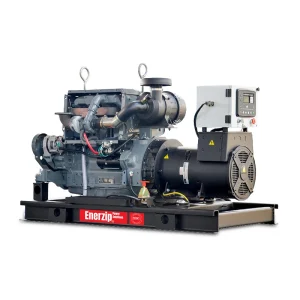
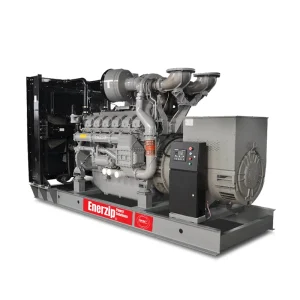
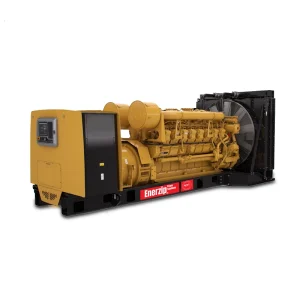
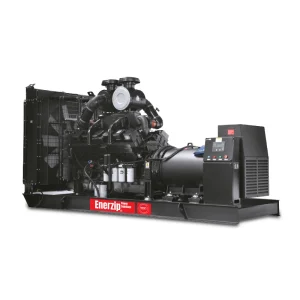
Enerzip manufactures diesel generator sets ranging from 9.5 kVA to 4125 kVA, covering everything from small standby units to large-scale industrial power systems. Units are available in open, sound-attenuated/weatherproof, trailer-mounted or containerised configurations. Depending on specific requirements, they can also be supplied with ATS panels, fuel tanks, parallel systems and remote monitoring.
For standard models, open-type units typically take 3–7 days, whilst soundproof or weatherproof units usually take 7–14 days. The final delivery time depends on engine and generator stock levels, voltage requirements, enclosure type, order quantity and any special configurations.
Prior to dispatch, every diesel generator set is inspected in accordance with the confirmed order specifications. We verify output performance, controller settings, protection functions, wiring layout, cooling configuration, the fuel system, the condition of the enclosure, and the overall configuration.
Enerzip assists customers with model selection, configuration confirmation, installation guidance, commissioning support, troubleshooting, spare parts provision and the processing of repeat orders. For ATS, parallel operation, remote monitoring or containerised units, we confirm key details prior to production to facilitate subsequent on-site installation by the customer.
Diesel generator sets are typically used in situations where the grid is unstable, mains power is unavailable, or on-site loads exceed the capacity of the existing power supply. They are commonly employed for standby power, continuous power, temporary power supply, and extended periods of on-site operation.
For purchasers, the key consideration is not merely the kVA rating. Selecting the appropriate diesel generator set also depends on the load type, motor starting requirements, operating duration, ambient temperature, altitude, ventilation conditions, noise restrictions, fuel supply, installation space and control system requirements.
Enerzip offers open-type, soundproof/weatherproof, trailer-mounted and containerised diesel generator sets. Depending on project requirements, the system can also be equipped with ATS, parallel operation, synchronisation control, remote monitoring, fuel tank solutions and export packaging.
For emergency and standby power projects in hospitals, data centres, public buildings and other critical facilities, project teams may also refer to NFPA 110, Standard for Emergency and Standby Power Systems, as a general guide for the installation, testing and maintenance of emergency power systems.
E Series Diesel Generator Sets – 16.5–75 kVA | Enerzip Engine
Suitable for small-scale backup power and light-duty applications. Ideal for homes, shops, telecommunications sites, small workshops and small commercial buildings, particularly for customers who prioritise compact dimensions, simple maintenance and cost control
P Series Diesel Generator Sets – 10–2500 kVA | Perkins Powered
Suitable for a wide range of commercial and industrial scenarios. Commonly used in construction, factories, telecommunications sites, agriculture, rental fleets, medical facilities, and by customers who prioritise ease of maintenance and parts availability.
D Series Diesel Generator Sets – 165–935 kVA | Doosan Powered
Suitable for medium-to-high power industrial users requiring reliable performance and reasonable costs. Commonly used in factories, high-rise buildings, construction projects, mining support facilities and infrastructure sites.
S Series Diesel Generator Sets – 275–800 kVA | Scania Powered
Suitable for continuous power supply and long-running applications. Commonly used in industrial plants, mining auxiliary systems, construction bases and regional power stations, particularly suited to users prioritising fuel economy and extended maintenance intervals.
W Series Diesel Generator Sets – 22–4125 kVA | Weichai Powered
Suitable for customers requiring a wide power range and a strong balance between cost and performance. Commonly used for industrial standby power, infrastructure, mining, heavy industry, modular power projects and high-capacity power consumption scenarios.
M Series Diesel Generator Sets – 300–4000 kVA | MTU Powered
Suitable for high-power and critical power projects. Commonly used in data centres, hospitals, ports, mines, heavy industry, large-scale infrastructure and multi-unit power systems.
Each Enerzip diesel generator series corresponds to a different engine platform, power range and application type. If the purchaser already knows the approximate power range and intended use, they can use the series descriptions above as a starting point for their selection.
For a more accurate recommendation, purchasers can submit their project details via the enquiry section below. Enerzip will assess this information and recommend a suitable diesel generator configuration.
To avoid under- or over-engineering, we recommend sizing and configuration based on your load profile and operating mode:
Power: required kVA/kW, standby/prime/continuous, running hours/day
Electrical: 50/60Hz, voltage, phase (e.g., 400/230V 3P4W)
Loads: largest motor (kW/hp) and starting method (DOL/soft starter/VFD), any load steps if available
Mode: ATS required or not, single unit or multi-unit paralleling (if any)
Site: ambient temperature, altitude, installation type (open/silent/weatherproof/container)
Diesel generator sets are typically used as power backup equipment when the local grid is unstable, there is no mains power available on-site, or critical loads cannot be shut down during a power cut. Depending on the final configuration, Enerzip diesel generator sets can be used for standby power, prime power, temporary on-site power supply and extended-duration operation.
Data Centers and IT Facilities
In data centres, diesel generator sets are typically used in conjunction with UPS systems, cooling equipment, servers, security systems and power distribution equipment. Rapid start-up, stable voltage and frequency, and the correct ATS (Automatic Transfer Switch) are crucial, as even a brief power outage can affect the operation of IT systems.
Hospitals and Healthcare Buildings
Hospitals utilise diesel generator sets as emergency power and building standby power sources. Typical loads may include emergency lighting, lifts, HVAC, water supply pumps, medical support areas, and certain critical equipment. Generator systems should be configured in accordance with project design and local emergency power regulations.
Mining and Heavy Industry
Mines, quarries and heavy industrial facilities are typically located in dusty, high-temperature, remote or high-load environments. Diesel generator sets can supply power to crushers, conveyors, water pumps, workshops, camps and auxiliary systems. In such environments, robust construction, ample cooling capacity, fuel planning and space for easy maintenance are all critical.
Manufacturing Plants
Factories utilise diesel generator sets to minimise production downtime caused by grid failures. Common loads include motors, air compressors, water pumps, production lines, lighting, control systems and auxiliary equipment. For such projects, motor starting and surge load conditions should be assessed prior to selecting a generator.
Construction Sites
Construction sites require power for tower cranes, welding machines, drainage pumps, lighting, tools, site offices and temporary facilities. Such projects typically require units suitable for outdoor use, appropriate fuel tank configurations, ease of hoisting and simple maintenance.
Telecom and Remote Stations
Communication towers, relay stations and remote control rooms in areas with weak or no mains power supply often require backup power. Compact dimensions, automatic start-up, fuel tank endurance and remote monitoring are factors frequently considered for unmanned sites.
Water, Pumping and Utilities
Pumping stations, water treatment plants, sewage pumping stations, municipal facilities, transport systems and public infrastructure utilise diesel generator sets to maintain essential services during power outages. These applications typically involve motor loads, ATS switching and extended periods of standby operation.
Commercial Buildings
Hotels, shopping centres, office buildings, schools, residential complexes and public buildings utilise diesel generator sets to power lifts, fire protection systems, lighting, water pumps, security systems and essential HVAC systems. When units are installed outdoors or near areas where people are present, silent or weatherproof models are usually selected.
First, consider the load. Small shops, factories, mines, hospitals and data centres all have different power requirements. Please provide the required kVA/kW, voltage, main loads, operating hours, installation location and fuel requirements. Enerzip will use this information to help match you with the appropriate diesel generator series and configuration.
Large motors require greater power during start-up. Water pumps, air compressors, lifts, crushers, conveyors and HVAC systems may cause voltage or frequency drops if the diesel generator is undersized. If your project involves large motors, please provide the motor power and starting method.
Standby generators are primarily used for emergency power supply during mains power failures. Prime power generators are suitable for situations where the mains supply is weak or absent. Continuous duty units are suitable for applications involving prolonged operation with relatively stable loads. Power ratings should be selected based on actual operating conditions, rather than relying solely on the nameplate power.
If you wish the generator to start automatically and switch over the power supply following a mains power failure, an ATS is required. If manual switching is possible on-site, an ATS is not necessarily required. ATS systems are commonly used in construction sites, hospitals, data centres, factories, telecommunications sites and other backup power systems.
Open-type generators are typically used in generator rooms. Sound-attenuated or weatherproof models are suitable for outdoor installation or locations with noise control requirements. Trailer-mounted units are suitable for temporary power supply or mobile power sources. Containerised units are typically used for high-power generators, remote projects, harsh environments or long-term outdoor operation.
Please let us know the required running time, for example 8 hours, 12 hours or 24 hours. Please also confirm whether you require a built-in fuel tank in the base or need to connect an external fuel tank. For projects involving prolonged operation, you should also consider fuel quality, filtration and refuelling arrangements.