Paralleling & Grid-connect Systems

EZ-PGC Series: Paralleling & Grid-Connect Systems

Intelligent Synchronization & Power Management Solutions

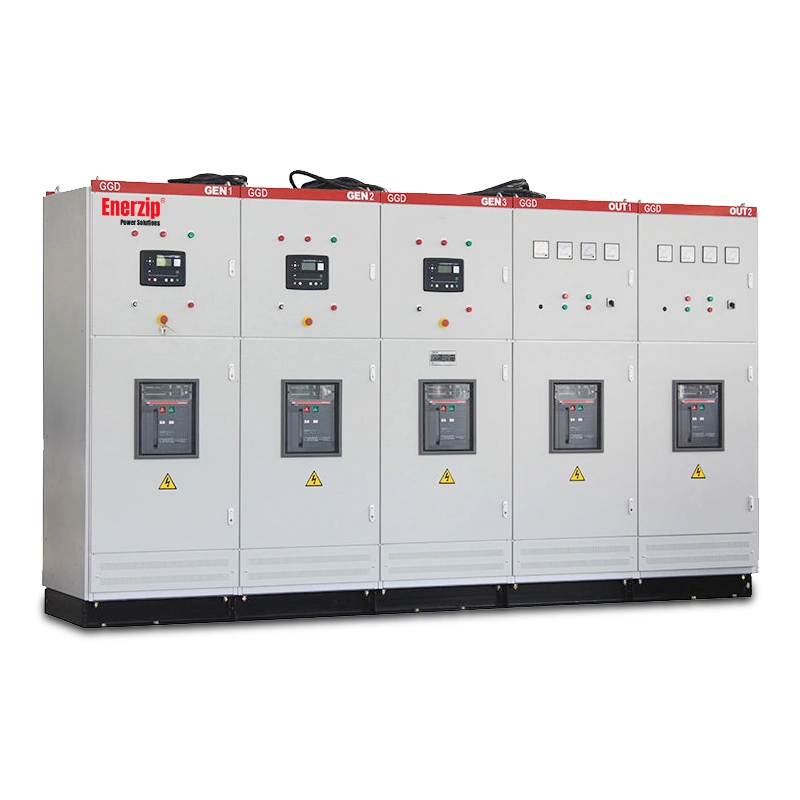
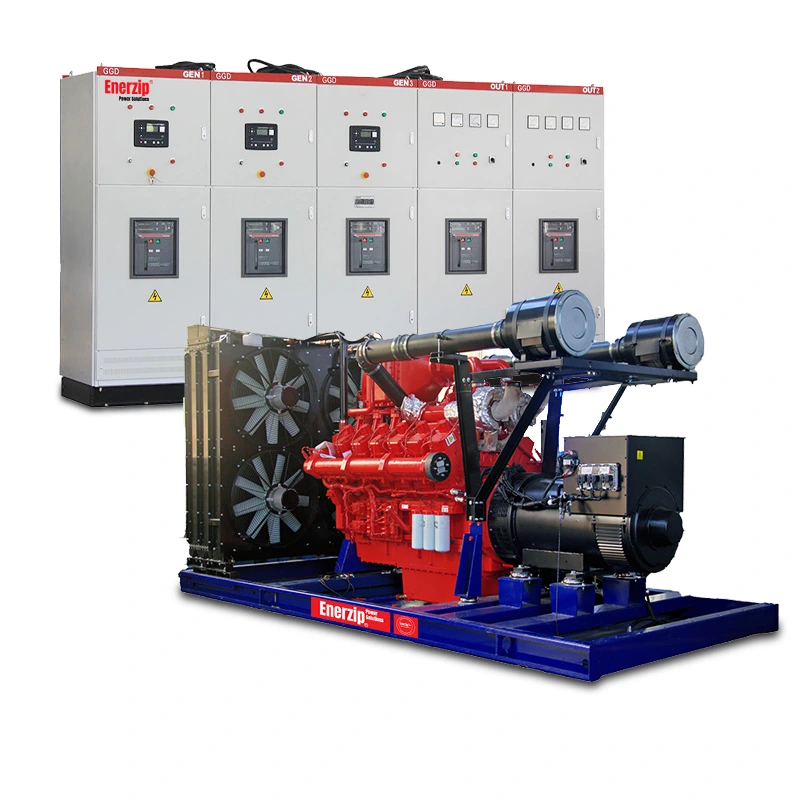
The Enerzip® EZ-PGC Series are low-voltage paralleling and grid-connect control systems designed to synchronize multiple diesel or gas generator sets and manage their operation with the utility grid. The system coordinates generator synchronization, load sharing, and grid interaction, providing stable and efficient power management for complex power systems.

Suitable for applications ranging from remote sites operating in Island Mode to industrial facilities and data centers requiring grid-parallel operation and peak shaving, the EZ-PGC Series adopts a modular and project-specific design to support reliable operation, scalability, and optimized fuel usage.

  • Multi-Genset Synchronization – Supports paralleling of up to 32 generator sets for scalable and redundant power systems.
  • Load Sharing Control – Distributes active (kW) and reactive (kVAr) power to maintain balanced and efficient generator operation.
  • Grid-Parallel Operation – Enables controlled connection and disconnection between generators and the utility grid under synchronized conditions.
  • Automatic Power Management – Sequences generator start and stop based on load demand to reduce fuel consumption and equipment wear.
  • Island & Hybrid Modes – Supports isolated microgrids and hybrid systems combined with renewable energy sources.

Description

Intelligent Paralleling & Grid-Connect Systems

Advanced Generator Synchronization & Power Management Solutions

The Control Layer for Mission-Critical Power Systems

Enerzip® Intelligent Paralleling & Grid-Connect Systems are integrated power management solutions designed to synchronize multiple generator sets with each other and, where permitted, with the utility grid. These systems coordinate generator control, alternator output, and switching logic to maintain stable voltage, frequency, and load balance across complex power networks.

More than a conventional distribution panel, the system functions as the central control layer of a generator power plant. It manages the interaction between engine dynamics, excitation control, and grid conditions, enabling stable, low-disturbance power delivery under varying load and operating scenarios.

1. What Is an Enerzip® Intelligent Paralleling System?

In medium- to high-capacity power installations, relying on a single large generator often results in inefficient fuel usage, reduced redundancy, and higher operational risk. The Enerzip® Intelligent Paralleling System enables multiple generator sets to operate together as a coordinated power system.

  • Synchronization Scope
    Supports paralleling of up to 32 diesel or gas generator sets, allowing flexible system scaling from hundreds of kilowatts to multi-megawatt power plants.

  • Synchronization Method
    Automatically aligns voltage, frequency, and phase angle before breaker closure, ensuring smooth and electrically safe connection between generator sets or between generators and the grid.

  • Typical Use Cases
    Designed for applications requiring N+1 / N+X redundancy, peak shaving, load-based dispatch, or fully isolated Island Mode operation.

2. Key Functions & Capabilities

Automatic Generator Synchronization

Using high-speed digital control logic, the system regulates engine speed and alternator excitation during the synchronization process. This controlled approach minimizes mechanical stress on rotating components and limits electrical transients during breaker closing, protecting both generators and downstream loads.

Intelligent Load Sharing & Power Management

The system continuously monitors system load and distributes both active power (kW) and reactive power (kVAr) proportionally across all online units. This prevents individual generators from operating outside their optimal efficiency range and supports stable long-term operation under fluctuating demand.

Grid-Connect & Disconnect Control

The system supports controlled transition between grid-connected and isolated operation. Under synchronized conditions and subject to local grid regulations, generators can be connected to or disconnected from the utility grid with minimal electrical disturbance.

Redundancy & Fault Isolation

Designed for N+1 or N+X architectures, the system automatically detects generator faults, isolates the affected unit, and redistributes load among remaining generators. This maintains supply continuity while allowing maintenance or repair without shutting down the entire power system.

3. System Architecture: Engineering Components

Each Enerzip® paralleling system is engineered as an integrated assembly of control, switching, and structural components:

  • Intelligent Controllers
    Based on proven platforms such as DSE (8610/8620 series), ComAp, or SmartGen, supporting synchronization, load sharing, and protection logic.

  • Primary Switching Devices
    High-breaking-capacity Air Circuit Breakers (ACBs) from manufacturers such as ABB, Schneider, or Siemens.

  • Protection & Interlocking Logic
    Integrated protection relays and mechanical/electrical interlocks, including Five-Prevention logic to prevent mis-operation, back-feeding, and unsafe switching conditions.

  • HMI & Communication Interfaces
    Touchscreen HMIs with RS485, Modbus TCP/IP, and CANbus, allowing integration with PLC, SCADA, or building management systems.

  • Structural Construction
    Heavy-duty steel enclosures fabricated on Enerzip® production lines using 2.0–2.5 mm cold-rolled steel, providing mechanical strength and vibration resistance.

4. Advanced Operating Modes

Operating Mode Technical Function
Island Mode Independent operation without grid connection, suitable for remote or off-grid sites.
Grid-Parallel Mode Generators operate alongside the utility grid to support large or variable loads.
Peak Shaving Generators start automatically when grid demand exceeds preset thresholds, reducing peak tariff exposure.
Base Load Mode Generators run at a fixed, efficient output while the grid absorbs load fluctuations.
Black Start System recovery from a total power loss without external grid assistance.

5. Industry Applications

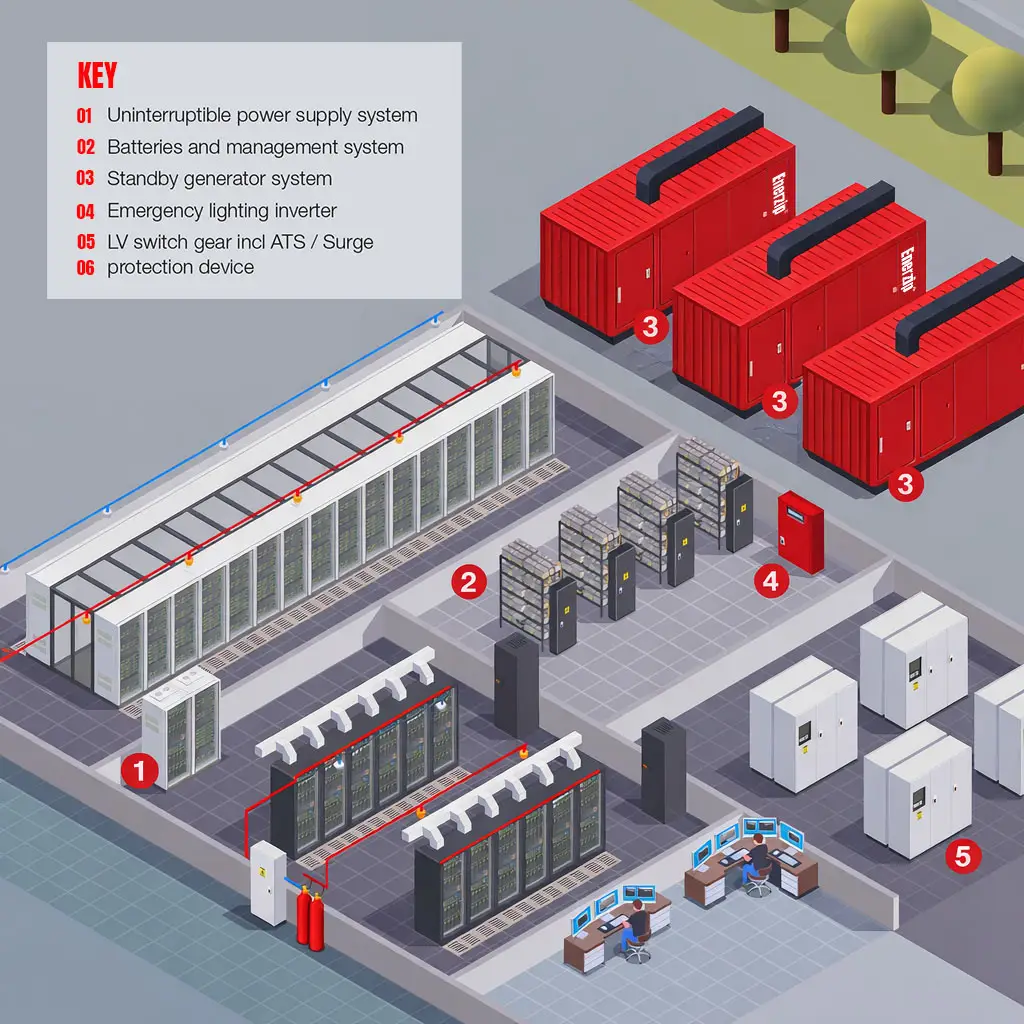
  • Data Centers – Supports redundant power architectures with coordinated synchronization to protect IT infrastructure during utility disturbances.

  • Hospitals & Healthcare – Maintains stable power for life-support and diagnostic equipment under strict safety and redundancy requirements.

  • Mining, Oil & Gas – Designed for harsh environments with high vibration, dust, and temperature variation.

  • Industrial Manufacturing – Enables peak shaving and load-based dispatch to control energy costs and improve power stability.

  • Renewable Hybrid Systems – Coordinates diesel or gas generators with solar or wind sources to stabilize microgrids.

6. Technical Specifications & Standards

  • Supported Capacity: From single units of approximately 100 kW to multi-megawatt generator arrays

  • Synchronization Time: Typical start-to-breaker-closure time ≤ 10 seconds, depending on engine and system conditions

  • Steel Thickness: Structural frame 2.0 mm; mounting plates 2.5 mm

  • Busbar System: T2-grade tin-plated copper for high conductivity

  • Standards Compliance: Engineered to meet IEC 61439, GB/T 7251, and international anti-islanding safety standards, ensuring safe and reliable grid-parallel operation.

  • Grid Safety: Integrated anti-islanding protection to safeguard utility maintenance personnel

7. Why Choose Enerzip® Intelligent Systems?

  • Reduced Mechanical and Electrical Stress through controlled synchronization and load sharing

  • Improved Fuel Efficiency via demand-based generator sequencing

  • Heavy-Duty Manufacturing with in-house structural fabrication, not third-party cabinet assembly

  • Broad Compatibility with major alternator and engine brands across global markets

8. Integration & Customization

Enerzip® provides project-specific engineering rather than fixed configurations:

  • Custom control logic adapted to local grid codes and operational requirements

  • Modular system design allowing future expansion

  • OEM/ODM services for generator manufacturers and system integrators

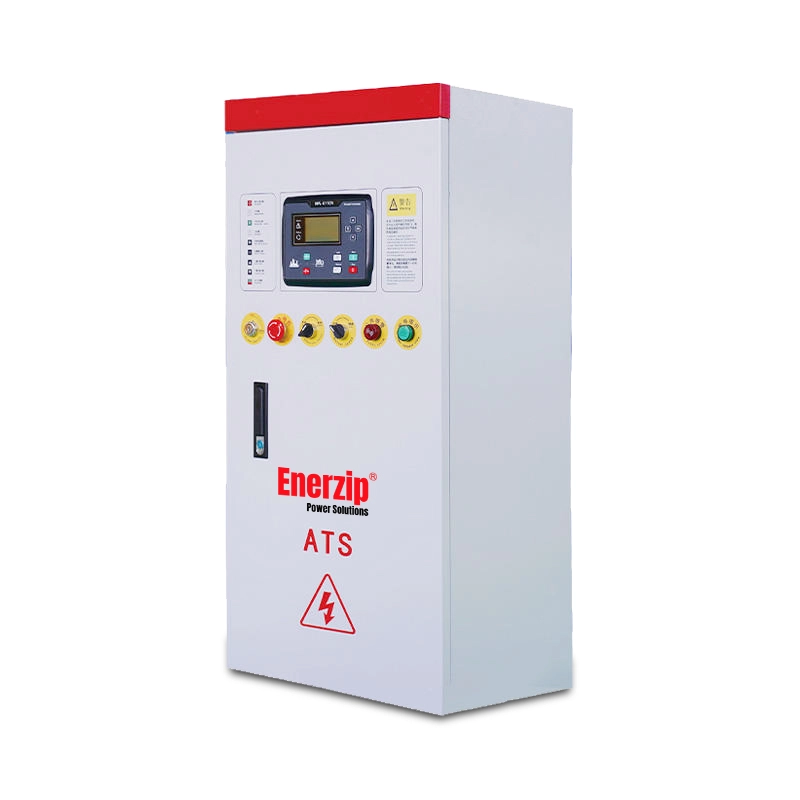
In grid-connected or standby power systems, the paralleling controller is often used together with an Automatic Transfer Switch (ATS) to manage safe source selection between utility and generator power.
 

Applications

Paralleling & Grid-Connect Systems – Application Scenarios

From mission-critical facilities to remote off-grid sites, the Enerzip® Intelligent Paralleling & Grid-Connect System is designed to address complex power management challenges across a wide range of industries. By coordinating generator synchronization, load sharing, and grid interaction, the system provides stable and controllable power under demanding operating conditions.

1. Data Centers & Mission-Critical IT Facilities

Engineering Challenge:
Rapid load growth, strict redundancy requirements (N+1 / 2N), and extremely low tolerance for power disturbances.

System Role:
The system manages multiple synchronized generator sets to form a stable isolated power bus during utility outages. Load demand is continuously monitored, and additional generators are automatically sequenced online as capacity requirements increase.

Operational Value:
If a generator develops a fault, the system isolates the affected unit and redistributes the load among remaining generators, maintaining continuity of power to critical IT infrastructure.

2. Hospitals & Healthcare Facilities

Engineering Challenge:
Maintaining uninterrupted and stable power for life-support systems while complying with healthcare electrical safety regulations.

System Role:
The system ensures controlled transition between utility and standby power, maintaining voltage and frequency stability required by sensitive medical equipment.

Operational Value:
Integrated protection logic and mechanical/electrical interlocking (“Five-Prevention” principles) support safe operation during both emergency events and scheduled maintenance.

3. Industrial Plants & Large-Scale Manufacturing

Engineering Challenge:
Supplying power to large inductive loads while managing peak demand charges and production continuity.

System Role:
Configured for peak shaving, base-load, or grid-parallel operation, the system dynamically starts or stops generators based on real-time load conditions.

Operational Value:
By limiting peak grid demand and avoiding inefficient low-load operation, the system helps reduce energy costs and mechanical stress on engines.

4. Mining, Oil & Gas, and Remote Off-Grid Sites

Engineering Challenge:
Operation in harsh environments with no stable utility grid and highly variable load profiles.

System Role:
Operating in permanent Island Mode, the system manages a modular generator power plant capable of expanding as site demand grows.

Operational Value:
Transient load surges from heavy equipment are shared across synchronized generators, improving system stability and allowing individual units to be serviced without shutting down site operations.

5. Commercial Infrastructure (Airports, Metros, Large Public Facilities)

Engineering Challenge:
Ensuring stable power for high-occupancy facilities where lighting, control, and safety systems must remain operational.

System Role:
The system provides controlled grid-parallel operation and coordinated transfer during utility disturbances or emergency events.

Operational Value:
Synchronized transfer logic minimizes electrical disturbances when transitioning between generator and grid operation, supporting continuous operation of critical public infrastructure systems.

6. Renewable Energy Hybrid Systems

Engineering Challenge:
Balancing intermittent renewable generation with the need for continuous and stable power supply.

System Role:
The system coordinates diesel or gas generators with solar or wind sources, compensating for fluctuations in renewable output in real time.

Operational Value:
This hybrid control approach improves microgrid stability while reducing reliance on continuous generator operation.

Typical Operating Modes Across Applications

Operating Mode Technical Purpose Primary Benefit
Island Mode Multi-generator operation without grid connection Independent power for remote or off-grid sites
Grid-Parallel Mode Generators operate alongside the utility grid Increased capacity and load support
Peak Shaving Mode Generator start based on grid demand thresholds Reduced peak electricity costs
Black Start System recovery from total power loss Emergency system restoration
Load-Based Control Automatic generator sequencing (Start/Stop) Improved fuel efficiency and reduced wear

Application-Level Advantages

  • Improved Power Continuity – Coordinated synchronization and load sharing reduce electrical disturbances

  • Reduced Operational Risk – Automated interlocking logic minimizes switching and operating errors

  • Flexible System Expansion – Modular architecture supports future capacity growth

  • Standards Compliance – Designed in accordance with IEC 61439, GB/T 7251, and anti-islanding safety requirements

FAQ

Yes. The Enerzip® EZ-PGC Paralleling & Grid-Connect System is designed to synchronize generator sets of different capacities and engine brands, provided they operate at the same rated voltage and frequency. The system uses advanced load-sharing algorithms to balance both active power (kW) and reactive power (kVAr) proportionally, ensuring stable operation even when gensets have unequal ratings. This makes the EZ-PGC system suitable for phased expansion projects and mixed-brand generator fleets.
The EZ-PGC Series is engineered in compliance with IEC 61439 and GB/T 7251, which are the globally recognized standards for low-voltage switchgear and controlgear assemblies. These standards cover structural strength, temperature rise, short-circuit withstand capability, insulation performance, and safety of assembled power control panels. Anti-islanding protection logic is also implemented to meet international grid safety requirements when operating in grid-parallel mode.
A single Enerzip® EZ-PGC system can synchronize up to 32 generator sets within one power management architecture. The modular design allows smaller systems to start with just two or three units and expand later as load demand increases. This scalability makes the system suitable for applications ranging from medium-sized industrial plants to multi-megawatt power stations and remote microgrids.
Yes. The EZ-PGC Series fully supports Island Mode, Grid-Parallel Mode, and seamless transition between the two. In island mode, the system manages all generators as a standalone power plant. In grid-parallel mode, it synchronizes generator output with the utility grid for peak shaving, base-load operation, or grid support. Transition logic ensures stable voltage and frequency without damaging transients or load interruptions.
The EZ-PGC system is designed with N+1 and N+X redundancy logic. If a generator experiences a fault such as over-temperature, low oil pressure, or electrical protection trip, the system automatically isolates the faulty unit and redistributes the load to the remaining generators. This process occurs without interrupting the main bus, ensuring continuous power supply to critical loads.
The Enerzip® EZ-PGC Series supports multiple industrial communication protocols, including Modbus RTU, Modbus TCP/IP, CANbus, and optional Ethernet-based monitoring. These interfaces allow seamless integration with SCADA systems, Building Management Systems (BMS), and remote operation centers, enabling real-time monitoring of generator status, load distribution, alarms, and operational history.

Related Products

Enerzip® Paralleling & Grid-connect Systems control panel for generator synchronization, load sharing, and grid connection

Paralleling & Grid-connect Systems

Enerzip® ATSE Series – Automatic Transfer Switches for Generator ATS front panel for automatic dual power transfer control

Automatic Transfer Switches (ATS)

Enerzip® E Series – Biogas Generator Sets open frame genset for farm-scale biogas power and simple on-site maintenance.

E Series – Biogas Generator Sets

Enerzip® C Series – Biogas Generator Sets open frame generator for waste-to-energy projects and reliable biogas power generation.

C Series – Biogas Generator Sets

Enerzip® W Series – High Voltage Generators open frame HV genset with direct 3.3–13.8kV output for industrial MV power

W Series – High Voltage Generators

Enerzip® Y Series – High Voltage Generators open frame HV genset with direct 3.3–13.8kV output for heavy-duty industrial power

Y Series – High Voltage Generators

Enerzip® MS Series – High Voltage Generators open frame HV genset with direct 3.3–13.8kV output for industrial MV power

MS Series – High Voltage Generators

Enerzip® M Series – High Voltage Generators open frame HV genset with direct 3.3–13.8kV output for industrial power systems

M Series – High Voltage Generators

Enerzip® P Series – High Voltage Generators open frame HV genset with direct 3.3–13.8kV output for industrial MV power

P Series – High Voltage Generators

Enerzip® C Series – High Voltage Generators open frame HV genset with direct 3.3–13.8kV output for industrial power

C Series – High Voltage Generators

Related News