Enerzip Africa Power Solutions Registered in Malawi

Table of Contents

September 5, 2026 — Zomba, Malawi

ENERZIP AFRICA POWER SOLUTIONS was officially registered in Malawi on September 3, 2026. The new operation is based in Zomba and will handle Enerzip generator sales, project communication, installation support, maintenance and spare parts services in the region.

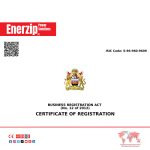
The business was registered under the Business Registration Act (No. 12 of 2012). Its Malawi Business Registration Number is BRN-L5SB77PV, and the registered business location shown on the certificate is ZOMBA_URBAN.

The registration gives Enerzip a local business presence from which to serve customers in Malawi and nearby markets. The initial service area covers Malawi, Mozambique, Tanzania, Zambia and Zimbabwe.

Enerzip Africa Power Solutions registration announcement in Zomba, Malawi
Enerzip Africa Power Solutions was registered in Malawi on September 3, 2026, to support regional generator sales and services.

Registration Information

The main information shown on the Certificate of Registration is:

  • Registered business name: ENERZIP AFRICA POWER SOLUTIONS
  • Business Registration Number: BRN-L5SB77PV
  • ISIC code: S-96-960-9609
  • Registration date: September 3, 2026
  • Registered location: ZOMBA_URBAN
  • Certificate expiry date: September 3, 2029
  • Place of issue: Blantyre, Malawi
  • Registration authority: Registrar of Business, Registrar General of Malawi
  • Applicable law: Business Registration Act (No. 12 of 2012)

This is a business registration certificate. It confirms the registration of the business name in Malawi. It should not be interpreted as a generator manufacturing licence, product certificate or exclusive dealership authorization.

Enerzip’s Address in Zomba

The business contact address is:

Enerzip Africa Power Solutions
3 miles from Zomba City, opposite the TNM Tower
P.O. Box 710
Zomba, Malawi

Customers can contact the Zomba operation about generator quotations, equipment selection, local installation, scheduled maintenance, troubleshooting and spare parts.

Generator Sales in Malawi and Nearby Markets

Enerzip Africa Power Solutions will market Enerzip generator sets and power system products in five African countries:

  • Malawi
  • Mozambique
  • Tanzania
  • Zambia
  • Zimbabwe

The company will work with end users, equipment dealers, electrical contractors, construction companies, farms, factories, mines, hospitals, hotels, telecommunications companies and project contractors.

Generator requirements differ from one site to another. A small commercial building may only need emergency power during a utility outage. A farm, mine or remote construction project may need a generator that operates for many hours every day.

Before recommending a model, the Enerzip team will normally need to confirm:

  • Required prime or standby power
  • Site voltage and frequency
  • Single-phase or three-phase output
  • Daily operating hours
  • Starting current of pumps, motors and compressors
  • Ambient temperature and altitude
  • Available fuel
  • Required noise level
  • Indoor or outdoor installation
  • Need for an ATS or synchronization system

This information is necessary because the kVA figure alone does not describe the complete operating requirement.

Diesel, Natural Gas and Biogas Generator Sets

Enerzip is a China-based integrated manufacturer of diesel generator sets, natural gas generator sets and biogas generator sets.

The company supplies generator systems for standby, prime and project power applications. Available configurations include:

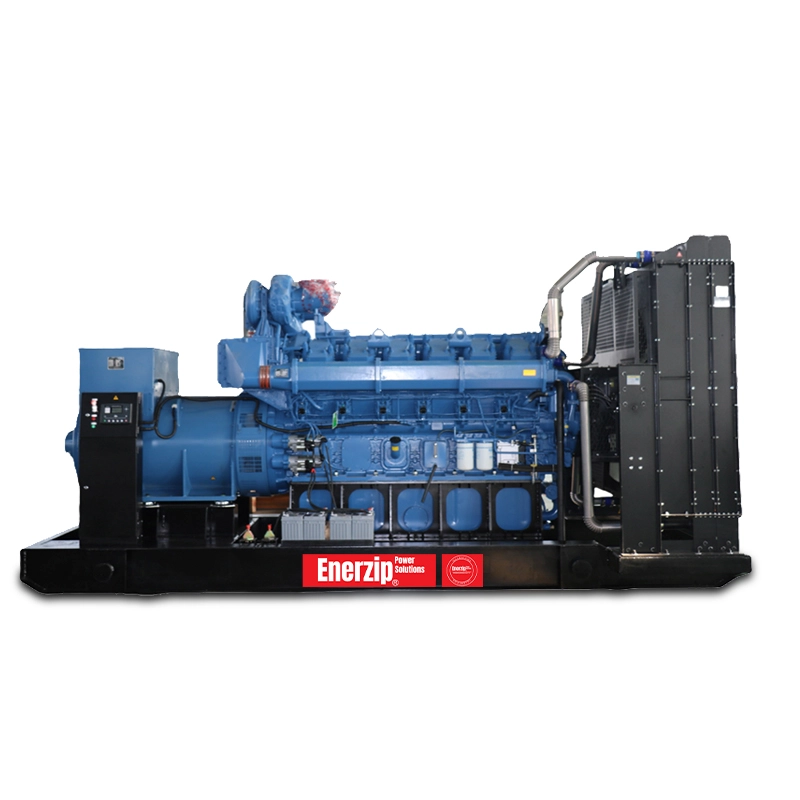
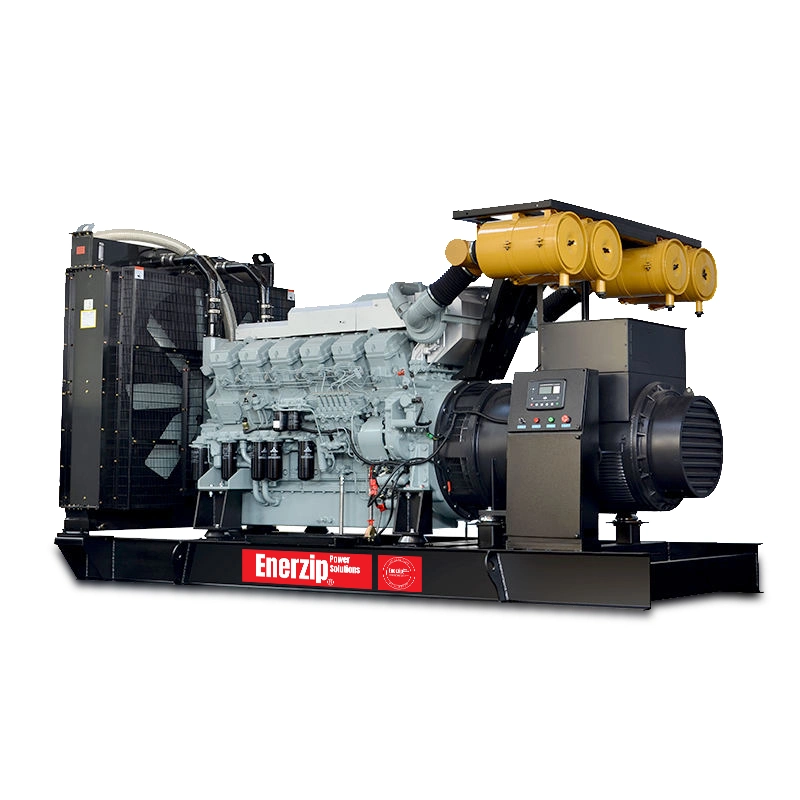
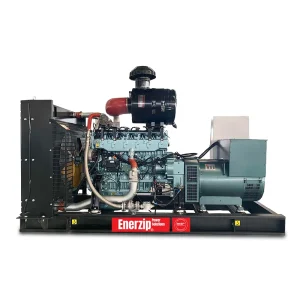
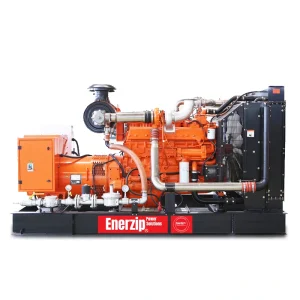
  • Open-type diesel generator sets
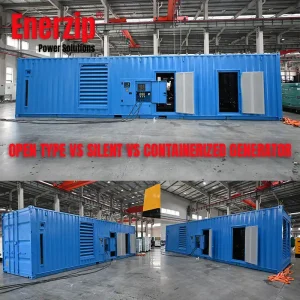
  • Silent and weatherproof generator sets
  • Containerized generator systems
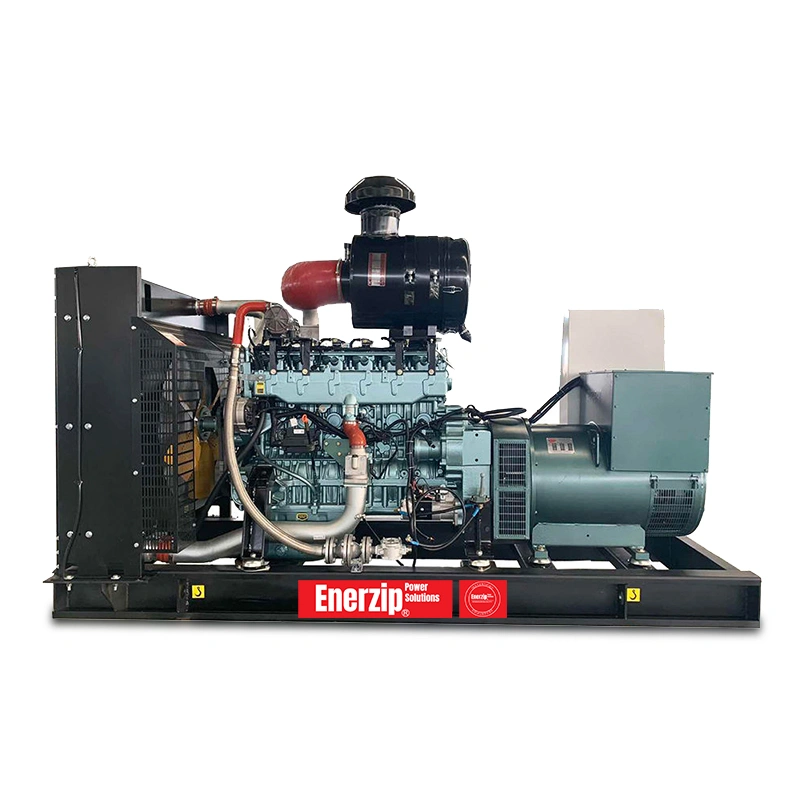
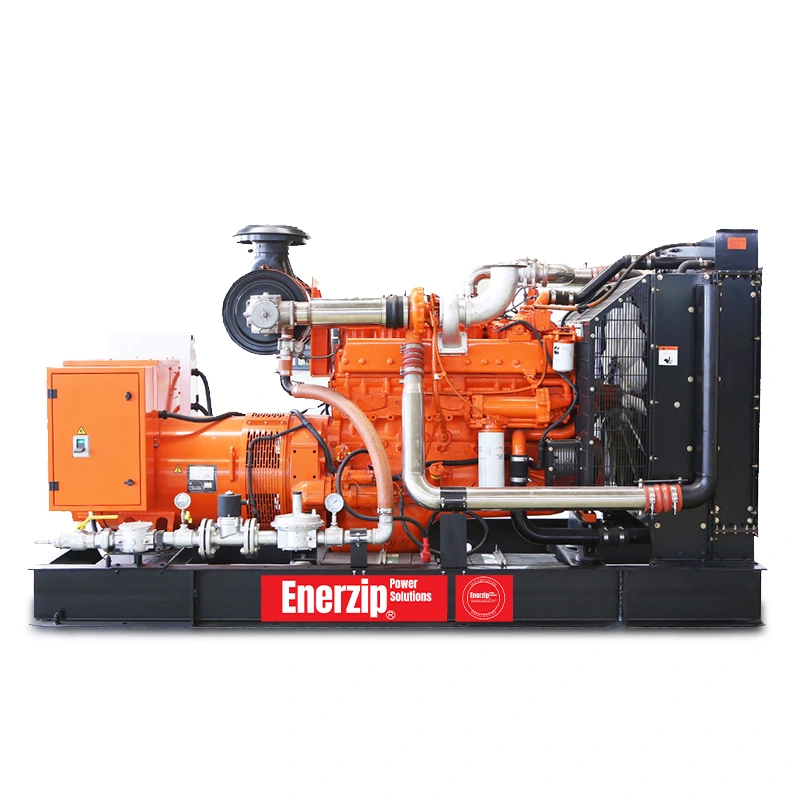
  • Natural gas generator sets
  • Biogas generator sets
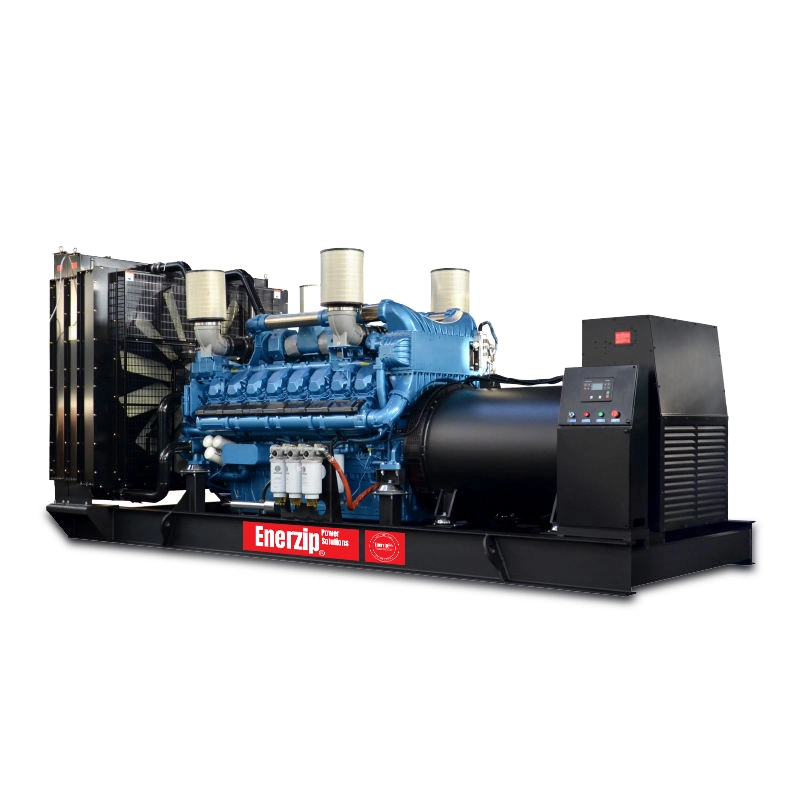
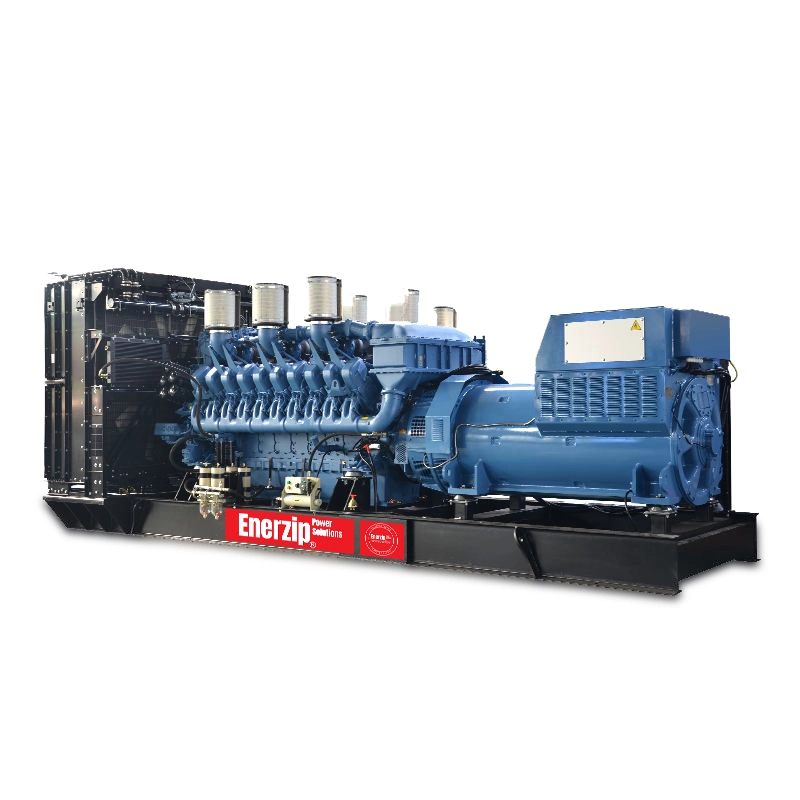
  • High-voltage generator sets
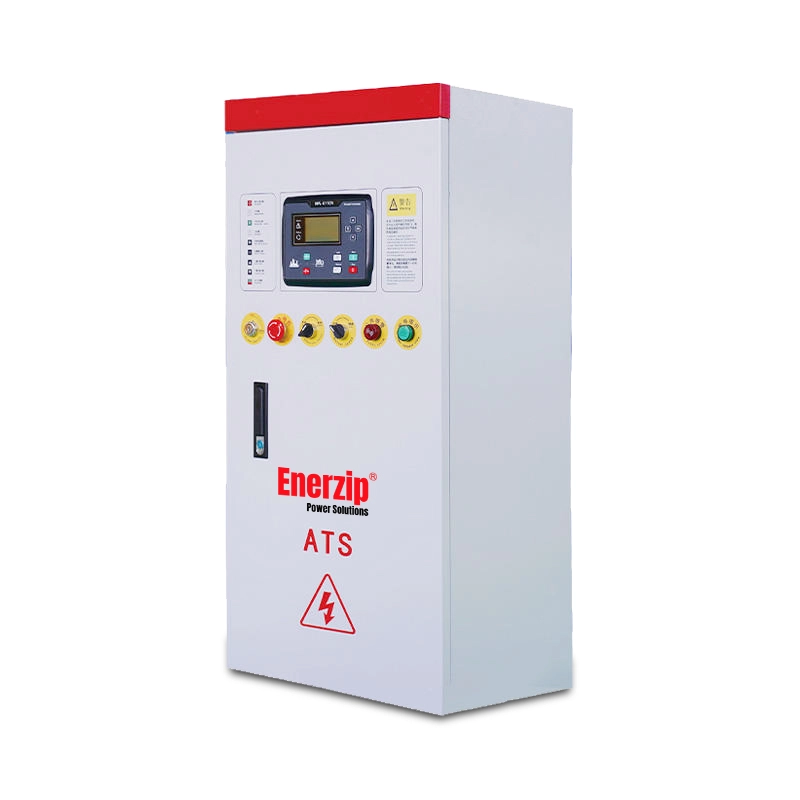
  • Automatic Transfer Switch systems
  • Generator paralleling and synchronization systems
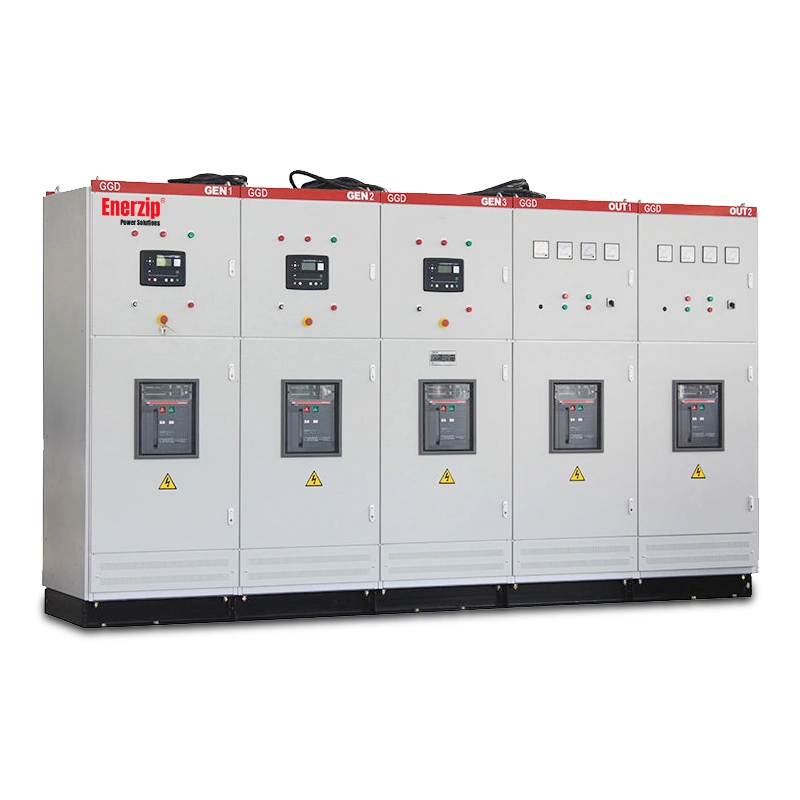
  • Electrical control and distribution panels
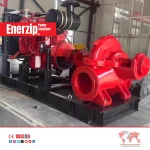
  • Diesel engine-driven water pumps

Generator sets can be configured with different engines, alternators, controllers and circuit breakers according to the required power, application and technical specification.

For project orders, the equipment configuration should be confirmed in the quotation and technical datasheet. Engine model, alternator model, controller, voltage, frequency, power rating and enclosure type should all be clearly stated before production.

Generator Installation and Commissioning

Enerzip Africa Power Solutions will provide or coordinate generator installation and commissioning services according to the project location and agreed scope of work.

A generator installation normally requires more than placing the machine on a concrete floor. The ventilation, exhaust, fuel, electrical and grounding systems must be suitable for the selected generator.

Installation work may include:

  • Inspection of the proposed installation area
  • Generator positioning
  • Foundation and vibration-isolation checks
  • Exhaust pipe arrangement
  • Ventilation and hot-air discharge checks
  • Fuel tank and fuel pipe connection
  • Power cable and control cable connection
  • Grounding inspection
  • ATS installation and testing
  • Starting battery inspection
  • Initial start-up
  • No-load and on-load testing
  • Operator instruction

The final installation scope will depend on the generator size, site conditions and local contractor arrangements.

For larger projects, the customer, electrical contractor and Enerzip team should confirm the work boundaries before delivery. This helps prevent missing cables, unsuitable exhaust systems, poor ventilation and delays during commissioning.

Generator Maintenance and After-Sales Service

A standby generator may remain unused for several weeks or months, but it still requires inspection. Batteries can lose charge, fuel can become contaminated, hoses can leak and electrical connections can loosen.

Enerzip Africa Power Solutions will support routine maintenance and fault diagnosis for Enerzip generator sets in its service area.

Typical maintenance work may include:

  • Engine oil replacement
  • Oil filter replacement
  • Fuel filter replacement
  • Air filter inspection
  • Cooling system inspection
  • Battery and charger testing
  • Belt and hose inspection
  • Fuel leakage inspection
  • Alternator terminal inspection
  • Controller alarm checks
  • ATS operation testing
  • Generator test running
  • Maintenance record updates

Maintenance intervals must follow the engine manufacturer’s instructions and the generator’s actual operating conditions.

Generators working in dusty environments, high temperatures or remote areas often require more frequent inspection. Long-running prime-power units also need a different maintenance plan from standby generators used only during power cuts.

Generator Spare Parts in Africa

Spare parts availability directly affects repair time. If the correct filter, sensor, controller or electrical component is not available, a generator may remain out of service while the replacement is shipped from another country.

Enerzip Africa Power Solutions plans to keep commonly required maintenance parts and selected critical components for supported generator models.

The parts range may include:

  • Engine oil filters
  • Fuel filters
  • Air filters
  • Fan belts
  • Coolant hoses
  • Sensors and switches
  • Battery chargers
  • Relays and fuses
  • Generator controllers
  • Automatic Voltage Regulators
  • Electrical protection components
  • Routine service consumables
  • Selected engine and alternator parts

Stock availability will depend on the generator model and engine platform.

When requesting parts, customers should provide the generator model, engine model, serial number, part number and photographs of the existing component. This reduces the risk of supplying an incorrect part.

Customers operating generators at remote sites can also order a maintenance package together with the generator. The package can be prepared according to the expected operating hours and planned service interval.

China Manufacturing with Regional Support in Africa

Enerzip generator sets are manufactured and assembled in China. The production work includes component matching, base-frame fabrication, fuel tank production, enclosure manufacturing, electrical panel assembly, wiring, system integration and operating tests.

Enerzip Africa Power Solutions is responsible for bringing sales and service work closer to customers in the target African markets.

The China operation and the Malawi operation have different functions:

  • The China team handles engineering, manufacturing, system integration, factory testing and export preparation.
  • The Malawi operation handles regional enquiries, customer communication, sales support, installation coordination, maintenance and spare parts requirements.

This arrangement allows customers to communicate with a regional contact while still receiving equipment and engineering support from the manufacturer.

Requesting a Generator Quotation

To prepare an accurate quotation, customers should provide the following information:

  1. Required prime and standby power
  2. Voltage and frequency
  3. Single-phase or three-phase output
  4. Type of electrical load
  5. Expected operating hours per day
  6. Installation country and city
  7. Open, silent or containerized configuration
  8. ATS or synchronization requirements
  9. Required fuel tank capacity
  10. Ambient temperature and altitude
  11. Required emissions or product certificates
  12. Expected delivery date

If the project specification is not yet complete, customers can provide an equipment list or recent electricity bill. The Enerzip team can use this information as a starting point, although final generator sizing should be checked against the actual connected load and motor-starting requirements.

Contact Enerzip Africa Power Solutions

Africa website: https://www.enerzipafrica.com/

Manufacturer website: https://www.enerzip.com/

Address:
Enerzip Africa Power Solutions
3 miles from Zomba City, opposite the TNM Tower
P.O. Box 710
Zomba, Malawi

Frequently Asked Questions

Is Enerzip Africa Power Solutions registered in Malawi?

Yes. ENERZIP AFRICA POWER SOLUTIONS was registered on September 3, 2026. Its Business Registration Number is BRN-L5SB77PV.

Where is Enerzip Africa Power Solutions located?

The business is located in the Zomba Urban area of Malawi. Its contact address is 3 miles from Zomba City, opposite the TNM Tower, P.O. Box 710, Zomba.

Which countries does the company serve?

The initial service area covers Malawi, Mozambique, Tanzania, Zambia and Zimbabwe. Service availability depends on the project location and the work required.

Does Enerzip manufacture generator sets?

Yes. Enerzip is a China-based integrated manufacturer of diesel, natural gas and biogas generator sets. Enerzip Africa Power Solutions handles regional marketing, sales and service support.

Does Enerzip provide generator installation in Malawi?

Enerzip Africa Power Solutions can provide or coordinate installation and commissioning. The work scope must be confirmed according to the generator size and site conditions.

Can customers order generator maintenance services?

Yes. Maintenance support can include filter and oil replacement, cooling-system checks, battery testing, controller diagnosis, ATS testing and generator test running.

Are generator spare parts available locally?

The company plans to stock routine service parts and selected critical components. Availability depends on the engine, alternator and generator model.

Can Enerzip supply generators outside Malawi?

Yes. The regional operation serves customers in Mozambique, Tanzania, Zambia and Zimbabwe as well as Malawi. Delivery and on-site service arrangements are confirmed separately for each project.

What information is needed for a generator quotation?

Customers should provide the required power, voltage, frequency, phase, operating hours, application, installation location and preferred generator configuration. Motor and pump starting loads should also be listed where applicable.
Related Products
Related News

Reliable Biogas Generator Sets Manufacturer

Biogas generator sets turn organic waste gas into dependable power—when the fuel is unstable and the site conditions are demanding. Enerzip biogas gensets are engineered for continuous duty, with configurations adapted to real biogas issues such as moisture/condensate, corrosive compounds, and fluctuating calorific value, making them suitable for waste-to-energy projects that require predictable uptime.

Features:

  • Designed for wet and corrosive biogas environments (H₂S and moisture tolerance)
  • Two-tier product strategy for real projects: E Series (farm-scale) & C Series (industrial duty)
  • Reliable output under variable methane conditions (typical CH₄ 40–70%)
  • CHP-ready options for jacket water & exhaust heat recovery
  • Controller options for island mode, ATS, paralleling, and grid synchronization
  • Safety-focused gas train integration to reduce leakage risk and improve supply stability

Biogas Generator Sets Series

Enerzip’s biogas generator portfolio spans 20–1875 kVA and is organized around how projects actually operate. E Series (20–250 kVA) is built for decentralized biogas users who prioritize affordability and local serviceability, while C Series (20–1875 kVA) targets industrial baseload systems where long-hour runtime, higher availability, and project-grade integration (CHP / grid-parallel / multi-unit) are required.
Instead of using a “one-size-fits-all” gas genset approach, Enerzip selects the proper series and configuration based on your gas report and operating mode—helping reduce common biogas failures such as misfiring, power fluctuation, corrosion-driven wear, and unplanned shutdowns.

Comprehensive Product Range

Enerzip offers biogas generator sets from 20 to 1875 kVA, covering E Series for farm-scale projects and C Series for industrial baseload. Multiple configurations are available, including open type, silent type, CHP-ready, grid-parallel, and multi-unit solutions.

Rapid Delivery

We value project schedules. With efficient production and clear configuration options, we support quick preparation and responsive quotation based on your gas data, required kVA, and operating mode.

Strict Quality Control

Quality is our core promise. Each biogas genset is built with project-grade integration and inspected for performance stability, protection functions, and key safety checks—supporting reliable long-hour operation in methane environments.

24/7 Customer Service

Our team is available 24/7 to assist with selection, installation, commissioning, and troubleshooting, ensuring dependable support throughout your project lifecycle.

Description

  • Biogas Generator Sets for Real-World Fuel Variability — Organized by How Projects Operate (20–1875 kVA)

    Enerzip biogas generator sets convert organic waste gas into dependable electricity—but biogas is never a “stable fuel”. In real waste-to-energy projects, gas composition and quality can vary by feedstock, digester performance, and season. That variability is why biogas gensets must be configured around real field challenges rather than clean-gas assumptions.

    In practice, biogas power systems commonly face:

    • Moisture & condensate: temperature swings and wet gas can create condensate, which may contribute to unstable combustion and corrosion risk if the gas system and drainage logic are not handled properly.

    • H₂S and corrosive compounds: sulphur-related corrosion and acidic condensate can accelerate wear on gas-path components over long-hour runtime.

    • Variable methane / calorific value: methane fluctuation (typical CH₄ 40–70%) can lead to misfiring, unstable frequency/voltage, and power fluctuation under load changes if the genset is not matched to the operating mode.

    • Different operating modes: farm microgrids, WWTP baseload, landfill gas plants, and grid-parallel export projects require different integration approaches (CHP, synchronization, paralleling, safety logic).

    To make selection faster and reduce mismatch, this category page follows a two-tier series strategy:

    • E Series – Biogas Generator Sets (20–250 kVA) — for farm-scale and decentralized sites where affordability, simple maintenance, and local serviceability matter most.
      Typical for livestock farms, rural cooperatives, small food processing, and off-grid/microgrid sites.

    • C Series – Biogas Generator Sets (20–1875 kVA) — for industrial-duty baseload systems where long-hour runtime, higher availability, and project-grade integration are required (CHP / grid-parallel / multi-unit).
      Typical for WWTP digesters, landfill gas (LFG) projects, industrial organic waste-to-energy, and IPP-style plants.

    For deeper planning and faster quotation, you may also explore: CHP (Combined Heat and Power) Solutions, ATS & Grid Synchronization, and Biogas Gas Conditioning Guide (H₂S removal / dewatering / siloxane risk).

    What we typically review to recommend the right series/configuration: CH₄ %, CO₂ %, H₂S (ppm), moisture/condensate condition, siloxanes (if available), required kVA, operating mode (island / ATS / grid-parallel), runtime hours/day, load profile (load steps if possible), and site conditions (ambient temperature / altitude / enclosure requirement).

    External references (biogas/WtE background): International Energy Agency (IEA) – biogas & biomethane overview, US EPA – Landfill Methane Outreach Program (LMOP), IEA Bioenergy – biogas/CHP resources.

Project Data Required for Quotation

To avoid under- or over-engineering, we recommend sizing and configuration based on your gas report and operating mode:

  • Gas data: CH₄ %, CO₂ %, H₂S (ppm), moisture/condensate condition, siloxanes (if available)

  • Power requirement: required kVA, running hours/day, load profile (load steps if possible)

  • Operating mode: grid-parallel or island, ATS required or not, multi-unit plan (if any)

  • Site conditions: ambient temperature, altitude, enclosure requirements, CHP required or not

Applications

Typical Applications of Biogas Generator Sets for Waste-to-Energy Projects

Biogas generator sets are widely used in waste-to-energy projects where organic waste gas is converted into stable on-site electricity. Typical applications range from decentralized farm digesters to industrial baseload plants, covering scenarios that may require long-hour runtime, CHP heat recovery planning, or grid-parallel operation (project dependent). The following are the most common application fields for biogas power generation.

Livestock Farms & Agricultural Digesters
Used for farm-scale electricity to support barns, ventilation, pumps, lighting, and small processing loads. This scenario often values practical stability under variable digester gas and configurations that fit rural maintenance conditions.

Wastewater Treatment Plants (WWTP) & Sewage Digester Gas
Applied for baseload power generation from digester gas to reduce plant electricity costs and improve energy self-sufficiency. Many WWTP projects also evaluate CHP utilization to support digester heating and improve total efficiency (project dependent).

Landfill Gas (LFG) Waste-to-Energy Projects
Common in landfill methane recovery projects where fuel quality can fluctuate. Biogas gensets support continuous generation, staged capacity expansion, and redundancy planning for higher uptime targets (project dependent).

Food & Beverage Organic Waste-to-Energy
Used by factories handling organic residues and wastewater sludge to offset grid power and stabilize energy cost. Typical use cases include baseload self-use and, where permitted, grid-parallel export for renewable energy projects (project dependent).

CHP-Driven Biogas Power (Heat Recovery Projects)
Suitable for sites that can use recovered heat from jacket water and exhaust systems to support digester heating, facility hot water, or process heat demand. CHP improves overall energy utilization and is often selected for better project ROI (project dependent).

Grid-Parallel & Multi-Unit Biogas Plants
Used in professional waste-to-energy developments that require grid synchronization or multi-unit paralleling. Multi-unit plants enable staged expansion, better redundancy, and easier maintenance planning, especially in industrial baseload and IPP-style projects (project dependent).

FAQ

We can provide a budgetary quote without a full report, but for an accurate PI we still need a minimum dataset. Please send: required kW/kVA, voltage/frequency, grid-parallel or island, and at least the CH₄ range + H₂S (ppm) (even a single test value helps). If you don’t have H₂S data yet, tell us the gas source type (farm / WWTP / landfill) and whether you have dewatering and basic gas cleaning—we will propose a practical configuration path and list what tests to confirm before finalizing.

If you only provide 6 items, we can usually quote fast:

  1. kW/kVA required + runtime hours/day

  2. CH₄ % range (typical min/max)

  3. H₂S ppm (average/peak if available)

  4. Gas flow (Nm³/h or m³/day) and inlet pressure (mbar/kPa if known)

  5. Operating mode: island / ATS backup / grid-parallel / multi-unit paralleling

  6. Packaging type: open / silent / container + site ambient temperature/altitude
    If any item is unknown, send what you have—we will reply with a short “missing data list” to complete the quote.

“Containerized” can mean very different scopes. To avoid misunderstandings, we confirm whether you want:

  • Genset + basic ventilation only, or

  • Genset + CHP heat recovery interfaces, or

  • Full container power house (cabling trays, lighting, emergency stop, service space, etc.)
    For CHP, we also confirm jacket-water only vs jacket + exhaust recovery, and the heat-use plan (digester heating / hot water / process). Once scope boundaries are clear, the price becomes predictable and comparable across suppliers.

Ask for a documentation list aligned to your project scope (genset only vs full electrical integration). A practical RFQ request usually includes: nameplate data, wiring diagrams, controller manuals, protection settings list, test report, packing list, and a compliance statement aligned to your market requirements. If you have a project compliance checklist (EU country-specific), send it with the RFQ so we quote the correct scope from the beginning.

Use checks that matter for project delivery:

  • Ask for the factory address, workshop photos/video with serial-number tracking, and a typical QC checklist (load test, protection test).

  • Confirm they can provide export packing method (wooden case / container loading plan) and normal lead time for open/silent units.

  • Request a sample PI with clear scope and model naming, plus after-sales boundary.
    A real manufacturer should answer these quickly and consistently.

The two most common issues are under-sizing and ignoring motor starting load steps. Farms often have ventilation fans, pumps, and feeding equipment that start as step loads. For a correct quote, send your largest motor size (kW/HP), how many motors start together, and whether the genset runs at stable baseload or changes frequently. If you only know your monthly electricity usage, we can still estimate a starting point, then refine with your real load list.