- Learn how to identify fake diesel generator sets, false power ratings, counterfeit engines, refurbished equipment and hidden procurement risks before purchasing a diesel generator.
I. The Most Basic Power-Rating Terminology Pitfalls: Common Tactics Used by Vendors That Buyers Easily Fall For
1. Mixing Horsepower and Kilowatts, Resulting in a Significant Underreporting of Actual Power
This is a relatively common marketing tactic in the industry, primarily targeting novice buyers who are unfamiliar with diesel generator set specifications. Many buyers, upon seeing a unit’s horsepower rating listed by the seller, subjectively assume the diesel generator set has sufficient power.
However, after installation and use, issues such as inability to handle the load, unstable voltage, and sluggish startup often arise, failing to meet on-site power supply requirements. The industry has clear standards for power conversion: 1 metric horsepower = 0.735 kilowatts, and 1 imperial horsepower = 0.7457 kilowatts.
There is a significant difference between these two units of measurement. Here’s an example based on actual operating conditions: A generator set rated at 100 horsepower has an equivalent power of only 73.5 kW, resulting in a power conversion discrepancy of approximately 26.5%.
If this unit is used to power a standard 75 kW load, the equipment will operate in an overloaded state for extended periods. Over time, this can lead to issues such as increased carbon buildup in the engine, reduced power output, and cylinder liner wear, significantly shortening the equipment’s overhaul cycle and overall service life.
Practical Tips to Avoid Pitfalls: Throughout the entire process—from business negotiations and quote verification to contract signing—prioritize kilowatts (kW) as the core unit of power measurement and ensure the equipment’s rated power is clearly specified.
Approach horsepower specifications with a critical eye, avoid being misled by vague marketing language, and ensure that the purchased specifications precisely match the intended application.
2. Selling Emergency Standby Power as Prime Power (A Common Industry Trick)
Most low-cost, non-standard generator sets on the market are commonly marketed and sold using emergency standby power instead of prime power—a long-standing unwritten rule in the generator set industry. Prime power and emergency standby power are defined by national standards and the ISO 8528 international standard; their applicable scenarios and operational requirements are completely different and must not be confused.
Prime Power (PRP): Refers to the effective power at which a generator set can operate continuously for extended periods while maintaining stable power supply.
It is the most valuable core parameter for procurement and selection, suitable for routine, normal power supply scenarios.
Emergency Standby Power (ESP): Is intended for emergency operation during a utility power outage. It is not normally provided with sustained overload capability.
Prime Power ratings may provide a 10% overload capability for up to one hour in every 12 hours, subject to the generator manufacturer’s published rating conditions. Operating a generator set at standby power levels for extended periods can cause overheating, increased fuel consumption, carbon buildup, and reduced service life.
A common sales tactic in the market is to market a 100 kW emergency standby-rated generator set at a lower price based on an 80 kW prime power rating. While the purchase price may seem advantageous, the actual operating power cannot meet routine load demands, leading to frequent malfunctions and downtime that disrupt normal production and power supply.
Practical Tips to Avoid Pitfalls: When signing a purchase contract, clearly specify the generator set’s prime power rating.
Also, note that standby power is intended only for short-term emergency use and is not suitable for long-term load operation. Exercise caution when dealing with manufacturers who refuse to clearly specify power ratings.
3. Confusing kVA and kW: A Common “Word Game” in the Specifications of Imported Generator Sets
Generator set ratings are commonly expressed in apparent power (kVA) and active power (kW). When the generator set is rated at a power factor of 0.8, the conversion is kW = kVA × 0.8, or 1 kW = 1.25 kVA.
Taking a conventional model as an example, at a rated power factor of 0.8, a 500 kVA generator set provides 400 kW of active power. Some vendors deliberately conceal the active power (kW) specifications and list only the apparent power (kVA), which can easily lead procurement personnel to misjudge the equipment’s power specifications.
This results in the purchase of undersized equipment at inflated prices, creating issues of falsely inflated specifications. Reputable generator set brands will list both kW and kVA specifications simultaneously.
Clear and standardized labeling reduces ambiguous marketing, allowing procurement personnel to accurately verify equipment configurations and avoid being misled by misleading specifications.
4. Mismatched Engine and Alternator Configurations: A Case of “A Small Horse Pulling a Heavy Cart”
To control production costs, some manufacturers of medium-sized generator sets employ production schemes with mismatched configurations. This type of covert downgrading is difficult for most procurement personnel to detect.
Industry-compliant production standards require that engines within the same power rating range be paired with alternators of corresponding output, ensuring sufficient safety margins for operation and suitability for long-term, stable running conditions. Some manufacturers cut costs by selecting engines one size smaller in power and pairing them with alternators rated at a higher output—for example, a unit rated at 2,000 kW may actually be equipped with an engine whose power falls short of the corresponding standard.
Manufacturers primarily rely on the fact that most users do not operate their equipment at full load on a daily basis to circumvent short-term equipment failure issues. While such non-compliant units can meet light, short-term usage needs, they are prone to various operational problems—such as overloading, excessive engine temperatures, voltage fluctuations, and frequent malfunctions—when operating at full load, under shock loads, or during prolonged continuous operation.
It is recommended that international buyers, prior to signing a contract, use professional tools to verify the power matching and operational safety margin of the generator set, and obtain written confirmation from the manufacturer regarding the engine-to-alternator sizing criteria. This will help avoid unreasonable configurations—where a “small horse pulls a large cart”—from the outset.
II. Advanced Counterfeiting: Counterfeit Engines, Refurbished Units, and Tampered Emissions Nameplates (Extremely Difficult to Detect)
Diesel engines account for approximately 70% of a generator set’s total cost. As the core component with the highest cost proportion, this is also the area where counterfeiting and substandard manufacturing are most prevalent in the industry, making it difficult to accurately identify such issues through conventional procurement verification methods.
1. Counterfeit Engines with Stolen Serial Numbers: Fake Nameplates Paired with Genuine Serial Numbers, Making Them Difficult to Detect Through Routine Verification
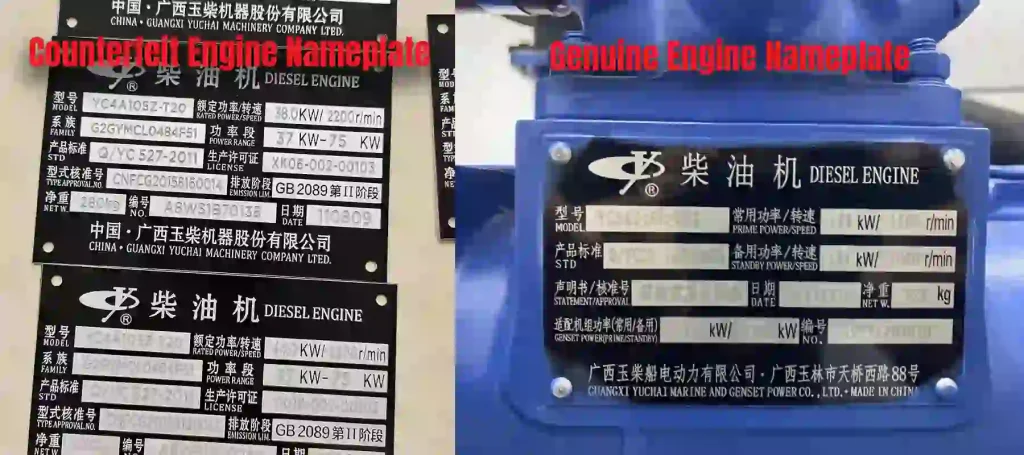
Currently, for mainstream engine brands such as Volvo Penta, Cummins, and SDEC (Shangchai), there are a large number of high-quality counterfeit casings and accessories on the market. The paint finish, air filter structure, font markings, and exterior details of these counterfeit units closely resemble those of genuine factory equipment, making it difficult to distinguish between genuine and counterfeit products with the naked eye.
Some unscrupulous manufacturers purchase high-quality counterfeit engine casings and, by forging equipment nameplates, misappropriating legitimate engine serial numbers, and using original factory documentation, package the counterfeit equipment as brand-new, genuine units for sale. The core risk of this type of counterfeiting lies in the fact that some counterfeit manufacturers can obtain legitimate and valid equipment serial numbers.
When procurement personnel verify the equipment through standard methods—such as checking official websites or verifying via phone—the equipment will appear to be genuine, making it impossible to detect the counterfeit using conventional verification methods. Legitimate power generation equipment manufacturers exclusively use brand-new, generator-drive engines from Cummins, Volvo Penta, Weichai, and SDEC (Shangchai), and can provide official, compliant warranty services from the respective brands.
Engines of the same model come in two versions: domestic warranty coverage and global warranty coverage. For overseas export projects, models with global warranty coverage should be prioritized to better ensure the implementation of after-sales service abroad.
Practical Tips to Avoid Pitfalls: Include specific binding clauses in the procurement contract to explicitly require the seller to guarantee that the supplied diesel engines are brand-new, factory-original units from the manufacturer, free from issues such as counterfeit branding, refurbishment, or model tampering.
If an officially authorized service center verifies the product to be counterfeit, a “ten-fold penalty for each counterfeit item” clause may be enforced. This provision effectively curbs manufacturers’ counterfeiting practices and reduces procurement risks.
2. Refurbished Used Engines: Signs of Refurbishment Are Difficult to Completely Hide
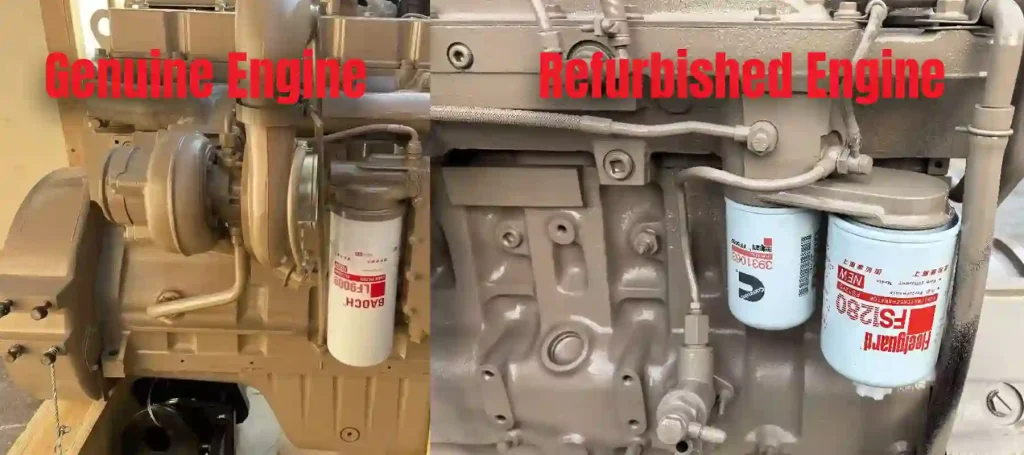
Used, refurbished engines from all major brands are available on the market. After undergoing a full repaint, these engines appear nearly as good as new; however, signs of refurbishment in hard-to-reach corners and hidden areas cannot be completely eliminated, allowing buyers to distinguish between new and used equipment by examining these details.
During the actual inspection, focus on hidden areas such as the corners of the engine body, gaps in piping, and screw grooves. Refurbished units typically exhibit rough touch-up paint and noticeable color discrepancies in the paint finish.
Additionally, feel the inner wall of the exhaust pipe; if there is a thick buildup of carbon deposits or oil residue, it indicates the unit has a history of long-term operation and is likely a refurbished used unit.
Practical Tips to Avoid Pitfalls: During the pre-delivery inspection, thoroughly record and photograph the engine’s unique serial number.
Use the brand’s official platform or authorized after-sales channels to check the unit’s manufacturing date, maintenance records, and operational history. If any usage or maintenance records are found, the unit can be identified as refurbished or used.
3. Tampering with Emissions Nameplates: Passing Off Older Models as New Units Meeting Current Standards
To increase product premiums, some small generator set manufacturers steal nameplate information from China Non-road Stage III-compliant engines and affix it to older engines that meet only China Non-road Stage II emission standards, thereby passing them off as new units meeting higher emission standards for sale. While the nameplate specifications of such tampered equipment comply with current standards, the core engine technology is outdated, leading to issues such as high fuel consumption, low operational efficiency, and excessive exhaust emissions.
Not only do these units have a higher failure rate and increased operating costs when used domestically, but when exported overseas, they are also prone to customs inspections resulting in seizure, return shipments, and fines, causing financial losses and project delays for the purchaser.
III. Common Tactics for Cutting Corners and Counterfeiting on the Market
1. Misleading Purchasers with Imitation Company Names and Counterfeit Brand Logos
To avoid the risks associated with hardware counterfeiting, some manufacturers register company names that are similar, homophonic, or have similar pinyin abbreviations to capitalize on the market visibility of mainstream brands, exploiting information asymmetries to mislead procurement personnel.
For example, some companies register names such as “XX Cummins Power Generation Equipment Co.” or “KMS Power Generation Equipment.” These companies have no equity, authorization, or partnership with the genuine Cummins brand; they merely assemble units using off-the-shelf, unbranded diesel engines and sell them under the guise of a well-known brand, misleading unsuspecting buyers.
2. Substitution of Materials in Alternators: Aluminum Wire and Copper-Clad Aluminum Used in Place of All-Copper Windings
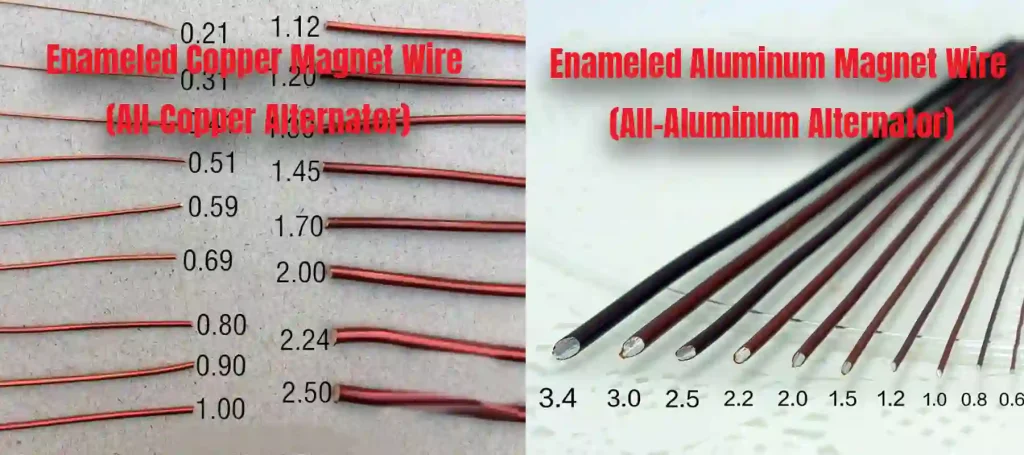
Since 2025, market prices for copper have continued to rise, widening the cost gap in the production of alternators. Currently, alternators on the market are primarily categorized into three configurations: all-copper windings, copper-clad aluminum windings, and pure aluminum windings.
There are significant differences in price, operational stability, and service life among equipment made from these different materials. Most low-cost units use copper-plated aluminum wire or copper-clad aluminum stator coils, disguised as all-copper-wound alternators through a surface copper plating process, making the deception difficult to detect.
While such equipment operates normally under short-term, light-load conditions, prolonged continuous operation can lead to issues such as overheating, voltage fluctuations, and reduced efficiency. After a period of use, the coils are prone to burning out, rendering the equipment unusable.
From an objective practical standpoint, copper-clad aluminum units are suitable for short-term backup applications at temporary construction sites and offer a certain level of cost-effectiveness; they do not constitute non-compliant or counterfeit equipment. However, such units have poor resistance to aging and are not suitable for demanding conditions such as continuous industrial operation or long-term primary power supply on ships; their failure rate over the long term is significantly higher than that of all-copper units.
In terms of excitation system configuration, brushless self-excited alternators are currently the industry standard due to their excellent voltage stabilization, maintenance-free operation, and low failure rate. To reduce production costs, some manufacturers still equip small- and medium-sized units (below 300 kW) with outdated phase-compound-excited alternators, resulting in generally poor operational stability and relatively higher long-term maintenance costs.
3. Counterfeit Electrical Switches of International Brands; Significant Safety Hazards with Automatic Transfer Switches (ATS)
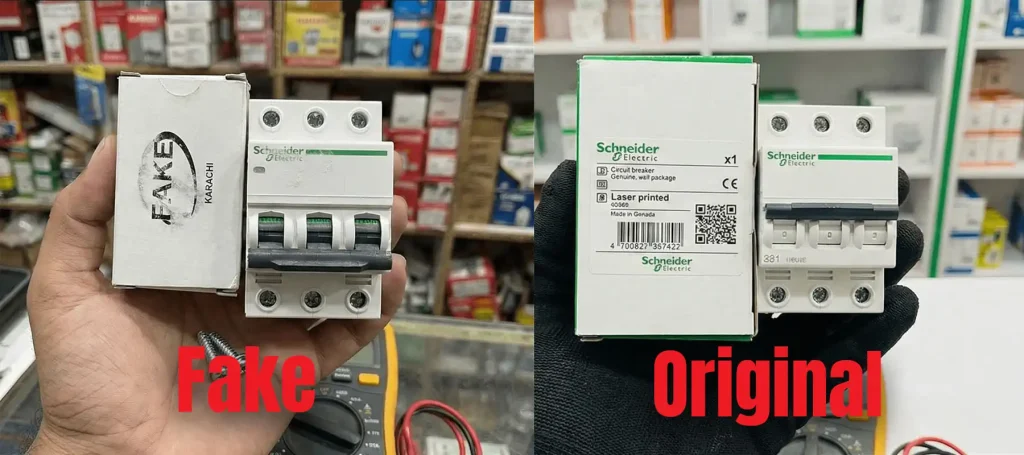
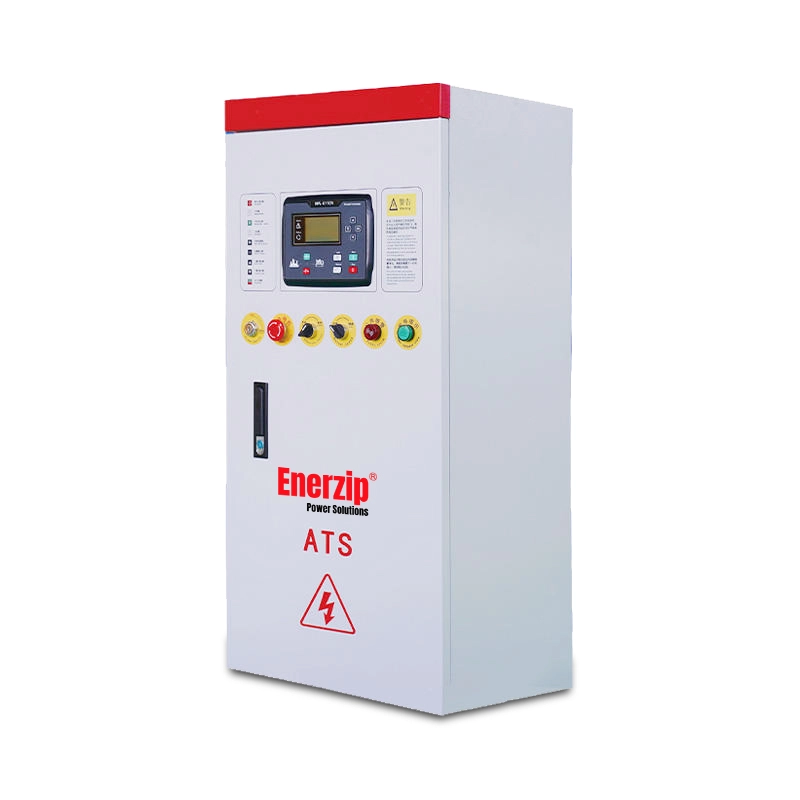
A large number of counterfeit electrical components imitating Schneider and ABB products are circulating in the market; the price difference between counterfeits and genuine products can be as high as 2–4 times, resulting in substantial profit margins. Among these, the automatic transfer switch (ATS)—a core component of generator sets—is the most commonly counterfeited and poses the most significant operational safety risks.
Counterfeit switches commonly suffer from downgraded specifications, such as inferior contact materials, simplified arc-quenching structures, and reduced protection functions. During operation, this can lead to failures such as power switching malfunctions, short circuits that fail to trip the circuit breaker, and lack of overload protection.
In critical power supply scenarios—such as construction sites, ship operations, and overseas engineering projects—this can easily cause circuit short circuits, equipment burnout, and complete system shutdowns. In severe cases, it may even result in safety incidents and trade disputes.
4. Lack of Professional Load Testing Leads to Misrepresented Power Ratings
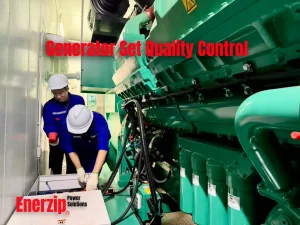
Legitimate generator set manufacturers with appropriate production qualifications are equipped with professional load banks and dedicated generator set test bays. Before each generator set leaves the factory, it undergoes standardized tests—including full-load and overload tests—to ensure that its power parameters are accurate and compliant.
In contrast, many small workshops and middlemen lack professional testing equipment; their power ratings are based solely on verbal claims without supporting actual test data, resulting in widespread misrepresentation of power ratings.
Practical Tips to Avoid Pitfalls: During on-site factory and product inspections, you can request that the manufacturer conduct an on-site 110% rated-power overload test.
If the manufacturer evades or refuses this test request under various pretexts, there is a high probability that the equipment’s actual output power is overstated.
IV. Common Fraud Schemes Specific to Marine Generator Sets (Key Reference for Exporters and Shipowners)
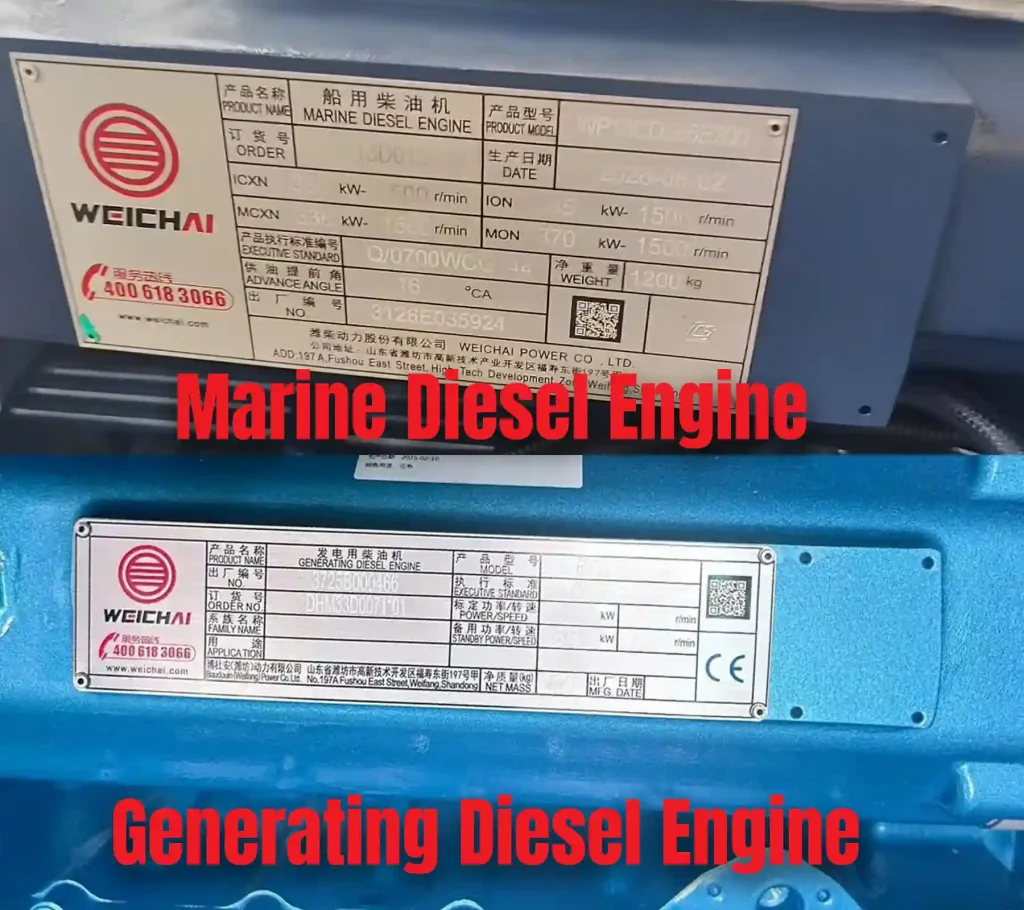
The schemes mentioned above primarily apply to land-based generator sets. Marine power supply conditions are far more demanding, with stricter requirements for corrosion resistance, shock resistance, moisture resistance, and certification.
Consequently, there are more specific fraud and cost-cutting schemes associated with marine equipment, which represent major risk points for exporters and shipowners during procurement. Some suppliers substitute marine-grade alternators with land-based alternators.
Without the heavy-duty marine-grade epoxy coating and specialized salt spray protection required for marine applications, the equipment will develop extensive rust after just 3–6 months of operation in the highly corrosive marine environment. Additionally, the structure of land-based alternators cannot accommodate the ±15° tilt conditions typical of shipboard operation, leading to frequent failures such as bearing wear, oil leaks, and rotor-stator contact once installed on board.
Other manufacturers substitute standard single-bearing alternators for the reinforced two-bearing alternators specifically designed for ocean-going vessels, resulting in equipment that cannot withstand the high-vibration conditions at sea and leading to a high failure rate. Cutting corners on the cooling system is another common practice.
Manufacturers eliminate marine-grade closed-loop heat exchangers and dual-circuit seawater/freshwater systems, replacing them with standard land-based water tanks. These cannot adapt to the unique conditions of seawater cooling on ships, causing the equipment to run at consistently high temperatures after installation and leading to frequent alarms and shutdowns.
Many units use standard industrial ATS switches instead of marine-grade switches. These switches lack explosion-proof, moisture-proof, and salt-spray-resistant properties and do not have CCS type approval or class certification.
In the damp and complex environment of the engine room, this can easily lead to safety hazards such as short circuits, switch malfunctions, and fires. There is also an issue of certificate forgery in the procurement of marine generator sets.
Some manufacturers forge or misappropriate classification society certificates from CCS, BV, DNV, and others. As a result, during annual ship inspections and customs clearance, the equipment is prone to being impounded, subject to fines, or returned, resulting in significant economic losses.
Regarding piping and fastener configurations, some manufacturers, in an effort to cut costs, use ordinary carbon steel screws and general-purpose rubber hoses instead of marine-grade stainless steel corrosion-resistant components. In environments subject to prolonged exposure to seawater and corrosion, this can easily lead to issues such as component rust, pipe leaks, and equipment damage.
Tips to Avoid Pitfalls in Marine Applications: Clearly specify in the purchase contract that engines, alternators, and switchgear components are all marine-grade models, accompanied by complete classification society certificates that can be verified on the official website.
The entire unit must be equipped with a dual-circuit heat-exchanger cooling system and marine-grade stainless steel corrosion-resistant piping and fittings to mitigate the risks of downgraded specifications and counterfeit products through proper configuration and certification.
V. Concealed Counterfeiting in Electronic Control Systems (Easily Overlooked, but Critical to Core Equipment Operation)
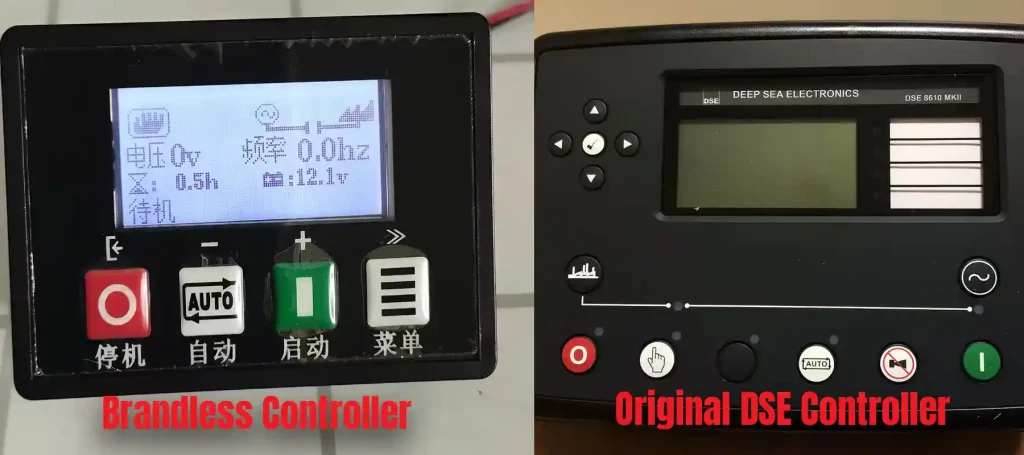
Most procurement personnel focus primarily on major components such as engines and alternators, and tend to overlook the configuration and authenticity of electronic control systems. However, since the controller serves as the core control unit of a generator set, the risks posed by counterfeit controllers can have a significant impact on equipment operation.
The market is flooded with counterfeit controllers imitating mainstream brands such as Deep Sea Electronics (DSE), ComAp, and SmartGen. These counterfeit devices typically omit protection functions for low oil pressure, high coolant temperature, overspeed, overcurrent, and short circuits.
Consequently, when the equipment malfunctions, automatic shutdown protection fails to trigger, easily leading to serious failures such as engine cylinder scoring and total equipment failure. Some vendors engage in false parameter labeling and feature downgrading.
While their quotes may specify the inclusion of mobile-app monitoring and remote communication functions, the relevant modules are actually removed and communication ports disabled upon shipment. This prevents remote monitoring, start/stop control, and maintenance functions at overseas construction sites and on vessels, thereby hindering the intelligent use of the equipment.
There are also issues of cost-cutting in the equipment’s wiring harness configuration, where standard, low-quality general-purpose cables are used in place of specialized marine-grade cables designed to be oil-resistant and weather-resistant. In the complex environment of an engine room—characterized by high temperatures, high humidity, and heavy oil contamination—these cables are prone to rapid aging, cracking, and short circuits, posing fire safety hazards.
Practical Tips to Avoid Pitfalls: Before the equipment leaves the factory, conduct on-site simulation tests of all the controller’s protective functions.
Verify that the serial number on the controller matches the manufacturer’s records. Additionally, require the manufacturer to provide specialized wiring harnesses that are waterproof, oil-resistant, and heat-resistant to ensure stable operation under complex working conditions.
VI. Risks Specific to Overseas Exports (Core Hazards in Foreign Trade Procurement)
When issues arise with equipment procured domestically, they are typically due to damage to the equipment itself. However, once equipment is exported to overseas markets such as Africa, French-speaking regions, and Russian-speaking regions, problems such as falsified specifications, downgraded components, and non-compliant certificates can trigger a chain reaction of economic losses and trade risks—these are hidden issues that most suppliers will not proactively disclose to buyers.
If equipment has issues such as tampered emission nameplates or failure to meet exhaust emission standards, customs and environmental inspections in the destination country will result in the equipment being detained or returned, incurring high port demurrage fees, warehousing fees, and round-trip ocean freight costs, which directly lead to delays and losses in overseas projects.
Non-standard components, such as counterfeit switches and controllers, cannot be accompanied by valid CE certification documents, preventing the entire unit from clearing customs and resulting in goods being stranded at the port and unable to be imported normally. There are also significant differences in equipment warranty coverage.
Models that only support domestic warranty coverage lack officially authorized service centers overseas. In the event of equipment failure, on-site repairs are impossible, and the equipment must be shipped back to China for servicing, incurring extremely high repair and logistics costs; Models equipped with a global warranty, on the other hand, can benefit from official after-sales support locally overseas, making operation and maintenance more convenient.
Safety incidents such as power outages, fires, and project damage caused by counterfeit electrical and electronic control components may lead overseas purchasers to initiate arbitration in accordance with international trade rules, holding the exporting company liable and seeking compensation—resulting in substantial trade disputes and economic losses.
VII. Hidden Pitfalls in Quotes and Contracts (General for International Trade Procurement)
While there are no obvious issues of falsification regarding the hardware configuration of some generator sets, vendors may exploit hidden loopholes in quoting rules and contract terms to indirectly inflate procurement costs and reduce after-sales rights, leading to procurement disputes. A common low-price “bare unit” tactic involves vendors quoting only the base price of the bare unit, while charging extra for accessories such as the base frame, vibration isolators, starting battery, exhaust silencer, control panel, and filters.
As a result, the final on-site price of the complete unit ends up being significantly higher than a legitimate, fully-equipped quote. Ambiguous trade term specifications are another common issue.
Suppliers may quote only a low FOB price while deliberately omitting hidden costs such as fumigation fees, packaging fees, inland transportation fees, and port charges, then impose last-minute price increases before shipment, thereby increasing pressure on the procurement budget. Warranty terms often involve wordplay: while sales representatives may verbally promise an extended warranty of 2–3 years during negotiations, the purchase contract specifies only a 1-year warranty for the entire unit.
Additionally, disclaimer clauses for consumables and wear parts exclude components such as filters, seals, bearings, and coils from warranty coverage, thereby reducing after-sales protection. Some vendors adopt a business model of selling generator sets at low prices to drive volume while profiting from high-priced spare parts.
Although the initial purchase price of the complete unit is low, the subsequent pricing of proprietary spare parts is high, resulting in persistently high overall costs for long-term equipment use.
Practical Tips to Avoid Pitfalls: Quotations and purchase contracts must clearly list the complete equipment configuration and a detailed breakdown of all included costs.
They should explicitly state the warranty periods for core components, consumables, and wear parts, and specify after-sales terms in detail. All rights and obligations are governed by the written contract; do not rely on verbal promises.
VIII. Hidden Tricks in Warranty and After-Sales Service
There are many hidden tricks in the after-sales warranty process. Some salespeople may verbally exaggerate the warranty period and scope of service, but these promises are not reflected in the purchase contract, and the seller will not honor them if the equipment malfunctions.
The warranty system for legitimate generator sets is transparent and standardized. Engine warranty standards strictly adhere to the original manufacturer’s requirements, and the warranty for the entire unit is fully managed by the original manufacturer.
For engines from certain partner brands, the warranty is uniformly covered by the manufacturer. The after-sales service process is straightforward and clear, effectively minimizing disputes.
Warranty periods for different equipment components vary, with the engine typically covered for a longer period. However, core electronic control components—such as the alternator, switchgear components, and controllers—are often covered for only 3 to 6 months.
Most purchasers fail to pay attention to this detail before signing the contract. Contract terms often fail to clearly define the criteria for distinguishing between quality defects and operator error or misuse.
When equipment malfunctions, suppliers may easily attribute the problem to improper operation and use this as a basis to refuse free maintenance and repair services, thereby infringing upon the purchaser’s rights.
IX. Third-Party Verification as a Fallback Plan (Preferred for High-Value Export Generator Sets)
Relying solely on contractual obligations and self-verification cannot completely eliminate procurement risks. For high-value, critical overseas generator set export projects, a third-party verification process may be added to comprehensively ensure equipment compliance.
Prior to shipment, a professional third-party organization can be commissioned to conduct a 4-hour continuous full-load test at 100% rated power and a 1-hour stability test at 110% overload, and to issue an official test report for record-keeping, ensuring that the equipment’s power parameters genuinely meet the specified standards. Through third-party material testing, the conductor material of the alternator windings can be verified to confirm that the equipment features all-copper windings, thereby eliminating downgrading issues such as the substitution of copper-clad aluminum or pure aluminum materials.
By leveraging third-party agencies to coordinate with official brand channels, the authenticity of engines, electrical components, and classification society certificates can be verified one by one, eliminating the risks of counterfeit brands and forged certificates. We utilize third-party container loading supervision services, with staff taking photos and videos throughout the process to document the shipment, preventing the substitution of parts or discrepancies between the shipped goods and the order specifications prior to shipment.
This documentation can serve as evidence for arbitration in international trade disputes. For high-value export projects, SGS pre-shipment inspection services are available.
Professional engineers verify the actual configuration of the units and the authenticity of core components on-site, require the manufacturer to rectify any non-conformities, and complete a full set of factory tests to further ensure equipment quality and protect procurement rights.
X. Rational Selection: Distinguishing Between Compliant, Low-Cost Equipment and Non-Compliant, Counterfeit Equipment
When procuring generator sets, one should not assume that all low-cost equipment is counterfeit. Instead, make rational selections based on actual operating conditions to avoid the misconception of applying a one-size-fits-all approach.
For short-term, temporary backup power supply scenarios at construction sites, compliant copper-clad aluminum-wound alternators, economical domestic ATS switches, and standard domestic engines can all meet operational needs. These offer reasonable value for money and fall within the category of compliant equipment.
For demanding power supply scenarios such as long-term continuous industrial operation, offshore vessel applications, and key government projects, it is recommended to prioritize generator sets with all-copper windings, switchgear components from established brands, and original-equipment manufacturer (OEM) engines with global warranties. Such equipment offers greater operational stability, lower failure rates, and a comprehensive after-sales support system, resulting in a more favorable overall cost of ownership over the long term.
Overall, equipment selection should be guided by the following core criteria: equipment with accurately labeled specifications, complete certification documents, compliant configurations without tampering, and no signs of rebranding or refurbishment is considered legitimate and compliant; equipment with deliberately inflated specifications, substituted core materials, tampered information, counterfeit well-known brands, or rebranded/refurbished units is considered non-compliant and counterfeit, and should be strictly avoided during the procurement process.