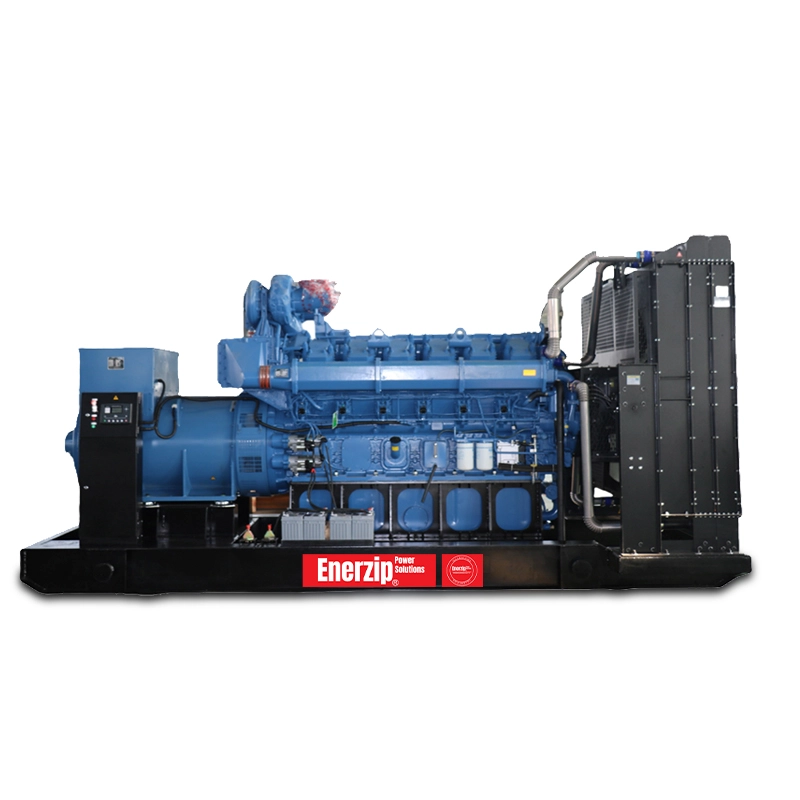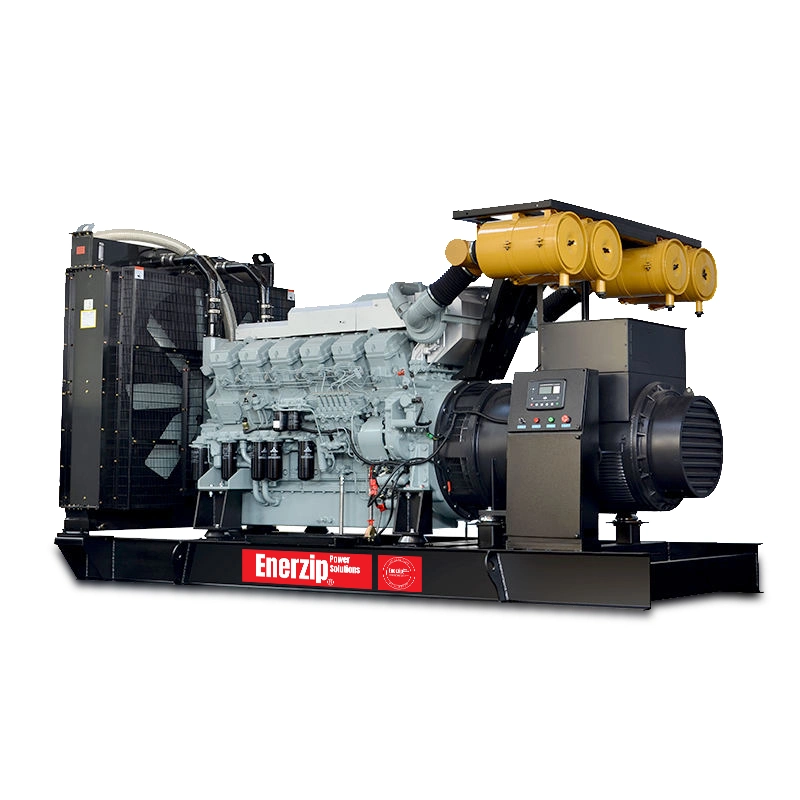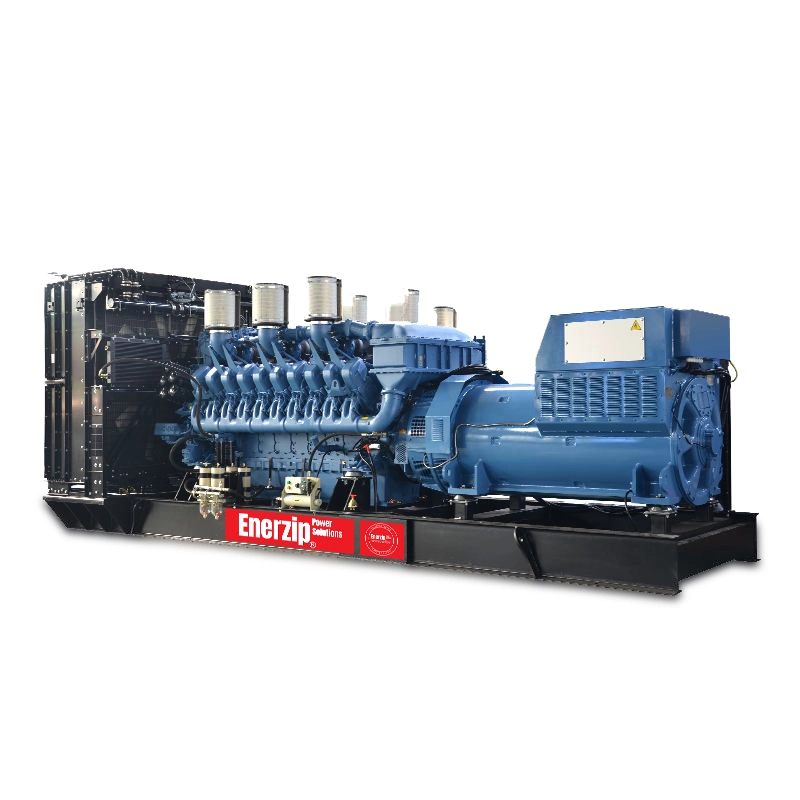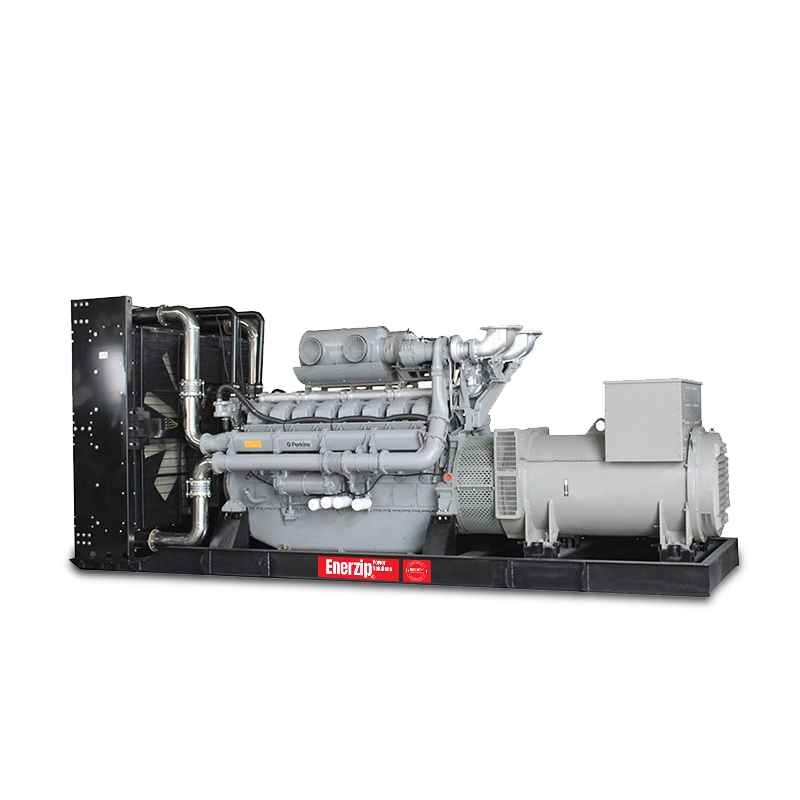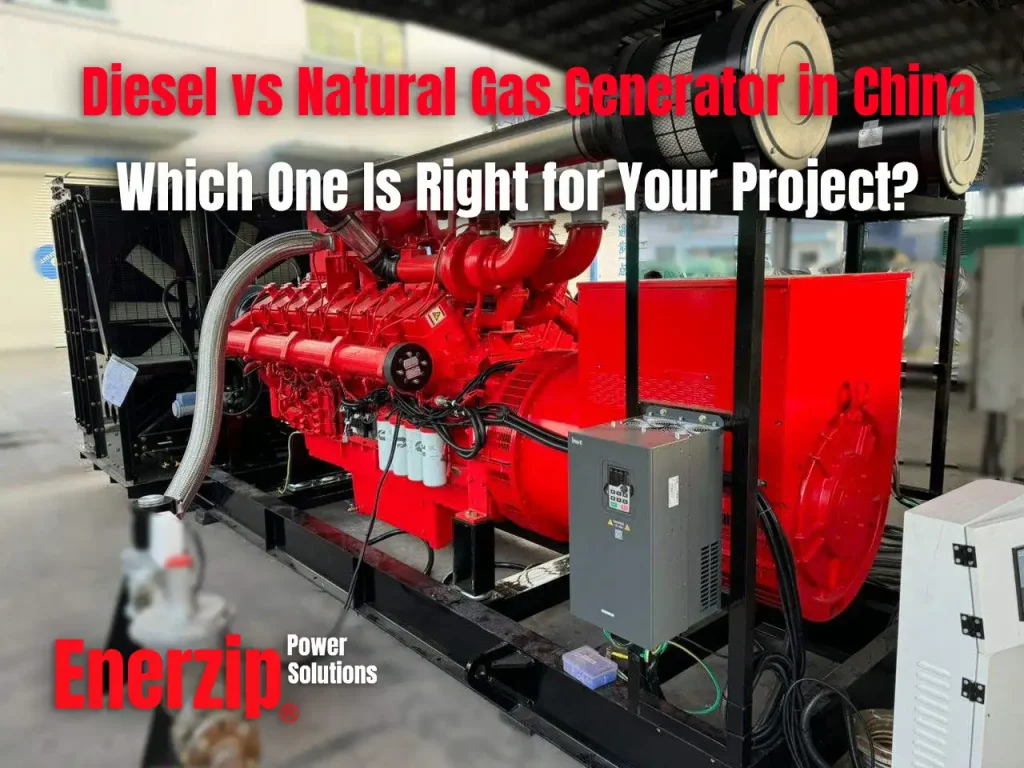
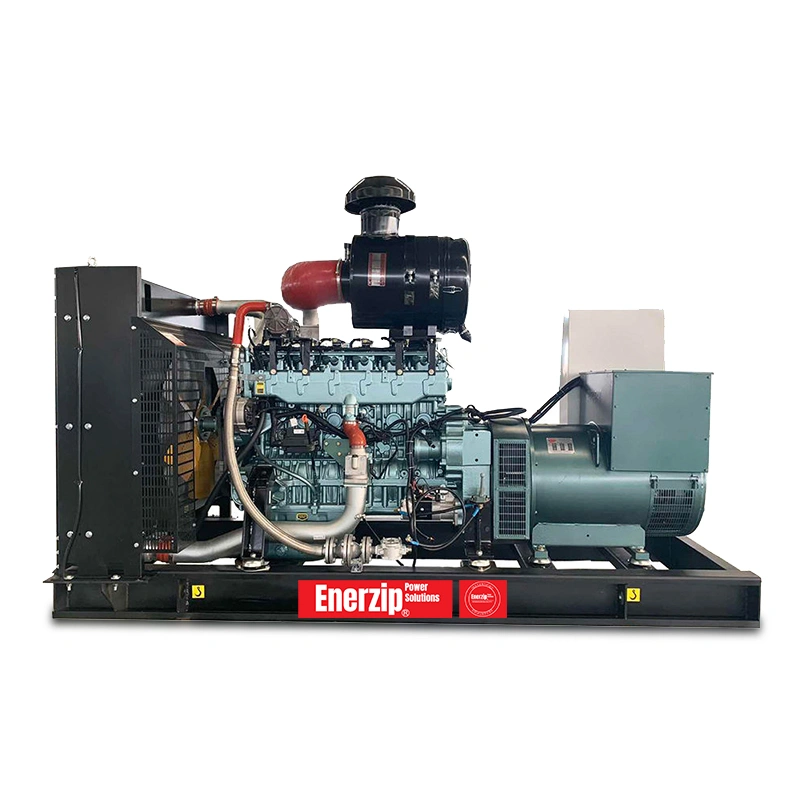
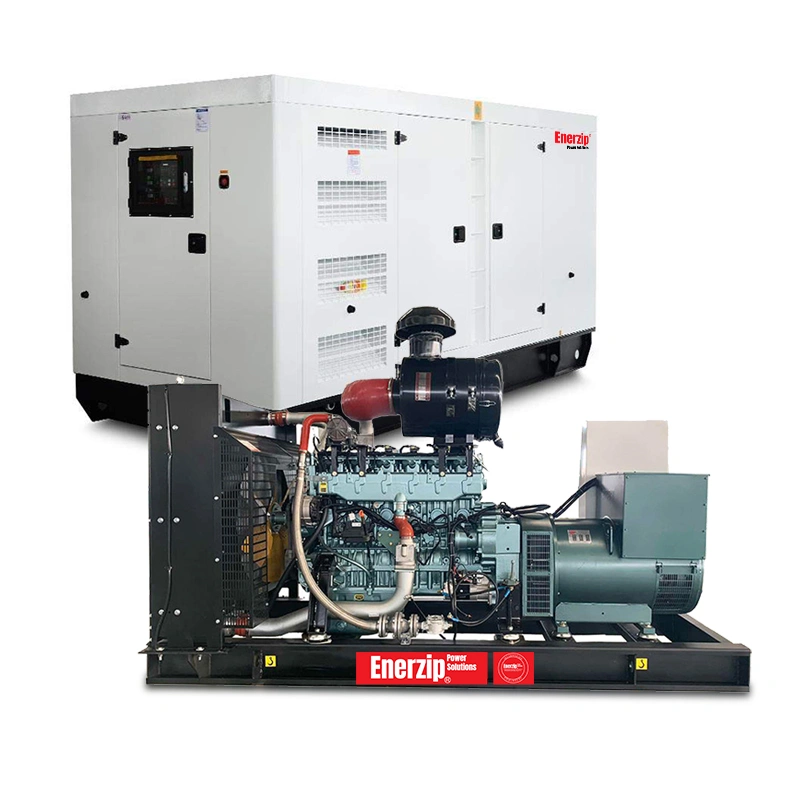
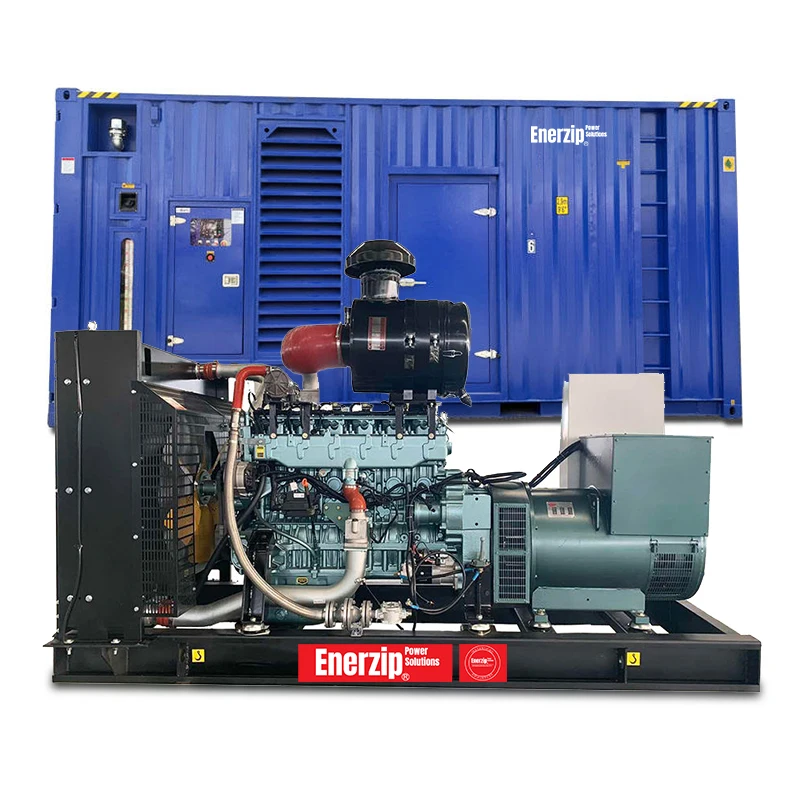
Powered by Enerzip® Proprietary Engines | Engineered for Farm-Scale Biogas Applications (20kVA – 250kVA)
From a manufacturer’s engineering perspective, small biogas projects fail not because of technology, but because equipment is over-engineered, expensive, and difficult to maintain in rural environments. The Enerzip® E Series Biogas Generator Sets were developed specifically to address these realities.
As a biogas generator manufacturer and factory supplier, Enerzip designs the E Series around proven agricultural engine architecture rather than complex automotive or high-speed industrial platforms. By adapting the Ricardo-based mechanical engine structure for biogas combustion, we provide a practical, serviceable, and cost-controlled solution for farms and small rural enterprises converting organic waste into electricity. For series comparison across farm-scale and industrial biogas projects, you may also explore the Biogas Generator Sets Series.
1. Engine Platform: Proven Agricultural Architecture
At the core of the E Series is the Enerzip® proprietary engine platform, derived from the classic Ricardo agricultural engine design that has been used globally in farm machinery for decades. For general reference on the engineering heritage behind this platform, buyers may also review Ricardo engine development and testing expertise.
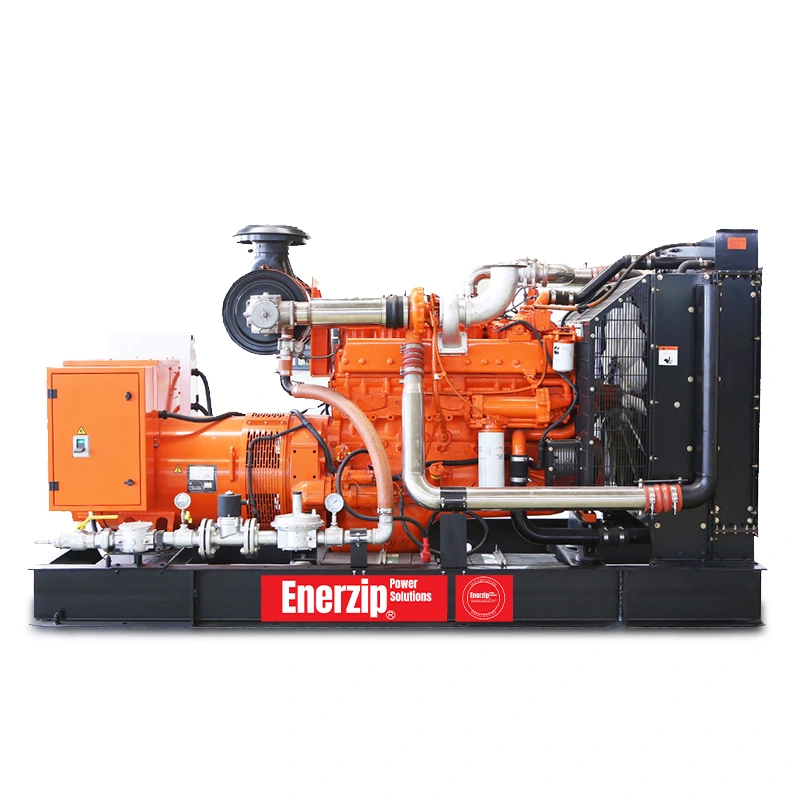
Unlike electronically intensive gas engines, this platform relies on a mechanically straightforward layout with wet cylinder liners and an overhead valve (OHV) configuration. From our manufacturing experience, this design allows engines to be serviced locally without specialized diagnostic tools, making it suitable for farms where technical resources are limited.
The heavy cast-iron engine block provides stable thermal behavior and structural rigidity, helping the engine tolerate the mild acidity, moisture, and variable gas quality typically found in farm-scale biogas systems.
2. Biogas Combustion Adaptation for Low-BTU Fuels
Farm-produced biogas is inherently unstable. Methane concentration, moisture content, and trace contaminants fluctuate daily depending on feedstock and digester conditions. The E Series is adapted specifically for this operating reality.
The engine is converted to spark-ignition using a high-energy electronic ignition system to ensure reliable combustion even at lower methane levels. A vacuum-demand Venturi gas mixer is employed to automatically regulate the air-fuel ratio based on engine load, eliminating the need for complex electronic calibration.
Critical intake components are treated for corrosion resistance to mitigate the long-term effects of hydrogen sulfide (H₂S) and water vapor commonly present in agricultural biogas.
3. Alternator Selection: Practical Electrical Reliability
In farm environments, electrical stability is more important than peak efficiency. The E Series is equipped with brushless alternators using 100% copper windings and Class H insulation to ensure durability under continuous operation.
An automatic voltage regulator (AVR) maintains stable output voltage, protecting agricultural loads such as ventilation fans, water pumps, feed systems, and lighting circuits. From field feedback, this configuration provides sufficient power quality without introducing unnecessary cost or maintenance complexity.
4. Control System: Simple Operation with Essential Protection
The E Series control philosophy focuses on essential protection rather than advanced automation. Digital controllers from SmartGen or Datakom are used to provide clear real-time monitoring of voltage, frequency, coolant temperature, and oil pressure.
Automatic shutdown protection is included for low oil pressure, high coolant temperature, and overspeed conditions. For biogas installations with gas holders, the generator can be configured to start automatically based on external gas pressure or level signals, allowing basic automation without operator intervention.
5. Cooling System: Designed for Rural Operating Conditions
Agricultural installations often operate in high-temperature, dusty environments with limited airflow. To address this, the E Series uses an oversized radiator package rated for ambient temperatures up to 50°C.
The cooling system layout allows easy access for manual cleaning, which is essential in farms where dust, feathers, and organic debris can accumulate quickly. This design reduces overheating risk during extended summer operation.
6. Frame Structure and Gas Safety Integration
Each E Series unit is mounted on a heavy-duty steel base frame manufactured in Enerzip’s own factory. Integrated vibration isolators reduce mechanical stress on both the engine and alternator during continuous operation.
A factory-assembled gas train is supplied as standard, including a manual shut-off valve, electrically actuated solenoid valve, and zero-pressure regulator. This configuration ensures that biogas only flows when engine vacuum is present, minimizing safety risks associated with uncontrolled gas release.
7. Typical Applications
Based on real installation scenarios, the E Series is commonly used in:
-
Livestock farms such as piggeries and poultry operations where manure digestion produces stable biogas
-
Rural cooperatives utilizing shared organic waste for local power generation
-
Small food processing facilities generating organic wastewater suitable for anaerobic digestion
These applications typically prioritize low capital investment, simple maintenance, and reliable continuous operation over maximum efficiency or grid-scale performance.
Why Enerzip® E Series Biogas Generator Sets
The Enerzip® E Series is designed as a practical biogas generator solution rather than a laboratory-grade power system. By focusing on mechanical simplicity, proven agricultural engine architecture, and factory-controlled manufacturing, Enerzip provides small biogas users with equipment that aligns with real operating conditions.
For farms and rural enterprises seeking affordable, repairable, and dependable renewable power, the E Series offers a balanced approach that prioritizes uptime, serviceability, and return on investment over unnecessary technical complexity.