Last updated: 09-Apr-2026
Update policy: This guide is reviewed when generator rating standards, performance-class guidance, Chinese tender practice, export quotation norms, or common project misunderstandings around ESP, PRP, COP, and LTP materially change.
Scope: Practical rating-selection guidance for industrial generator systems (diesel / natural gas / biogas), focused on how to choose between standby, prime, and continuous power based on duty cycle, operating hours, average load, utility relationship, project acceptance logic, and contract clarity.
Executive Summary
If your generator is installed mainly to protect the site when utility power fails, you are usually dealing with standby or emergency-backup duty. If the generator is expected to carry the site as the main working source under varying load, you are usually dealing with prime power. If the set must run for long periods at a stable, non-varying base load, you are usually dealing with continuous power.
The real problem in generator projects is that many buyers do not ask for the rating directly. They ask for “500 kW,” “1000 kVA,” or “best price for a diesel generator,” and different suppliers respond with different assumptions. One supplier may quote an emergency-backup number. Another may quote a working-duty number. A third may not clearly state the rating basis at all. That is why generator rating confusion still causes quotation disputes, comparison errors, contract misunderstandings, and acceptance problems.
In China, the current framework is aligned with the international ISO framework. In practical terms, that means the rating logic itself is not usually the source of confusion. The real source of confusion is how different markets, sales teams, data sheets, and catalogs present the same machine.
A Fast Comparison Before We Go Deeper
| Duty idea | Typical load type | Typical operating pattern | Overload logic | Best fit | Common sales habit | Most common buying mistake |
|---|---|---|---|---|---|---|
| Standby / emergency backup | Variable | Outage support, limited annual hours | Usually no overload under ISO-style ESP; always check the exact data sheet | Hospital backup, building backup, data center outage support | Often highlighted first in export catalogs because the headline number looks larger | Buyer assumes the quoted number is suitable for daily working duty |
| Prime power | Variable | Unlimited annual hours, but average load matters | Limited overload is usually allowed under stated conditions | Construction, mining, remote industrial power | Often overlooked in early sales discussions even when it is the real working-duty basis | Buyer compares prime against standby as if they were the same promise |
| Continuous power | Constant or non-varying | Unlimited annual hours | No overload | CHP, base load, utility-parallel stable process load | More common in technical or utility-parallel discussions than in generic backup sales | Buyer assumes continuous simply means “better than prime” |
| Limited Time Prime | Constant or non-varying | Limited annual hours | No overload | Some capped-hour peaking or specific limited-duty projects | Often misunderstood or mixed into standby discussions | Buyer treats every “500 hours” statement as if it were standby |
Why This Subject Causes So Many Expensive Mistakes
The generator business still has a simple but costly habit: too many people compare the power number before they compare the duty model.
A customer asks for a 1000 kW generator. One supplier quotes the biggest emergency number because it looks more competitive. Another supplier quotes the working-duty number because the site is remote and the machine will actually be the main source of power. A third supplier sends a quotation that only says “1000 kW diesel generator” without clearly stating whether that means ESP, PRP, or something else. On paper, the offers may look similar. In reality, they are not promising the same thing.
This is one of the most common quotation risks in generator projects. The misunderstanding often does not appear on day one. It appears later when the owner starts using the set for more hours than expected, when fuel consumption does not match the forecast, when the plant operator assumes the machine can run like a prime unit, or when acceptance testing reveals that the project team and supplier were not working from the same duty assumption.
That is why generator rating is not a marketing detail. It is part of the technical and commercial promise.
The Standard Basis You Should Actually Rely On
China’s Current Basis
For current China projects, the base reference is GB/T 2820.1-2022, which aligns with ISO 8528-1:2018 for application, rating, and performance. For practical project work, that means China and international projects are not built on different core rating theories. If a project is confused, the confusion usually does not come from China using one rating definition and overseas markets using another. It usually comes from sales language, catalog habits, and quotation shortcuts.
For real specification work, buyers should also remember that generator rating is not only a Part 1 issue. The broader standards family also covers technical declarations and, where relevant, safety-service applications. That matters because a serious project should never stop at “How many kW?” It also needs to ask under which rating basis, at what voltage and frequency, under what ambient conditions, with what operating mode, and under what acceptance logic.
International References
Internationally, the core current reference remains ISO 8528-1:2018, which defines classifications for the application, rating, and performance of generating sets consisting of a reciprocating internal combustion engine, AC generator, and associated equipment.
For practical specification work, the broader ISO family also matters. Technical declarations for specification and design, alternator-related requirements, and emergency power supply to safety services all influence how a generator package should be described, compared, and accepted. In other words, the rating label alone is only one part of the real engineering conversation.
Why Older Documents Still Confuse the Market
A lot of market confusion comes from the fact that not every brochure and catalog has been updated at the same speed. Many older documents still reference older ISO editions or earlier domestic standards. That does not automatically mean the supplier is dishonest. It often means the documentation was built on an older standard cycle and was not fully updated later. But it does mean project teams should verify which edition and which rating language are actually being used before comparing quotations.
The Most Important Distinction: Standard Language and Market Language Are Not Always the Same
This is the point that separates a useful guide from a shallow one.
In search behavior, buyers often use the word standby as a general term for a backup generator. In formal rating language, however, the safer contract language is often ESP, PRP, COP, and where relevant LTP. At the same time, some manufacturers also publish commercial rating names such as Standby, Mission Critical, or other application-specific labels that do not map perfectly to ISO-style terminology.
That means the word standby can mean three different things depending on context:
- a generic search term used by a buyer,
- a commercial label used in a catalog,
- or a rating concept that the project team assumes is formally defined.
Those are not always the same thing.
This is exactly why many export quotations go wrong. The buyer thinks “standby” means “backup when the utility fails.” The supplier thinks “standby” means the highest headline power figure in the brochure. The engineering team thinks the machine will only operate a limited number of hours per year. The site operator later uses it like a prime-duty machine. None of those assumptions are automatically aligned unless the quotation and contract force them to be aligned.
For Enerzip, this is why we prefer to state the rating basis directly and early. Search language can stay broad. Contract language should not.
What Standby, Prime, and Continuous Really Mean in Site Language
Standby Power: Outage Support, Not Daily Working Duty
In real site language, standby duty means the generator exists mainly because the utility is expected to be available most of the time. The genset is there to start, transfer, stabilize, and support the required loads when utility power is lost.
This is the normal logic for hospital backup generators, commercial building backup systems, many telecom backup installations, and many data center outage-support applications.
The key mistake is assuming that because the standby number looks large, the same machine can be treated like a daily working-duty unit without further checking. That is not a safe assumption.
In Enerzip RFQ reviews, one of the most common standby-related mistakes is that the customer asks for an “automatic backup generator” but later describes a site where the generator will run for long hours during grid weakness, regular curtailment, or unstable utility conditions. At that point, the project may already be drifting out of pure standby logic and into a different duty model.
Prime Power: The Rating for Variable-Load Working Power
Prime power is the correct language when the generator is expected to serve as the real working source under a variable load. This is usually the more honest basis for construction sites, mining sites, remote industrial facilities, temporary production power, remote camps, and off-grid operations that commonly rely on diesel generator sets for daily working power.
This is also where many buyers get trapped by headline numbers. A standby figure may look stronger because it is larger, but if the site will genuinely use the machine as working power, then prime duty is usually the more meaningful comparison basis.
In Enerzip project discussions, this is one of the clearest dividing lines between a simple price inquiry and a real engineering inquiry. Once a customer tells us the generator will be the main source of supply, the conversation changes immediately. We stop treating it as a simple backup package and start looking at average load, runtime, cooling margin, maintenance access, fuel planning, and overload expectations.
Continuous Power: Flat, Long-Duration Base Load
Continuous duty is not simply “prime with more hours.” It is a different operating idea. It fits applications where the load is constant or non-varying and the machine is expected to run long-term under a stable base-load pattern.
That makes continuous power more relevant for CHP and trigeneration, utility-parallel base-loading, stable process loads, and many long-duration projects using natural gas generator sets.
A common misunderstanding is to assume that “continuous” is automatically the safest or strongest choice. In reality, it is the correct choice only when the load profile actually matches that kind of duty. If the load is highly variable, continuous duty is not automatically the right answer.
Limited Time Prime: The Category Many People Forget
Even though this article focuses on standby, prime, and continuous, serious buyers should still know about LTP because it explains much of the “500-hour” confusion that appears in generator sales.
In practice, many people hear “500 hours” and attach it to standby. But depending on the source, that 500-hour logic may belong more naturally to Limited Time Prime or to a manufacturer’s specific commercial standby label rather than to every use of the word “standby.”
The safest lesson is simple: never rely on the word alone. Always check the exact rating basis on the data sheet.
Why China and Export Markets Often Talk Past Each Other
One of the biggest practical gaps in generator sales is not the standard itself. It is the sales habit.
In many export markets, customers and distributors often begin by comparing the largest headline number because it is faster and more visible in a catalog. In many project-driven China discussions, the conversation tends to move more quickly toward actual operating duty, because project teams know that acceptance, runtime, and system behavior matter just as much as the nameplate.
This does not mean China and overseas markets use different core standards. They do not. The real difference is that many export conversations remain catalog-led, while many domestic project conversations become application-led much earlier.
This difference is important for Enerzip because we work in both directions: factory-side configuration logic and project-side duty logic. One of the most common export quoting problems we see is that customers compare standby power from one supplier to prime power from another without realizing they have changed the basis of comparison. The machines may even be built around similar engine platforms, but the commercial promises are not the same.
How to Choose the Right Rating by Application
Hospital Backup and Life-Safety Support
For a hospital backup generator or similar life-safety installation, the normal starting point is standby or emergency-backup duty because the utility is usually the normal source and the generator exists to preserve essential operations during outages. Projects involving life-safety and emergency support should also be reviewed against ISO 8528-12 for emergency power supply to safety services.
But this does not mean the project is simple. In our experience, hospital and critical-building projects often fail not because the generator is too small on paper, but because the emergency load sequence was not thought through properly. The questions that matter include which loads transfer first, which motors restart automatically, whether UPS recharge creates secondary load stress, and how much voltage and frequency deviation the system can tolerate during transfer.
That is why hospital backup should be treated as a system-integration topic, not just a genset topic.
Data Center Backup Power
A data center generator is usually still an outage-support application, but real data center backup power design is rarely a simple standby package in practice. Data center projects often involve UPS-backed systems, staged block loading, remote monitoring, redundancy logic, and stricter operating expectations than ordinary commercial buildings.
At Enerzip, we do not like to evaluate a data center generator only by the standby number in the brochure. We also want to understand how the site will pick up block loads, what the alternator and control system must handle, whether the plant is single-set or multi-set, what maintenance-mode assumptions exist, and whether the owner is thinking only about outages or also about longer grid-quality events.
That is where real selection happens.
Construction and Mining Projects
A construction site generator or mining power generator usually belongs in the prime-power world because the generator is typically the actual working source rather than a pure emergency asset.
This is where the rating decision starts to affect real operating cost. A buyer who chooses on standby headline power alone may end up with the wrong working-duty basis. Once the project enters long daily runtime, variable load, dust, heat, motor starts, and field-service conditions, the truth of the application becomes unavoidable.
This is one reason why Enerzip treats construction and mining inquiries differently from building-backup inquiries even when the requested kW is the same. The number may be identical. The duty is not.
CHP, Gas Power, and Stable Industrial Operation
For CHP, utility-parallel, and stable process load applications, continuous power often becomes more relevant. This is particularly true in some natural gas or biogas projects, where the goal is not just backup resilience but long-duration operating economics and stable output.
In those cases, the correct question is often not “What is the biggest emergency number?” but “What is the most truthful long-duration rating for the actual load profile?”
Multi-Generator and Paralleling Systems
A common question is whether a paralleling system should automatically be treated as standby or prime. The answer is no. Paralleling hardware does not define the rating. The site operating model defines the rating.
A hospital with multiple generators in parallel can still be a standby application. A remote industrial site with multiple units in parallel can still be a prime-power application. A base-load gas plant with multiple units in parallel can still be a continuous-duty application.
When Enerzip reviews a multi-set project, one of the first questions we ask is not “How many units are there?” but “How will this plant actually operate?” That answer matters far more than the switchgear count.
Why Chinese Tender and Acceptance Logic Changes the Buying Process
One of the most useful differences between a generic web article and a practical project guide is that real projects do not buy only by power number.
In many China project environments, tender and acceptance logic often includes more than the genset headline. The project may specify voltage, frequency, power factor, performance class, ATS scope, interface requirements, fuel autonomy, noise expectations, and other system details. That means the generator is not being purchased as an isolated product. It is being purchased as part of a technical acceptance package.
This is why some export buyers struggle when they move from distributor-style generator buying to project-style generator buying. A short quote with model and power may be enough for some resale situations. It is usually not enough for an engineered project.
For Enerzip, this is also why RFQ quality matters so much. A better RFQ produces a better rating decision, a better quotation, and a better project outcome.
G1, G2, G3, and G4: Useful, but Often Oversimplified
Many buyers know they want “G3” because they have heard it associated with more demanding loads. But in real projects, simply writing “G3 required” is not always enough.
The more useful question is whether the project’s load-step assumptions are standard or custom. If the site has special restart logic, unusual UPS interaction, or non-standard block-loading expectations, then the project may not fit neatly into a simple off-the-shelf performance-class label. In that case, the right path is to define the actual acceptance targets rather than hide the complexity behind a short label.
This is one more example of the same broader point: the problem is rarely the generator alone. The problem is usually the generator + load behavior + control logic + acceptance expectation.
Export Quotation and Contract Rules That Prevent Claims
The safest quotation is not the shortest quotation.
A quotation that says only “500 kW diesel generator” is incomplete. A quotation that says “500 kW standby” is still incomplete if the project does not make clear what that means in the supplier’s rating language.
The safer export format is to show the rating basis clearly:
- ESP: ___ kW / ___ kVA
- PRP: ___ kW / ___ kVA
- COP: ___ kW / ___ kVA
- LTP: ___ kW / ___ kVA, if relevant
And then declare the key operating conditions:
- voltage
- frequency
- phase
- power factor
- ambient temperature
- altitude
- annual operating hours
- load type
- isolated or utility-parallel mode
At Enerzip, one of the most common contract-side mistakes we try to prevent is the use of a power number without a duty basis. That one omission can create problems all the way through FAT, site commissioning, and warranty discussions.
Why Wrong Rating Choice Affects Life and Cost
The wrong rating does not always cause immediate failure. More often, it causes slow technical and commercial damage.
A machine quoted under standby logic but used like a prime machine will lose margin. A badly oversized prime unit may spend too much time underloaded. A continuous-duty selection for a load that is not actually flat may be commercially inefficient. In all of these cases, the equipment may still run, but it is no longer running under the duty assumptions that shaped the original quotation.
That is why the best generator selection process does not start with “Which model is cheapest at this kW?” It starts with the real duty, the average load, the actual operating hours, and what the site expects the machine to do.
For Enerzip, this is the most practical difference between a simple inquiry and a serious project.
The Most Common Buyer Mistakes
The first mistake is believing that the biggest published number is automatically the best offer. It is not.
The second mistake is assuming that standby can be used as prime as long as the engine is large enough. That is also not safe.
The third mistake is assuming that because the China and ISO frameworks are aligned, the wording in the quotation no longer matters. It still matters a great deal.
The fourth mistake is casually asking for G3 without checking whether the project actually requires custom performance targets.
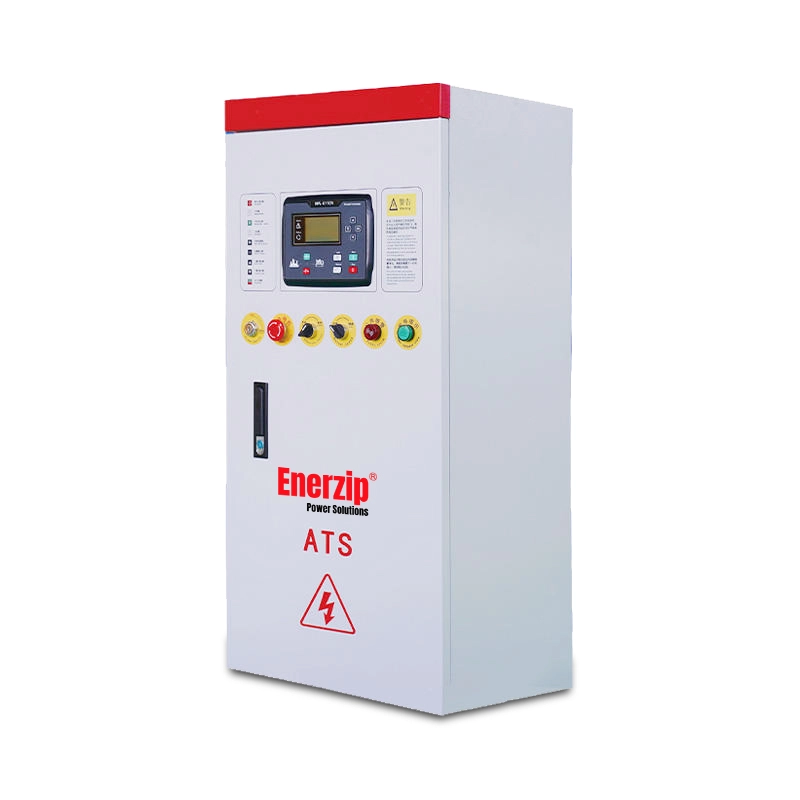
The fifth mistake is treating rating as a generator-only issue when it is actually a generator + ATS + control + operating mode + acceptance issue.
Enerzip’s Practical Selection Method
When Enerzip reviews a serious RFQ, we usually reduce the rating question to five operating truths:
- Is the generator for outage backup, daily working power, or stable base load?
- Is the load variable, constant, motor-heavy, UPS-backed, or process-sensitive?
- How many hours per year will the machine realistically operate?
- Will the site run isolated, ATS-backed, or utility-parallel?
- What are the expected average load factor and biggest step loads?
Once those five points are clear, the correct rating basis usually becomes much easier to identify. That is why Enerzip prefers to define duty early, rather than correcting misunderstandings later in the quotation stage.
FAQ
Is standby power always higher than prime power?
In many catalogs, yes, the standby or emergency figure is higher than the prime figure for the same model. But the key question is not which number is bigger. The key question is which duty model matches the site.
Can a standby generator be used as prime power?
It should not be treated as a casual substitution. If the site will use the machine as its real working source, prime power is usually the more honest starting point.
What is the difference between ESP and PRP?
ESP is the emergency-backup style concept used for outage support under limited annual hours. PRP is the working-duty concept used for variable load and unlimited annual hours, with average load and overload conditions treated differently.
Is 500 hours per year a standby rule or an LTP rule?
It depends on the source. In some rating frameworks, 500-hour logic is associated with LTP. In some manufacturer commercial terminology, 500-hour logic may also appear under a standby label. This is why the exact data sheet definition matters.
Which rating is usually best for a mining generator?
Usually prime power, because mining sites often use generators as the real working source under variable load.
Which rating is usually best for a hospital backup generator?
Usually standby or emergency-backup logic, because the utility is normally present and the generator exists mainly for outage support.
Which is better: standby or prime generator rating?
Neither is “better” in general. The correct choice depends on how the site actually operates.
Can I compare generator prices without checking ESP or PRP?
You can, but the comparison may be wrong. If the quotation basis is different, the price comparison is not technically fair.
How should ESP, PRP, and COP be written in an export contract?
The safest method is to list the rating basis explicitly in kW and kVA, then state the governing rating basis for the ordered configuration together with voltage, frequency, ambient, altitude, annual hours, load type, and operating mode.
Should quotations show both kW and kVA?
Yes, in most B2B generator projects that is the safer practice, especially when the project spans multiple markets or multiple engineering teams.
Final Recommendation
If you remember only one sentence from this guide, make it this:
Do not buy a generator by kW alone. Buy it by duty.
A hospital backup generator, a commercial standby generator, a data center backup package, a construction site generator, a mining power generator, and a gas-fueled base-load system may all fall under the broad category of industrial generator projects, but they do not live under the same rating logic. The correct selection depends on outage duty vs working duty, variable load vs constant load, annual operating hours, average load factor, utility relationship, and how the project will actually be accepted.
That is the reason Enerzip treats generator rating as a front-end engineering decision rather than just a product-label decision.
Talk to Enerzip About Your Generator Rating Selection
If you are comparing standby, prime, and continuous generator ratings for a real project, send Enerzip these inputs first:
- required kW/kVA
- voltage and frequency
- phase
- average and peak load
- largest motor starting requirement
- annual operating hours
- ambient temperature
- altitude
- outage backup vs daily working power vs base-load duty
- isolated vs utility-parallel mode
That is the fastest way to determine whether ESP, PRP, COP, or LTP is the correct basis before quotation and contract confirmation.
References
- GB/T 2820.1-2022, Reciprocating internal combustion engine driven alternating current generating sets — Application, ratings and performance
- GB/T 2820.7-2024, Technical declarations for specification and design
- ISO 8528-1:2018, Reciprocating internal combustion engine driven alternating current generating sets — Application, ratings and performance
- ISO 8528-7:2017, Technical declarations for specification and design
- ISO 8528-12:2022, Emergency power supply to safety services
- Caterpillar, Understanding Generator Set Ratings
- Caterpillar, Demystifying Generator Set Ratings
- Cummins, Understanding ISO 8528 Generator Set Ratings