Reviewed by: Enerzip Power Technology (Weifang) Co., Ltd. – Applications & Integration Team
Last updated: 08-Apr-2026
Update policy: This guide is reviewed when common project requirements for generator packaging, enclosure noise targets, transport certification, canopy and container structural practices, or outdoor installation expectations materially change.
Scope: Practical configuration guidance for industrial generator systems (diesel / natural gas / biogas), focused on how to choose between open type, silent, and containerized generator packages based on noise, transport, structure strength, maintenance access, fuel tank arrangement, and real project conditions.
Choosing a generator is not only about engine brand, alternator brand, or kVA rating. In real projects, many costly mistakes happen before the engine even starts—when the buyer chooses the wrong configuration.
A generator that looks competitive on price can become noisy, difficult to move, expensive to maintain, or inconvenient to install once it reaches the site. A unit that is perfect for an indoor plant room can be completely wrong for a hospital, hotel, telecom tower, mine, or remote construction site. A package that seems cheaper at quotation stage can become more expensive after transport, installation, weather exposure, acoustic treatment, fuel planning, or local compliance requirements are taken into account.
That is why serious buyers should not ask only, “What generator should I buy?” A better question is:
Should I buy an open type generator, a silent generator, or a containerized generator?
This guide is written for industrial buyers, EPC contractors, distributors, rental companies, and project engineers who need a real comparison based on site conditions, transport needs, acoustic expectations, structural strength, maintenance access, and total project cost. For readers comparing package styles across different power ranges and engine platforms, you may also explore the Diesel Generator Sets Series.
It explains the differences between:
- Open type generators
- Silent generators / silent gensets
- Containerized generators
And it shows when each option is the right answer—and when it is not.
Why Generator Configuration Matters More Than Many Buyers Expect
A generator set is a complete package, not just an engine and alternator. The configuration—open, silent, or containerized—changes how the generator behaves in the field.
Configuration affects:
- noise level
- weather protection
- transport strength
- installation flexibility
- maintenance access
- fuel tank integration
- appearance
- corrosion resistance
- outdoor aging
- handling and lifting
- overall project practicality
That means two generator sets with the same engine brand and the same kVA can create completely different outcomes for the buyer.
A factory with a proper generator room may gain little from paying extra for a heavy soundproof canopy. A hotel or hospital may regret choosing an open type generator even if the quotation was lower. A large mining contractor may save more money with a containerized package than with a normal canopy, simply because the structure is stronger and the logistics are easier.
This is why configuration is not a cosmetic issue. It is an engineering, commercial, and operational decision.
Why Power Rating Alone Is Not Enough
Many buyers still begin with only one question: “How many kVA do I need?” That question matters, but it is incomplete.
A correctly rated genset can still become the wrong purchase if:
- the noise level is unsuitable
- the shell is too weak for transport
- the fuel tank arrangement is wrong
- the service access is poor
- the enclosure does not match the climate
- the published dimensions change after project-specific engineering
- the shipping route does not match the chosen container style
Generator projects are also usually discussed using recognized rating language such as standby, prime, and related classifications under ISO 8528-1, while airborne sound measurement for generating sets is covered by ISO 8528-10. That means serious buyers should evaluate not only rated power, but also the installation, testing, and package design context.
How Noise, Transport, and Maintenance Change the Real Buying Decision
Three project questions usually reveal the right direction early:
- Where will the generator operate—indoors or outdoors?
- How much noise is acceptable?
- How will the generator be moved, shipped, or relocated?
If the site already has a generator room and noise is not critical, open type may be ideal. If the unit is outdoors near commercial or institutional buildings, silent type is often the better choice. If the project is large, remote, export-heavy, or frequently moved, containerized packaging often becomes the most rational option.
The Three Main Generator Configurations
In industrial export business, most buyers compare three broad generator forms.
Open Type Generator
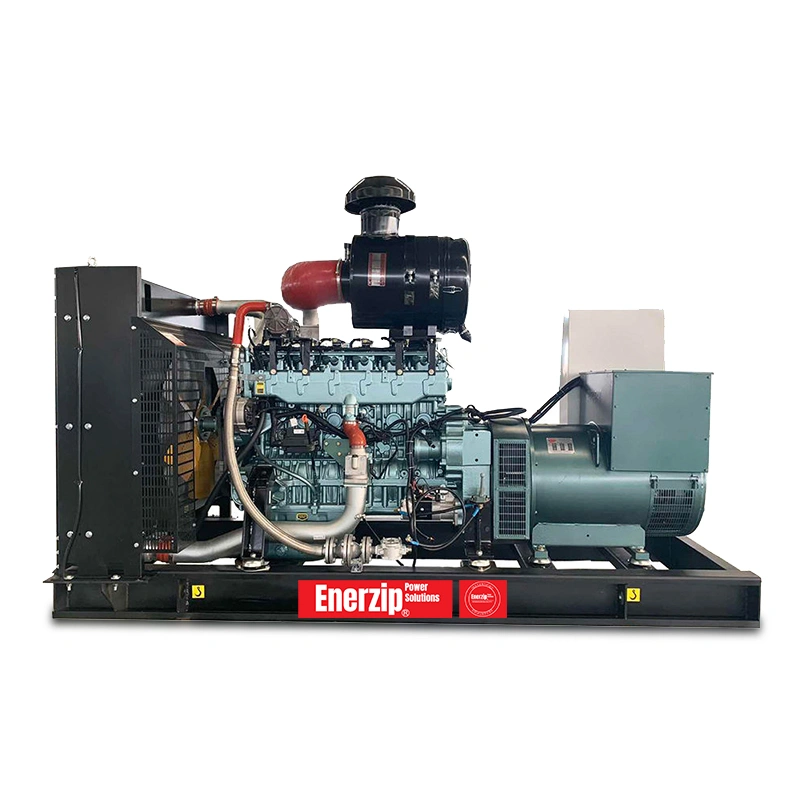
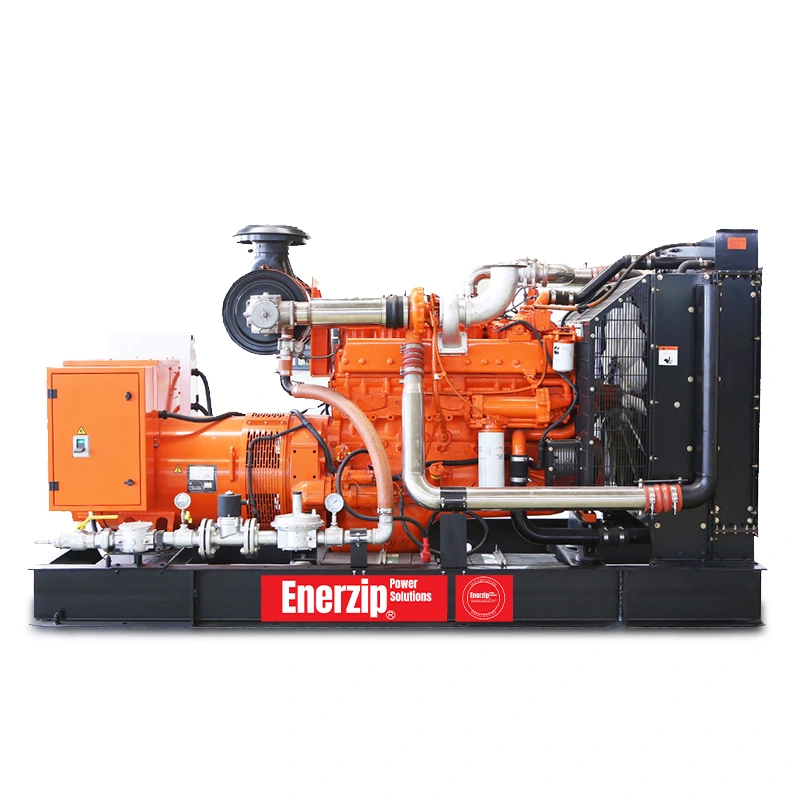
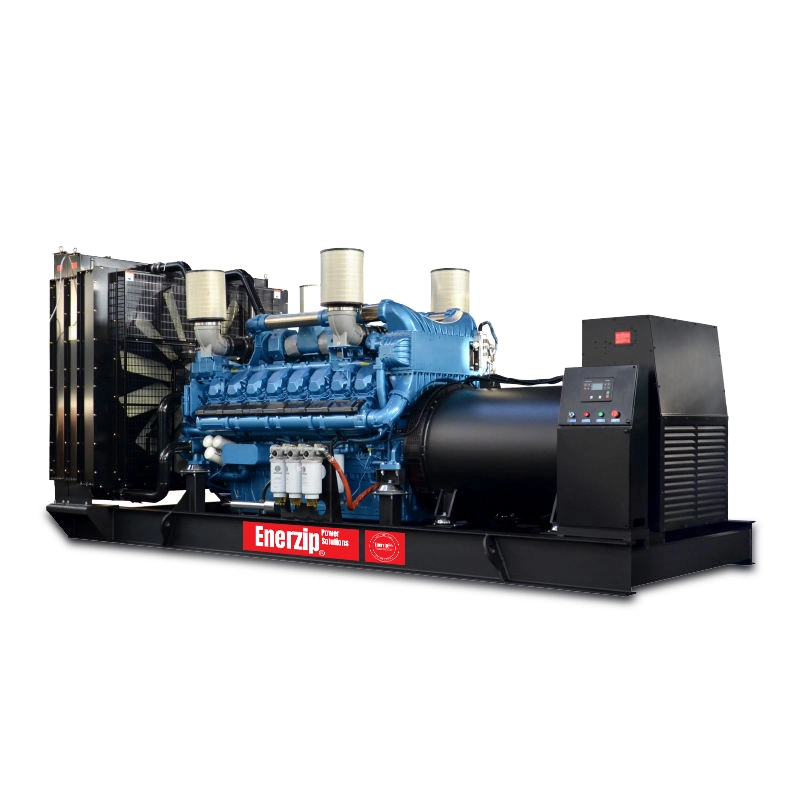
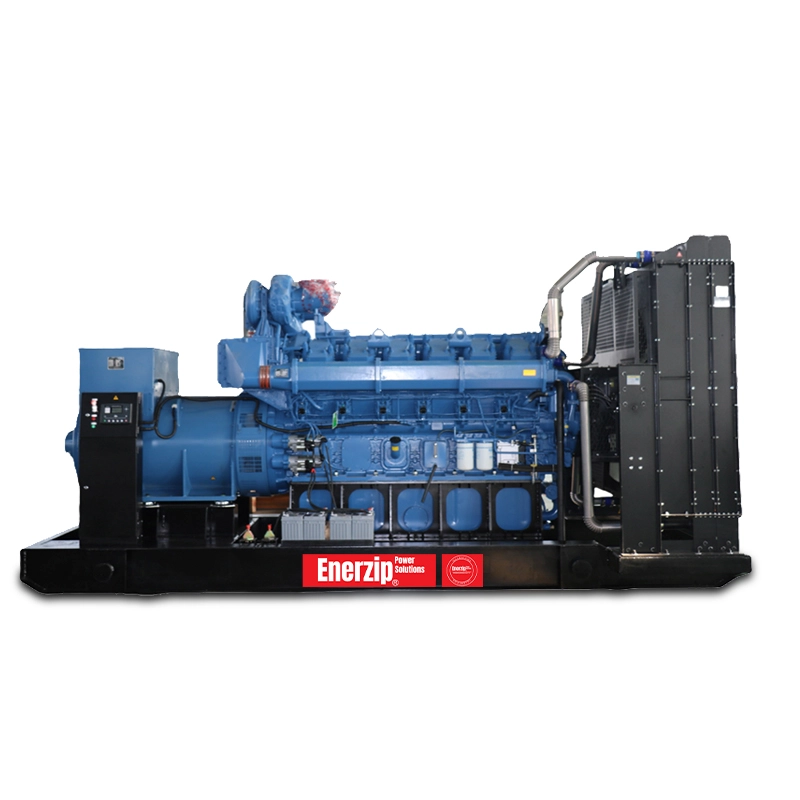
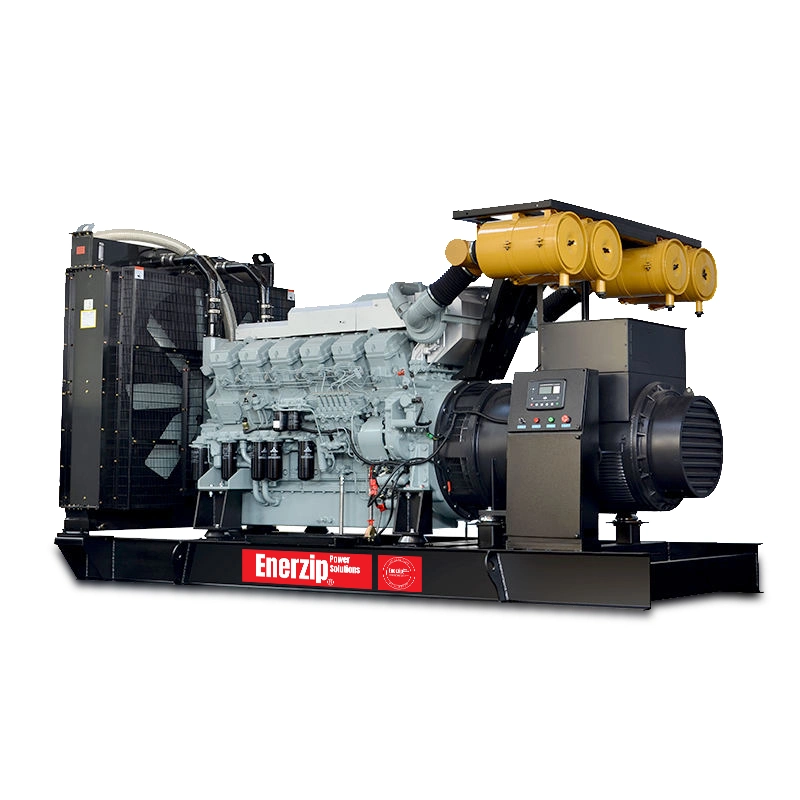
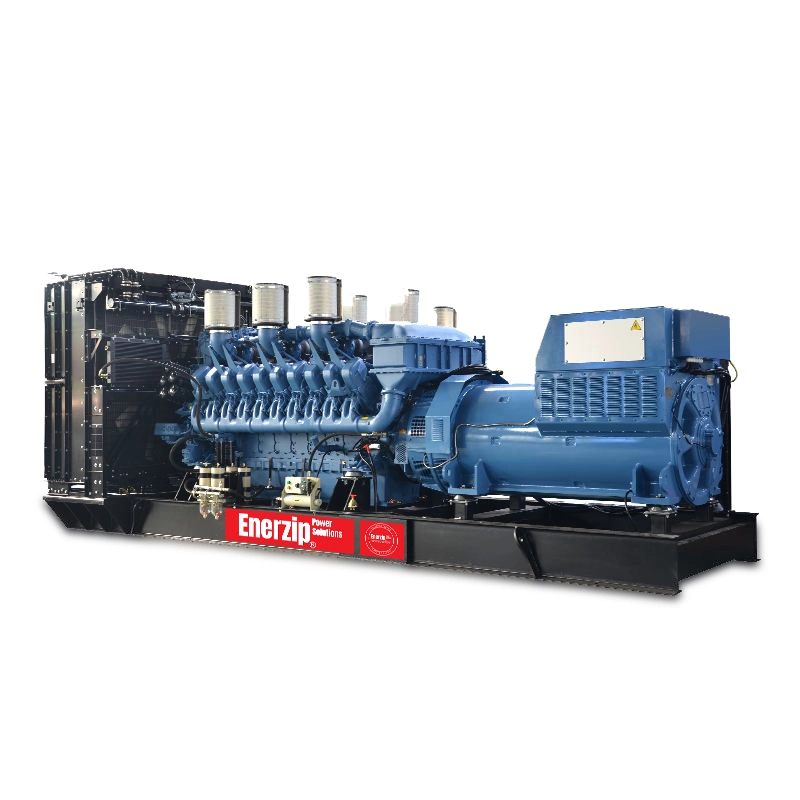
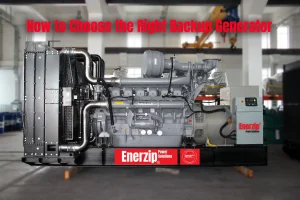
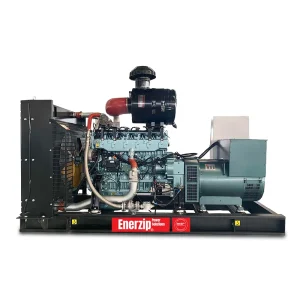
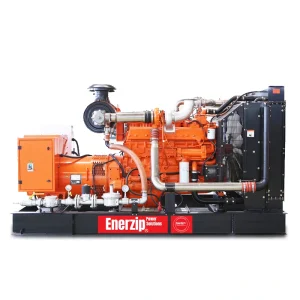
An open type generator is the most direct industrial form of a genset. It usually includes the engine, alternator, radiator, controls, and baseframe, but it does not include a soundproof canopy.
Common names include:
- Open type generator
- Open genset
- Open type diesel generator set
- Industrial open generator
- Base mount generator
- Open generator without canopy
- Open generator with skid base
For industrial projects, open type generator or open genset is the clearest wording.
Silent Generator / Silent Genset
A silent generator is an enclosed industrial genset built with an acoustic canopy.
The most useful commercial terms are:
- Silent generator / Silent genset
- Soundproof generator
- Sound-attenuated generator
- Silent canopy generator
Of these, Silent Generator / Silent Genset is the safest and most universal term for export business.
Soundproof generator is useful when you want to emphasize noise reduction.
Sound-attenuated generator is more technical and often works well in tenders, technical specifications, and engineering conversations.
The term quiet generator is usually too consumer-oriented and may sound like a small residential or portable machine. It is not ideal as the main term for large industrial export use.
Containerized Generator
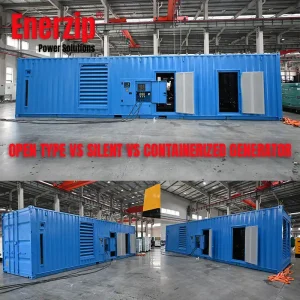
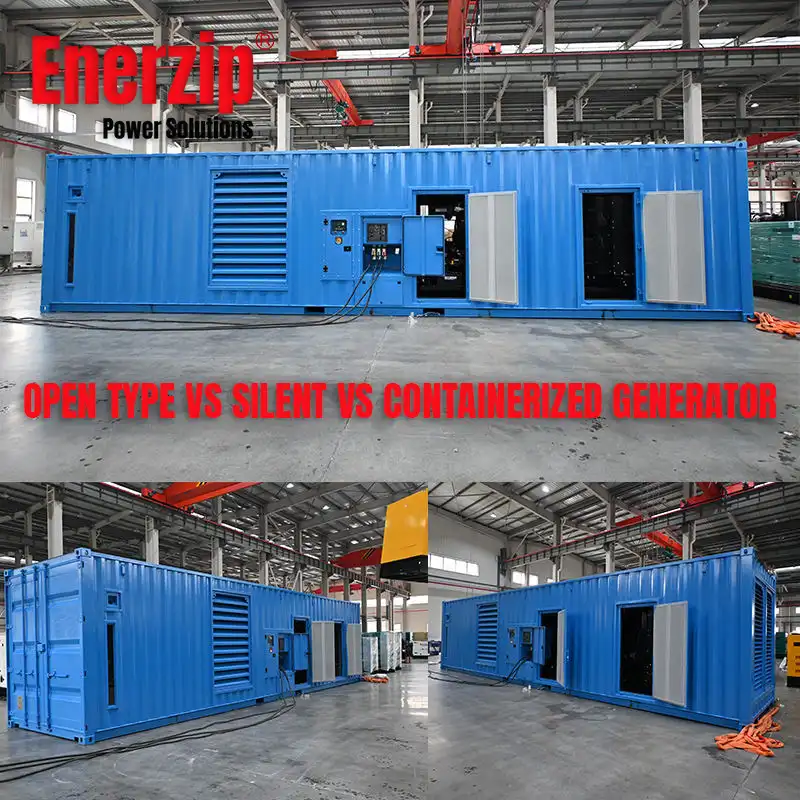
A containerized generator is a generator packaged inside a container-based or container-style enclosure.
Common names include:
- 20ft container generator
- 40ft container generator
- Standard container type
- Soundproof container type
- Weatherproof / all-weather container
- Containerized power station
- Container with parallel cabinet
- Container with fuel tank
- Container with ATS
- Mobile container generator
In many projects, “containerized generator” is the umbrella term, while the exact structure depends on shipping method, power range, accessories, and site conditions.
Open Type Generator: When It Is the Right Choice
Open type generators are still the right answer for many serious industrial applications. They are not “cheap versions” by definition. In the right environment, they can be the most practical configuration.
Typical Applications for Open Type Generators
Open type generators are usually well suited to:
- indoor generator rooms
- permanent industrial installations
- utility rooms or plant rooms with engineered ventilation
- projects where building acoustics handle noise externally
- process plants
- pump stations
- water infrastructure
- sheltered industrial sites
- applications where easy service access matters more than enclosure protection
In these situations, the building or site infrastructure already provides some of the protection that a canopy or container would otherwise need to provide.
Advantages of Open Type Generators
Lower Package Cost
Without a canopy or container shell, the package is simpler and often cheaper. If the site does not need noise reduction or weather protection from the genset itself, paying for them can add cost without adding real value.
Better Maintenance Access
Open type generators are easier to inspect and maintain. Technicians can reach the engine, radiator, alternator, exhaust, control points, and vibration mounts more directly. In industrial sites where uptime and service efficiency matter, this is a real operational advantage.
Flexible Baseframe Engineering
Open type generators can be built with different skid and baseframe styles according to power rating and application.
Enerzip’s actual product logic is useful here: not all open type units need the same baseframe design. Depending on the customer’s power range and use case, the baseframe can be built with:
- standard skid bases
- reinforced skid bases
- forklift pockets
- no forklift pockets
- pallet-style compact bases
- heavier-duty fabrication for field use
Forklift pockets are helpful for handling, but they also increase cost and fabrication complexity. Some smaller sets use simpler pallet-style bases to save money. That is a practical customization point many buyers overlook.
Easier Fuel System Flexibility
Open type generators can be supplied with different tank arrangements more easily in many projects.
Common fuel arrangements include:
- 8-hour base fuel tank
Common wording: Base fuel tank, 8 hours running time - 12-hour base fuel tank
- 24-hour larger tank or external tank
- 48 / 72 / 96-hour customized tank arrangement
- 4–6 hour compact tank arrangement on smaller sets
Some projects want only a base tank. Others want longer runtime with external tanks or side-mounted tank arrangements. The right choice depends on runtime expectations, site safety, footprint, and transport limits.
Limitations of Open Type Generators
Higher Noise
Without an acoustic enclosure, noise is significantly higher. That makes open type unsuitable for:
- hospitals
- hotels
- office buildings
- schools
- residentially sensitive sites
- city-center standby projects
- telecom sites near populated areas
Less Environmental Protection
If the unit will operate outdoors, the project must solve:
- rain protection
- dust protection
- corrosion protection
- UV exposure
- physical security
- unauthorized access
Those costs can reduce the apparent savings of an open type unit.
Appearance and Site Acceptance
An open industrial skid may be technically acceptable but visually inappropriate for many commercial, institutional, and public-facing projects.
When Open Type Is Still the Best Option
Open type is usually best when:
- the generator is installed indoors
- site ventilation is already engineered
- noise is not a priority
- the project is budget-sensitive
- easy service access is important
- the unit is part of a permanent industrial installation
If the site already solves the enclosure problem, an open type generator can be the smartest choice.
Silent Generator: The Most Common Industrial Export Choice
For many export projects, the silent generator is the most balanced answer. It offers weather protection, reduced noise, practical transport, and a cleaner appearance than open type.
Why “Silent Generator / Silent Genset” Is the Safest Wording
For websites, quotations, PI, and general export communication, Silent Generator / Silent Genset is usually the best main term. It is widely understood by overseas buyers and avoids ambiguity.
When you want to emphasize noise reduction, you can also use Soundproof Generator.
When you want a more technical expression, especially in specifications, Sound-attenuated Generator works well.
Standard Silent Generator vs Super Silent Generator
Not all silent generators are equal. Based on your real product situation, Enerzip has two meaningful acoustic levels.
Standard Silent Generator
This is the common export-oriented acoustic canopy design. Under standard testing conditions, it is generally engineered around about 75 dB(A).
This level is suitable for:
- general commercial standby projects
- office buildings
- mixed-use developments
- municipal standby applications
- outdoor standby where some noise control is needed
- industrial sites with moderate acoustic requirements
Super Silent Generator
This is the premium acoustic package. It uses:
- thicker steel plate
- thicker special acoustic insulation
- more advanced acoustic design
- more demanding fabrication details
Under standard testing conditions, this type can target about 65 dB(A).
This should be understood as a premium low-noise industrial solution for projects with stricter acoustic requirements, not simply as a generic “better silent generator.” Its value depends on the site.
Why Test Conditions Matter
A standard silent generator and a super silent generator should not be compared only by brochure dB figures. Buyers should always confirm the stated test method, measurement distance, load condition, and installation state. Actual sound levels also depend on how the unit is measured, the operating load, the environment around the unit, and whether the published figure is taken under standardized test conditions or field assumptions. For general reference on airborne noise measurement for generating sets, readers may also review ISO 8528-10.
This matters because many buyers compare “silent generators” only by power and price, without realizing that one may be a standard 75 dB(A) package while another is a much heavier and more expensive 65 dB(A) super silent package.
Why the Cost Difference Is Significant
Your super silent canopy cost is more than twice the cost of a standard silent canopy. That is a major buying point.
A customer should not pay for a super silent package unless the project genuinely requires it. At the same time, a customer should not choose a basic canopy if the site is near residents, hospital wards, hotels, or premium commercial zones where noise complaints or compliance issues are likely.
Canopy Steel Thickness and Structural Design
The steel thickness of the silent canopy affects:
- rigidity
- vibration resistance
- long-term durability
- door stability
- sound control
- transport resistance
- weathering resistance
Based on your actual manufacturing practice, buyers can understand silent canopy structure as follows.
Outer Canopy Steel Thickness
Small units (≤100 kW)
- economy level: 1.5 mm
- standard export level: 2.0 mm
Medium units (100–300 kW)
- common standard: 2.0–2.5 mm
- reinforced / super silent: 2.5–3.0 mm
Large or container-style packages (≥300 kW)
- often 3.0 mm and above, with stronger framework
Internal Structure
- perforated acoustic inner sheet: usually 1.0–1.5 mm
- main frame and base: usually 3.0–5.0 mm
- base fuel tank: often 4.0–6.0 mm
- door panel structure: similar to side panels, usually reinforced
In tender or quotation language, this can be explained simply as:
- Standard canopy: 2 mm steel plate
- Heavy-duty / super silent: 2.5–3 mm steel plate
- Economy canopy: 1.5 mm steel plate
That helps buyers understand why two “soundproof generators” can have very different strength, life, and acoustic behavior.
Painted Canopy vs Powder-Coated Canopy
In the Chinese market, silent canopies are commonly made with either:
- painted finish
- powder-coated finish
Enerzip offers both.
This is useful because different buyers prioritize different things. Some focus on cost first. Others care more about long-term outdoor appearance, corrosion resistance, surface durability, and color retention.
Custom Appearance and Structural Design
A silent generator should not be treated as a fixed standard box. Good suppliers should be able to customize:
- canopy appearance
- shell shape
- door arrangement
- structural reinforcement
- color
- branding
- indoor vs outdoor design priorities
- access layout
- acoustic package level
Your in-house steel cutting and welding capability is a real advantage here. It means customers can provide appearance drawings and color requirements, while Enerzip engineers develop the internal structure to meet:
- strength requirements
- noise reduction requirements
- rain protection
- UV resistance
- anti-aging requirements
- service access
- indoor or outdoor use conditions
When Silent Generators Are the Best Choice
Choose a silent generator when the project needs:
- outdoor installation
- moderate or high noise reduction
- weather protection
- a cleaner commercial appearance
- a practical export package
- a balanced solution between cost and usability
For many standby projects, this is the safest all-round answer.
Containerized Generator: When Structure and Logistics Matter Most
Containerized generators become more attractive when power increases, project logistics become harder, or the site environment becomes more demanding.
Why Buyers Move Toward Containerized Designs
A containerized generator is not simply “a genset in a box.” It often solves multiple project problems at once:
- stronger outer structure
- easier heavy transport handling
- better protection in harsh environments
- easier integration of parallel cabinets or switchgear
- cleaner project packaging for large systems
- better suitability for relocation
- stronger logistical discipline for export projects
Common Container Formats
Enerzip can provide:
- 20GP
- 20HQ
- 40GP
- 40HQ
This matters because buyers often simplify everything into “20ft” or “40ft,” but in practice the internal layout, height, service access, fuel arrangement, and ventilation design can differ significantly.
Standard Container Type vs Soundproof Container Type
Containerized products can be grouped into practical categories.
Standard Container Type
Mainly for weather protection and export packaging.
Soundproof Container Type
For projects that need both containerized structure and stronger acoustic control.
Weatherproof / All-Weather Container
Focused on environmental protection where low noise is less critical than outdoor durability.
Containerized Power Station
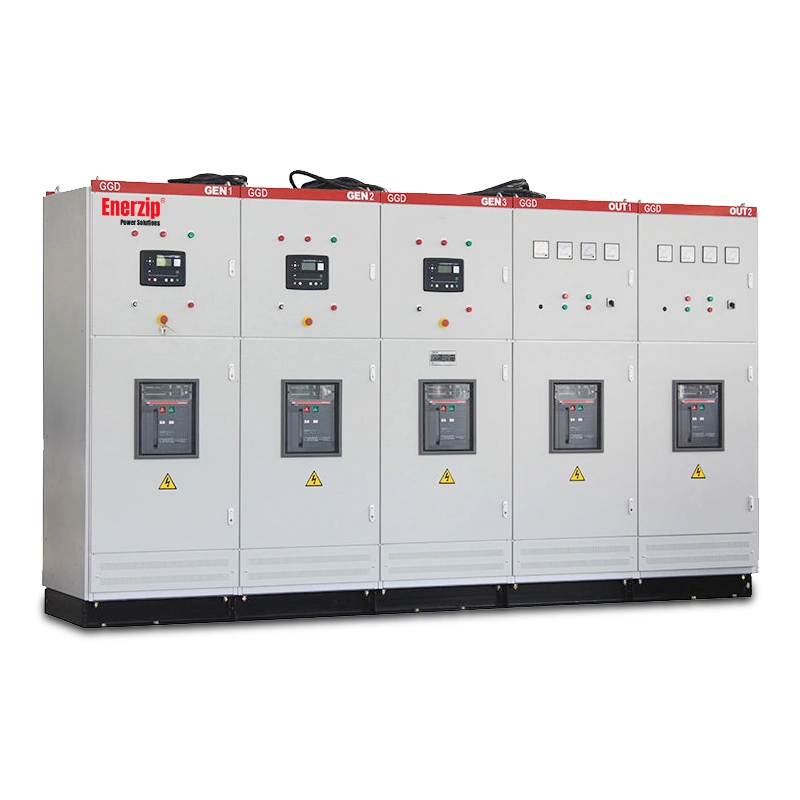
A more integrated system that may include:
- generator set
- parallel cabinet
- distribution equipment
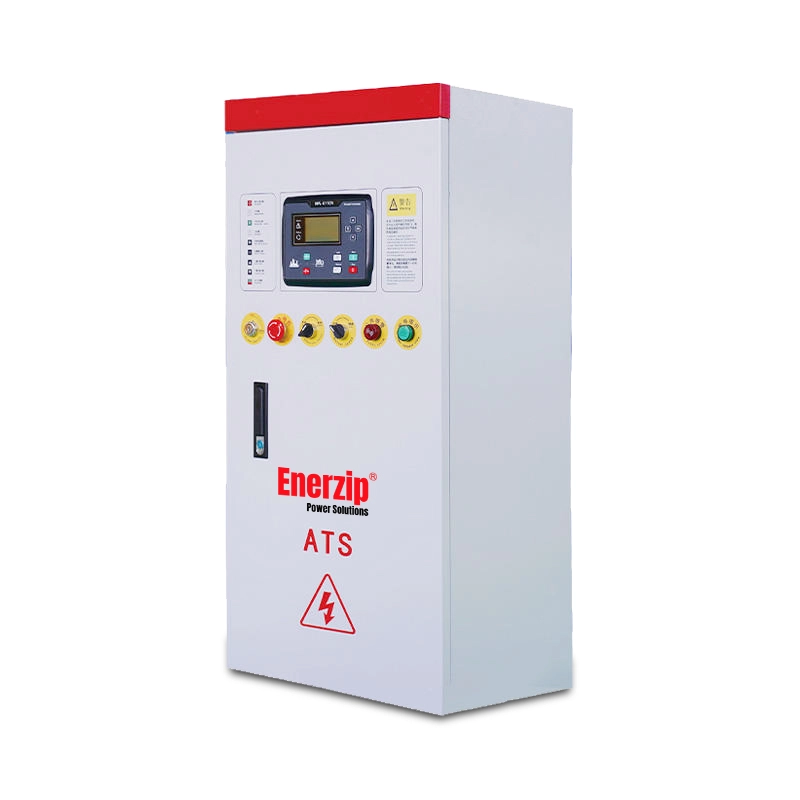
- ATS
- built-in tank arrangement
- control section
This type is especially useful when the project needs more than a single genset enclosure.
CCS-Certified Container Generator vs Non-Certified Container Generator
This distinction is commercially very important.
Enerzip can provide:
- CCS-certified containerized generators
- non-certified containerized generators
- non-standard containerized generators
That matters because shipping method and logistics planning can change significantly.
CCS-Certified Containerized Generator
This is the better choice when the project needs a container-type package that aligns with standard container transport expectations.
Non-Certified Containerized Generator
This is cheaper, but it may change the shipping route logic. It may require:
- breakbulk shipping
- other sea freight arrangements
- land transport
- non-container-vessel transport options
That can still be entirely practical, especially for routes such as China to Central Asia where overland movement may already be part of the plan.
Non-Standard Containerized Generator
Some customers want stronger shell structure than a standard certified container can provide. In those cases, a non-standard reinforced structure may be the better answer, even if the transport method changes.
Why Transport Method Must Be Discussed Early
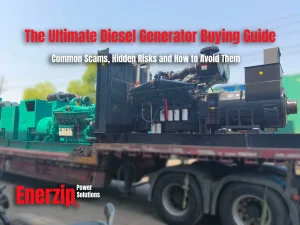
For overseas buyers, the difference between a certified containerized generator and a non-certified containerized generator is not only about price. It can also affect the shipping method, available transport routes, handling requirements, and the type of structural approval that carriers or project logistics partners may require. In practice, buyers should confirm the exact certification scope with the supplier before order confirmation, because transport eligibility, inspection basis, and route flexibility may differ between certified containerized structures and non-certified container-style generator packages. For general reference, buyers may also review the International Convention for Safe Containers (CSC).
This distinction is important because many buyers assume that all containerized generators follow the same logistics rules. In reality, they do not. The right choice depends on the project route, shipping method, destination handling conditions, and the customer’s balance between transport cost, structural strength, and delivery flexibility.
Why Larger Projects Often Move Toward Containerized Designs
Based on your practical product logic:
- for 500 kW and above, containerized design is often worth recommending where movement, structure, and transport matter
- for 1000 kW and above, containerized design is often the preferred direction
That is a practical engineering conclusion. As power increases, package size, transport stress, accessory integration, and outdoor durability matter more, and the benefits of a stronger outer structure become much clearer.
When a Containerized Generator Is the Best Choice
Choose containerized when you need:
- larger power
- stronger transport durability
- repeated relocation
- integrated auxiliary equipment
- harsh outdoor service
- long-distance export handling
- project-style packaged power stations
- cleaner logistics for large power packages
It is not always the cheapest answer, but in many large or difficult projects it is the most rational one.
Fuel Tank Design and Runtime Planning
Fuel arrangement is one of the most practical buying issues, yet it is often oversimplified.
Common Fuel Tank Options
Typical options include:
- 8-hour base tank
- 12-hour base tank
- 24-hour larger or external tank
- 48 / 72 / 96-hour customized tank systems
- small compact tank arrangements for lower-power sets
Some customers want the tank under the baseframe. Others prefer side-mounted or external tanks. The correct choice depends on runtime expectation, safety layout, footprint, maintenance habits, and logistics.
Why Tank Size Should Follow the Project
There is no universal “best” runtime arrangement. A commercial standby project may be well served by an 8-hour base tank. A remote site may require 24 hours or more. Some buyers care about footprint. Others care about refueling frequency.
The important point is that runtime planning should follow:
- outage expectation
- refueling access
- installation footprint
- transport constraints
- safety requirements
- project operating philosophy
Noise, Transport, Maintenance, and Lifetime Practicality
The right configuration should not only solve the first purchase. It should also reduce long-term project friction.
Which Configuration Is Easier to Maintain?
- Open type is easiest for access
- Silent type can still be practical if the canopy is well designed
- Containerized type needs planned service layout, especially for larger units and integrated equipment
Which Configuration Is Easier to Ship?
- Open type is simple, but may need more site protection later
- Silent type is practical for many normal export projects
- Containerized type is strongest where shipping, lifting, and relocation matter
Which Configuration Is Stronger for Repeated Movement?
Containerized is usually strongest, especially at larger power ratings. Silent canopies work well for many standard export projects, but they are not always the best answer for repeated heavy handling.
Why Website Dimensions Must Be Treated as Reference
This is a very important point for industrial buyers.
The published dimensions of:
- open type generators
- silent generators
- containerized generators
should be treated as reference only.
Final dimensions can change because of:
- different engine generations
- different emission versions
- special acoustic requirements
- different tank capacities
- ATS integration
- parallel cabinet integration
- stronger structural requirements
- customer-specific appearance changes
So final dimensions should always be confirmed from the engineer-approved project solution, not from a generic website table.
How to Choose the Right Configuration for Different Applications
Industrial Plants and Generator Rooms
Usually open type indoors, silent type outdoors, and containerized if the project is large or integrated.
Commercial Standby and Mixed-Use Buildings
Most often silent generators. Super silent may be worth the extra cost if the acoustic environment is sensitive.
Hospitals and Noise-Sensitive Sites
Usually silent or super silent. Containerized may make sense on larger projects or where integrated systems are needed.
Construction and Rental Applications
Silent and trailer-mounted units are common, but larger projects may move toward containerized power packages for durability and easier heavy handling.
Mining and Remote Field Projects
Containerized often becomes more attractive due to transport strength, relocation, and harsh environment protection.
Telecom and Municipal Standby Projects
Silent generators are often the most practical balance between outdoor durability and manageable noise.
Open Type vs Silent vs Containerized Generator: Quick Comparison
| Item | Open Type Generator | Silent Generator | Containerized Generator |
|---|---|---|---|
| Noise level | Highest | Reduced; standard or super silent levels available | Depends on design; can be standard, weatherproof, or soundproof |
| Outdoor suitability | Limited unless site provides protection | Good for many outdoor standby projects | Strongest for harsh outdoor conditions |
| Transport strength | Depends on skid/baseframe | Moderate to strong depending on canopy structure | Usually strongest |
| Maintenance access | Best | Good if canopy design is practical | Depends on internal layout and integrated equipment |
| Typical package cost | Lowest | Mid-range | Higher |
| Fuel tank flexibility | High | High | High, but more integrated planning often required |
| Appearance | Most industrial, least refined | Cleaner commercial appearance | Strong project-style appearance |
| Best applications | Indoor plant rooms, fixed industrial sites | Commercial standby, outdoor projects, institutional sites | Large export projects, harsh environments, integrated power stations |
| Typical power suitability | Broad range, especially indoor | Broad range, especially outdoor standby | Increasingly preferred above 500 kW; especially strong above 1000 kW |
| Main buying reason | Lower cost and easy access | Best balance of noise, weather, and practicality | Structure, transport, integration, and large-project suitability |
Common Buying Mistakes
Choosing Only by Purchase Price
A cheaper package may become more expensive after transport, acoustic work, civil modification, or field maintenance.
Assuming All Silent Generators Are the Same
A standard 75 dB(A) canopy and a 65 dB(A) super silent package are not the same product.
Ignoring the Shipping Route
Container certification and actual shipping method can affect total landed cost more than many buyers expect.
Treating Website Dimensions as Final Dimensions
Published data is useful for early planning but not a substitute for final engineering.
Choosing a Canopy or Container Before Understanding the Site
The site should drive the shell—not the other way around.
Which Generator Configuration Should You Buy?
Choose Open Type When
- the installation is indoors
- the site already handles noise and weather
- easy service access is important
- budget matters
- the unit is part of a permanent industrial installation
Choose Silent When
- the unit will be outdoors
- noise matters
- weather protection is required
- appearance matters
- you want the safest all-round export configuration
Choose Containerized When
- the project is large
- the site is harsh
- transport strength matters
- the unit may move or expand
- integrated cabinets or project packaging are needed
- shipping route and structural durability are major factors
Practical Recommendation for Buyers
If you are unsure, do not begin with “Which one is cheapest?”
Begin with:
- site location
- indoor or outdoor use
- acoustic target
- required runtime
- transport route
- handling method
- project power range
- future relocation or expansion
The correct configuration usually becomes much clearer after those questions are answered. If your project is focused on outage preparedness rather than continuous operation, you may also review our Standby Power Generator Solutions.
Why Enerzip
Choosing between an open type generator, a silent generator, and a containerized generator is not only a matter of price. It is a project decision shaped by noise limits, transport routes, installation conditions, maintenance access, runtime expectations, and long-term reliability. That is why Enerzip does not treat generator packaging as a fixed standard box. We help customers match the right configuration to the real project.
Enerzip can supply open type generators with different baseframe strengths, forklift pocket options, and fuel tank layouts based on power range and handling requirements. For silent generators, we provide both standard silent canopy designs and super silent canopy solutions, with painted or powder-coated finishes, customized appearance, and structural design based on outdoor or indoor use conditions. For larger and more demanding applications, Enerzip also offers containerized generator solutions in multiple sizes and structures, including certified and non-certified options based on shipping route, transport method, and project budget.
With in-house steel cutting, welding, and enclosure fabrication capability, Enerzip can customize generator shell design, color, access layout, and structural details according to customer drawings and project requirements. Our engineering team also helps buyers evaluate practical details such as noise targets, fuel tank runtime, maintenance access, transport strength, and final installation conditions before confirming the configuration. This allows customers to choose not just a generator, but the right generator package for the real operating environment.
If you are comparing open type, silent, and containerized generator options for your next project, contact Enerzip to discuss your required power range, noise target, transport method, installation environment, and runtime expectations.
FAQ
Is a silent generator always better than an open type generator?
No. A silent generator is better when the project needs noise reduction, weather protection, or a cleaner outdoor package. An open type generator is often better for indoor plant rooms or fixed industrial sites where enclosure features are unnecessary.
Is a containerized generator always better than a silent generator?
No. Containerized design is stronger and often more suitable for large, harsh, or logistics-heavy projects, but it is not automatically the best option for every standby installation.
What is the safest export term for industrial silent generators?
For most international business use, Silent Generator / Silent Genset is the safest and clearest term.
Are published generator dimensions final?
No. For industrial projects, website dimensions should be treated as reference only. Final dimensions should be confirmed from the engineer-approved project solution.
When should I consider a super silent generator?
When the project has stricter acoustic expectations, such as hospitals, hotels, premium commercial buildings, municipal standby projects, or noise-sensitive outdoor environments.
What should I ask before choosing a containerized generator?
Ask about:
- shipping route
- certification scope
- required power range
- integrated accessories
- expected movement frequency
- whether a certified or non-certified structure is more practical for the actual route and cost structure