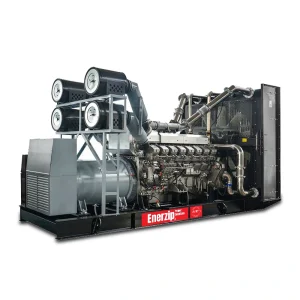

Diesel generator sets deliver dependable backup and prime power when the grid is unstable, loads are critical, and site conditions are demanding. Enerzip (Enerzip Power Technology (Weifang) Co., Ltd.) is an industrial generator supplier providing industrial diesel generators engineered for predictable uptime—configured for real project needs such as motor starting, load steps, high ambient temperature, enclosure airflow resistance, and ATS integration—serving data centers, hospitals, mining, manufacturing, and infrastructure users.
Features:
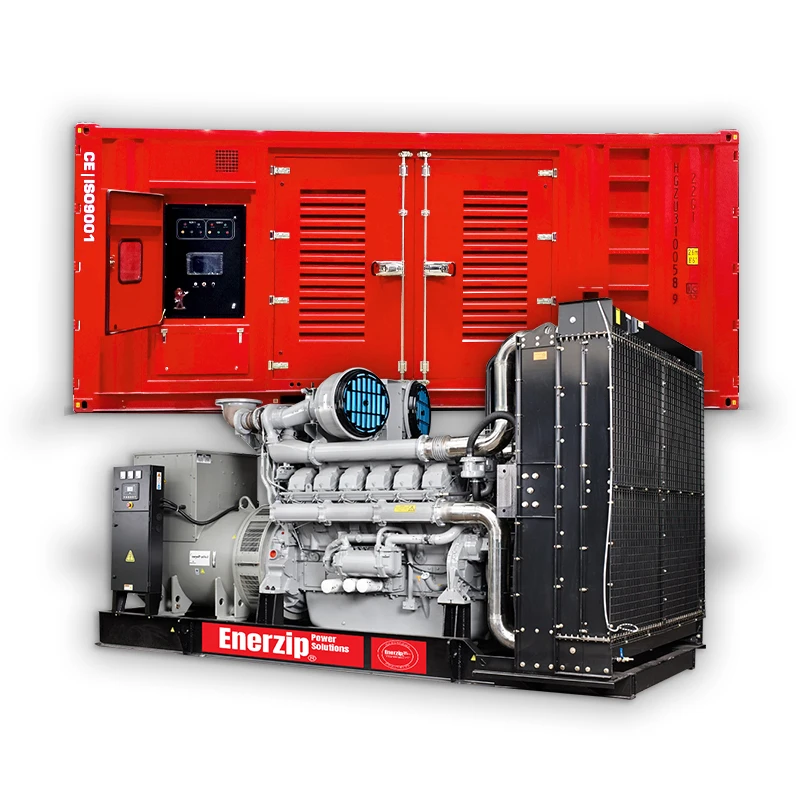
Enerzip’s diesel generator portfolio spans 9.5–4000 kVA and is organized for real operating needs—standby backup, prime power, and continuous duty. Instead of selecting by kVA alone, we help match the right solution based on duty cycle (ESP/PRP/COP), load behavior (motor starting and load steps), site conditions (ambient/altitude/enclosure airflow), and integration scope (ATS/paralleling)—reducing common risks such as under-sizing, voltage/frequency dips, high-ambient overheating, nuisance trips, and installation mismatch.
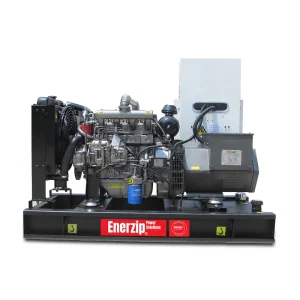
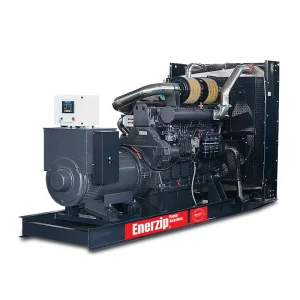
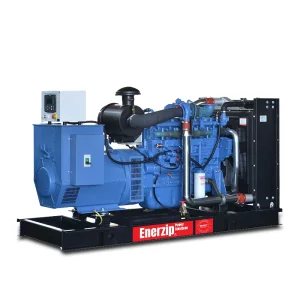
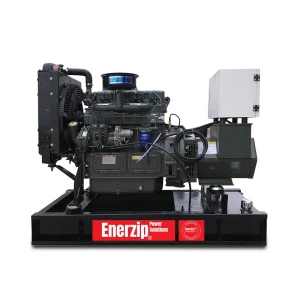
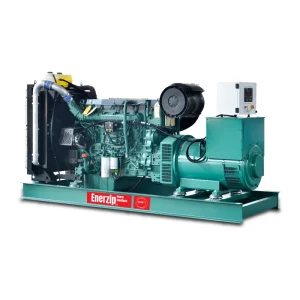
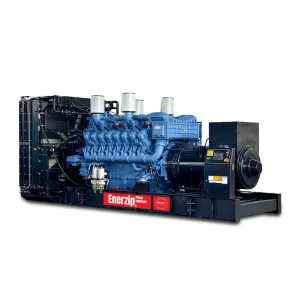
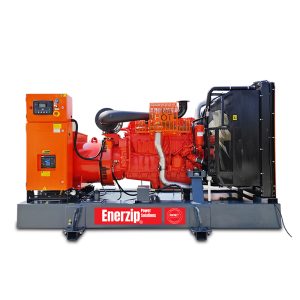
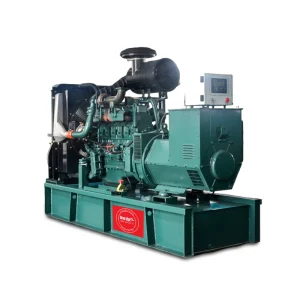
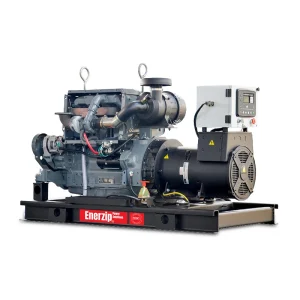
Enerzip offers diesel generator sets from 9.5 to 4000 kVA, covering compact standby units to heavy-duty industrial solutions. Available formats include open type, silent type, weatherproof type, and containerized power house solutions for outdoor, remote, or harsh environments. Optional scope can include ATS packages, fuel tank customization, and multi-unit paralleling (project dependent).
We value project schedules. With standardized configurations and an efficient supply chain, we support fast preparation and responsive quotation. Typical lead time: open type 3–7 days; silent/weatherproof type 7–14 days (configuration dependent).
Quality is our core promise. Each diesel genset is built with system-grade integration and inspected for stable voltage/frequency, transient response readiness, protection functions, wiring correctness, and key safety checks. Where required, we also verify load pickup readiness and enclosure cooling/airflow performance (project dependent), supporting reliable long-hour operation on site.
Our team is available 24/7 to assist with selection, installation guidance, commissioning coordination, and troubleshooting—covering ATS transfer setup, load-step planning, and paralleling support—so you get dependable service throughout your diesel generator lifecycle.
Diesel generator projects are rarely “standard”—real performance is defined by transfer behavior, transient loads, cooling/ventilation limits, and installation format, not by kVA alone. That’s why the right diesel generator configuration should be selected based on how the site runs, how loads start, and what the environment allows—so the genset delivers stable power when uptime is non-negotiable.
In practice, diesel power systems commonly face:
Transfer events & acceptance performance: ATS transfer and load pickup can create the harshest operating moment. If the system is not configured correctly, voltage/frequency recovery may be slow, causing nuisance alarms or sensitive load issues.
High inrush & step loads: motors, pumps, compressors, elevators, crushers, and HVAC can generate large starting currents and fast load steps. Without sufficient transient capability, a diesel generator may suffer frequency dips, voltage sag, smoke, or trip behavior under real starts.
Cooling margin in hot and restricted sites: high ambient temperature, altitude, dust, and limited air paths inside silent enclosures/containers can raise coolant and intake temperatures. Poor airflow design can lead to derating, overheating, or recirculation problems.
Fuel logistics & runtime planning: prime and long-hour operation require realistic fuel tank sizing, refueling plans, filtration, and service intervals. Mismatch here often causes downtime that has nothing to do with “kVA”.
Installation format constraints: open sets for plant rooms, silent/weatherproof units for outdoor and noise-sensitive sites, and containerized solutions for remote deployment—each format changes access, ventilation, and serviceability assumptions.
To simplify selection, we group our diesel generator sets by common duty profiles and project types:
E Series – Diesel Generator Sets (16.5–75 kVA)
For small standby and light industrial users where compact footprint and cost efficiency matter most.
Typical for telecom, small workshops, retail backup, and residential compounds.
CA Series – Diesel Generator Sets (9.5–715 kVA)
For rugged standby power where durability and long-life reliability are priorities.
Typical for construction sites, utilities, general industry, and harsh outdoor environments.
C Series – Diesel Generator Sets (15–3750 kVA)
For industrial and critical facilities requiring strong load acceptance and predictable uptime.
Typical for hospitals, data centers, mining, manufacturing, and infrastructure projects.
P Series – Diesel Generator Sets (10–2500 kVA)
For broad commercial and industrial coverage where maintainability and serviceability are important.
Typical for buildings, factories, rental fleets, and standby/prime users.
DE Series – Diesel Generator Sets (22–825 kVA)
For demanding environments where hot-site/high-altitude performance and fuel efficiency are valued.
Typical for remote stations, industrial sites, and challenging climate conditions.
D Series – Diesel Generator Sets (165–935 kVA)
For cost-effective mid-to-high power industrial standby/prime projects.
Typical for general industrial users balancing performance and ROI.
SD Series – Diesel Generator Sets (75–900 kVA)
For value-focused industrial projects needing steady long-hour operation and practical maintenance.
Typical for municipal projects, factories, and standard industrial deployments.
S Series – Diesel Generator Sets (275–800 kVA)
For long-hour applications where low TCO and efficiency matter.
Typical for continuous/prime duty users and high-runtime scenarios.
V Series – Diesel Generator Sets (94–800 kVA)
For stable performance across a wide range of industrial standby and prime needs.
Typical for general industry and mixed-load sites.
W Series – Diesel Generator Sets (300–1000 kVA)
For rugged, ROI-driven industrial backup power with scalable capacity.
Typical for emerging markets and capacity expansion planning.
MS Series – Diesel Generator Sets (715–2500 kVA)
For heavy industrial duty and stable baseload operation.
Typical for plants requiring robust integration and long-hour runtime.
M Series – Diesel Generator Sets (1100–4000 kVA)
For mission-critical, high-output multi-megawatt deployments.
Typical for large campuses, critical infrastructure, and power-plant-level applications.
Y Series – Diesel Generator Sets (44–3300 kVA)
For broad kVA coverage supporting infrastructure-heavy markets and large industrial projects.
Typical for utilities, heavy industry, and large-scale standby/prime installations.
For deeper planning and faster quotation, you may also explore: ATS & Automatic Transfer Switches, Paralleling / Synchronization Solutions, and a Genset Cooling & Ventilation Guide (high-ambient derating / enclosure airflow / acceptance testing).
What we typically review to recommend the right series/configuration: required kVA/kW, rating basis (ESP/PRP/COP), largest motor starting and load steps, expected runtime hours, site conditions (ambient temperature / altitude / ventilation limits), installation format (open/silent/weatherproof/container), and integration scope (ATS / multi-unit paralleling / remote monitoring)—so your diesel generator performs predictably on site.
To avoid under- or over-engineering, we recommend sizing and configuration based on your load profile and operating mode:
Power: required kVA/kW, standby/prime/continuous, running hours/day
Electrical: 50/60Hz, voltage, phase (e.g., 400/230V 3P4W)
Loads: largest motor (kW/hp) and starting method (DOL/soft starter/VFD), any load steps if available
Mode: ATS required or not, single unit or multi-unit paralleling (if any)
Site: ambient temperature, altitude, installation type (open/silent/weatherproof/container)
Diesel generator sets are widely used where projects require dependable backup power, prime power, or continuous duty under real site constraints. Typical applications range from critical facilities that need fast ATS transfer to remote worksites where diesel remains the most practical on-site energy source. The following are the most common application fields for diesel power generation.
Data Centers & Critical IT Backup
Used to protect servers, cooling systems, and critical electrical loads during grid outages. This scenario values stable voltage/frequency, strong transient response, and reliable ATS transfer performance (project dependent).
Hospitals & Healthcare Facilities
Applied for life-safety backup power supporting essential loads such as ICU equipment, emergency lighting, elevators, and HVAC. Typical focus: dependable transfer, predictable uptime, and long-hour standby readiness (project dependent).
Mining, Quarry & Heavy Industry
Used for prime/continuous power and backup for crushers, pumps, and heavy machinery in harsh environments. This scenario often requires rugged construction, high-ambient cooling margin, and practical maintenance access (project dependent).
Manufacturing Plants & Production Lines
Installed to reduce downtime risk and protect production continuity where power loss causes major losses. Typical focus: load-step performance, motor starting capability, and stable output for mixed industrial loads (project dependent).
Construction Sites & Temporary Power
Used for site offices, welding equipment, dewatering pumps, cranes, and temporary utilities. This scenario often values fast deployment, outdoor-ready packages, and practical serviceability (project dependent).
Telecom Sites & Remote Stations
Used for reliable standby power at telecom towers, relay stations, and remote control rooms where grid stability is limited. Typical focus: compact footprint, reliable auto-start, and long standby readiness (project dependent).
Utilities & Infrastructure (Water, Pumping, Municipal)
Applied to pump stations, water works, sewage pumping, and public infrastructure requiring uninterrupted operation during outages. Typical focus: motor starting performance, ATS integration, and reliable long-hour operation (project dependent).
Commercial Buildings & Real Estate Backup
Used for hotels, malls, offices, and residential compounds to support elevators, fire systems, lighting, and essential HVAC during outages. Typical focus: low-noise solutions, outdoor installation readiness, and ATS coordination (project dependent).
We quote diesel generator sets by duty: ESP for emergency standby, PRP for prime power with variable load, and COP for continuous baseload. Share hours/day and whether the diesel genset runs only during outages or as planned power.
Confirm 50/60Hz, voltage, phase, and wiring system (e.g., 400/230V 3P4W). If you have generator room standards or grid rules, include them to avoid a wrong alternator/control configuration.
Provide the largest motor (kW/hp), starting method (DOL / star-delta / soft starter / VFD), and any step loads. This is critical for diesel gensets to handle inrush without frequency dip, voltage sag, smoke, or trips.
If the diesel generator is for automatic backup, confirm ATS required, ATS rating (A), and whether loads are all-at-once or sequenced pickup. If you have an ATS model, send it so the controller and wiring match.
Open suits plant rooms with good airflow; silent/weatherproof suits outdoor/noise control; containerized suits remote sites and harsh environments. Share ambient temperature, altitude, and ventilation limits—diesel gensets in enclosures can overheat if airflow is underestimated.
Tell us required runtime (e.g., 8/12/24 hours) and whether you need an integrated base tank or external tank connection. For long-hour diesel operation, also note fuel quality/filtration and refueling plan to prevent downtime unrelated to kVA.